.png)
American craftsmanship,
reconsidered.
The European interiors world has spent a long time treating American luxury as a single, slightly loud category. The houses that have always been quiet have begun, very slowly, to be noticed for what they actually are.
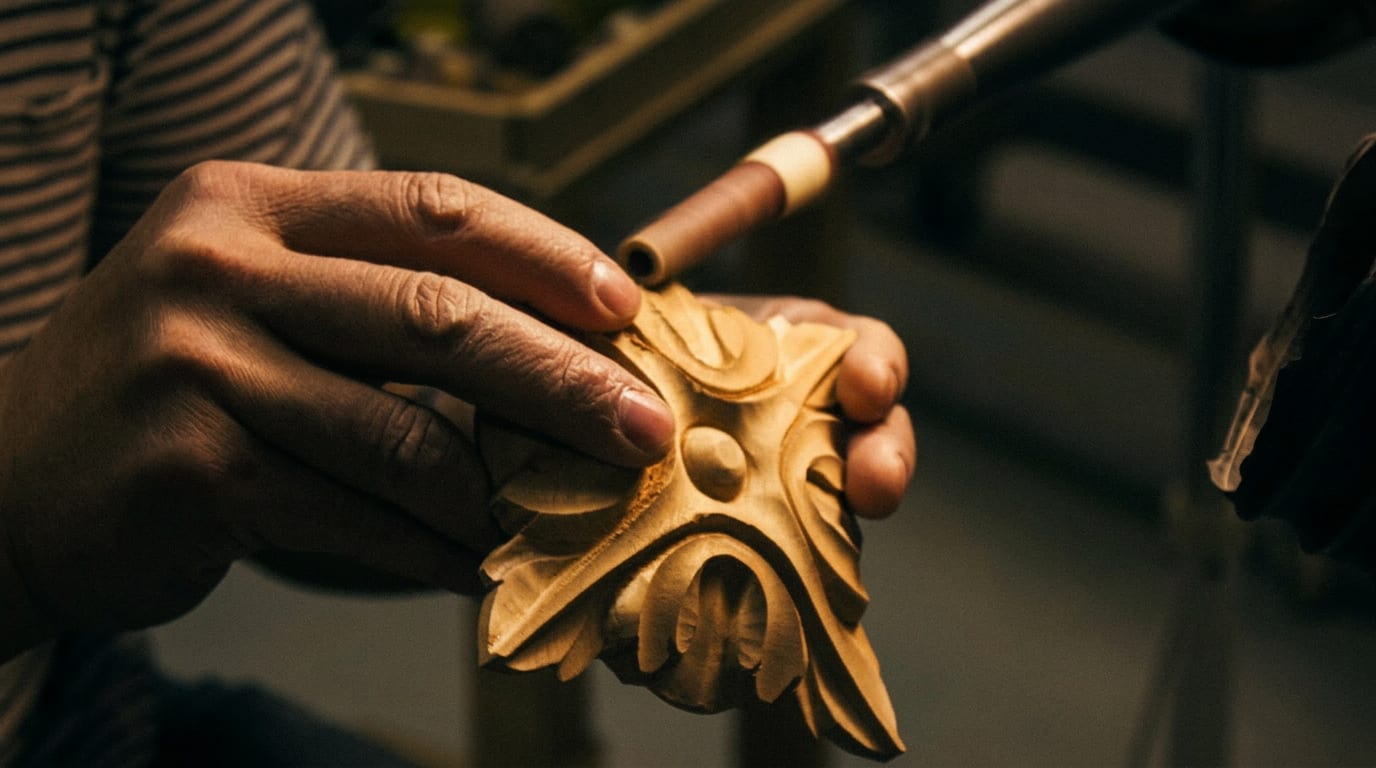
For almost a generation, the international design press has treated American luxury interiors as a single category, and mostly a category to be politely avoided. The image was a composite — Park Avenue formality, oversized scale, gilded finish, a great deal of upholstery — and it had the practical effect of folding several quite distinct American traditions into one easily dismissed silhouette. The actual American work that has, for over a century, run alongside this image was rarely registered.
That work is now, slowly, beginning to be looked at again. The interest is partly generational and partly material. A new European and Asian client, working with European designers who travel widely, has begun to specify pieces from the long-running American workshops that European production simply cannot equal. The pieces tend to be hardwood. They tend to be bench-made. They tend, almost without exception, to come out of the corridor of furniture-making towns that run from western Michigan into North Carolina, with Grand Rapids at its centre. And the houses that produce them have been doing so, in some cases, for more than a hundred and fifty years.
Grand Rapids, properly understood.
Grand Rapids is, for furniture, what Limoges is for porcelain or Murano is for glass. The town and its surrounding counties supplied the United States with the great majority of its hardwood furniture for the better part of a century, and the depth of skilled labour that built up around the industry has, in the better workshops, simply never gone away. A handful of those workshops still cut, join, carve and finish furniture by hand, in the same buildings, often by craftsmen whose grandfathers worked at the same benches.
What this produces is, in the strict sense, a different object from anything currently being made in Europe at comparable price points. A side chair from a serious Grand Rapids workshop will involve eight to twelve discrete handworked stages and as many days of skilled labour. The frame will be cut from kiln-dried American hardwood, mortise and tenon joined, hand-carved where carving is specified, and finished by hand-rubbing rather than spray. The piece is intended to last for a hundred years, and is built for the assumption that it will.
The bench-made American chair is not an aesthetic argument. It is a method of making, with consequences that show up over decades.
Sculptural proportion, not American scale.
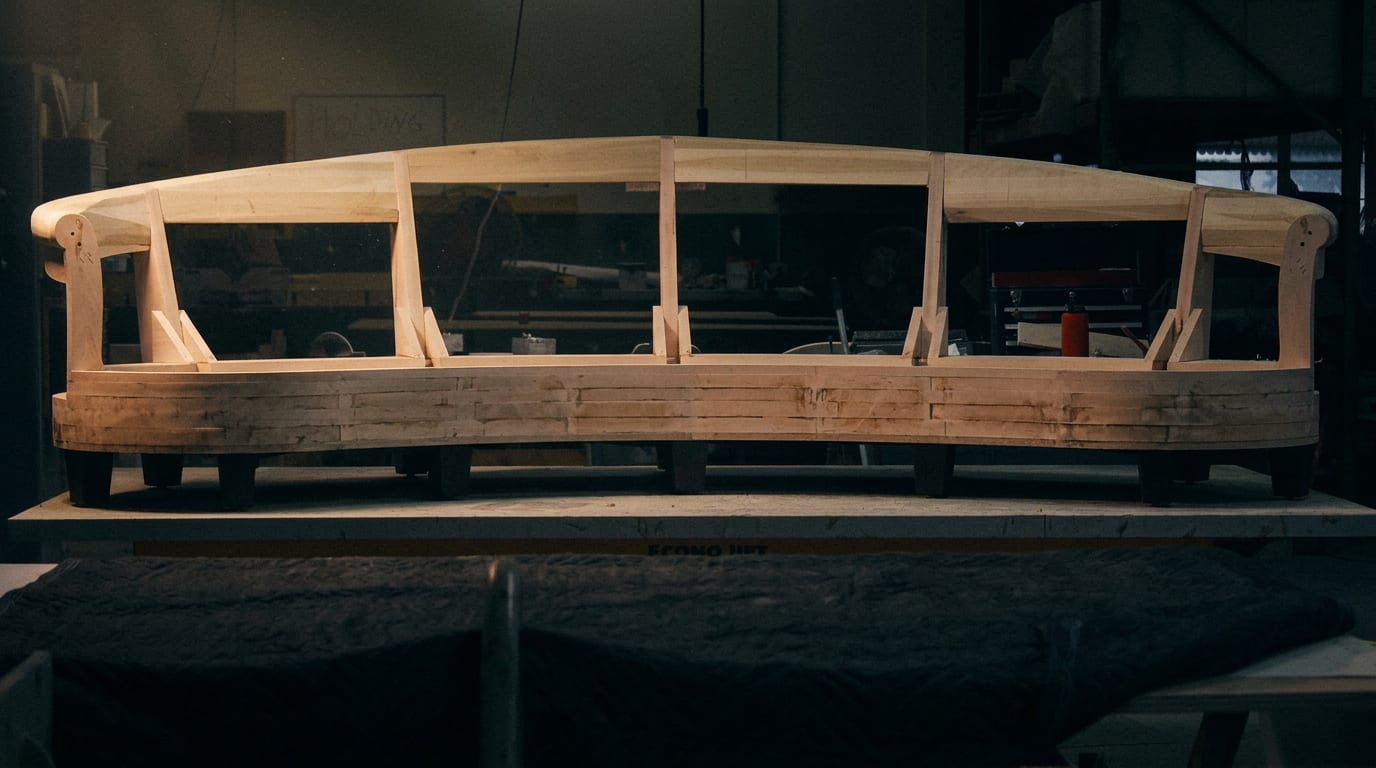
The European caricature of American furniture as oversized breaks down on contact with the workshops that matter. The serious American hardwood pieces are not, on the whole, larger than their European counterparts. They are, in many cases, more sculpturally proportioned. The carved arm of a good American armchair has a confidence of line that European production-line work simply does not attempt; the hand-cut frieze of a bench-made breakfront has a depth of shadow no machined version can produce. The pieces read, in a serious interior, as sculpture.
What is striking about this work in the current register is how naturally it sits inside the quieter, more restrained contemporary scheme. A single bench-made hardwood case piece in a hand-finished plaster room reads architecturally rather than ornately. The sculpture is in the proportion, not in the surface. The room is held by the weight of the piece; the piece is allowed to be the only weight in the room.
A transatlantic dialogue.
What is happening at the level of practice, more interestingly, is a real dialogue. European designers working on substantial projects in California and the eastern seaboard have begun to specify American bench-made pieces with some regularity, and American designers working on London, Geneva and Milan projects have begun, in turn, to bring those pieces back across the Atlantic. The traffic was, for a long time, almost entirely one-way — European antiques into American houses — and it has now opened in both directions.
The pieces that travel best tend to be the ones that carry the cleanest sculptural line. A hand-carved hardwood dining chair from a serious workshop, set against a hand-finished plaster wall in a Marylebone townhouse, reads as one of the most considered objects in the room. A bench-made walnut sideboard, placed under an eighteenth-century Italian mirror in a Brera apartment, carries its own conversation with the surrounding work. The pieces are not folkloric and they are not, in any regional sense, exotic. They are simply unusually well-made furniture, and the international audience for unusually well-made furniture is no longer regional.
Warmth instead of cold minimalism.
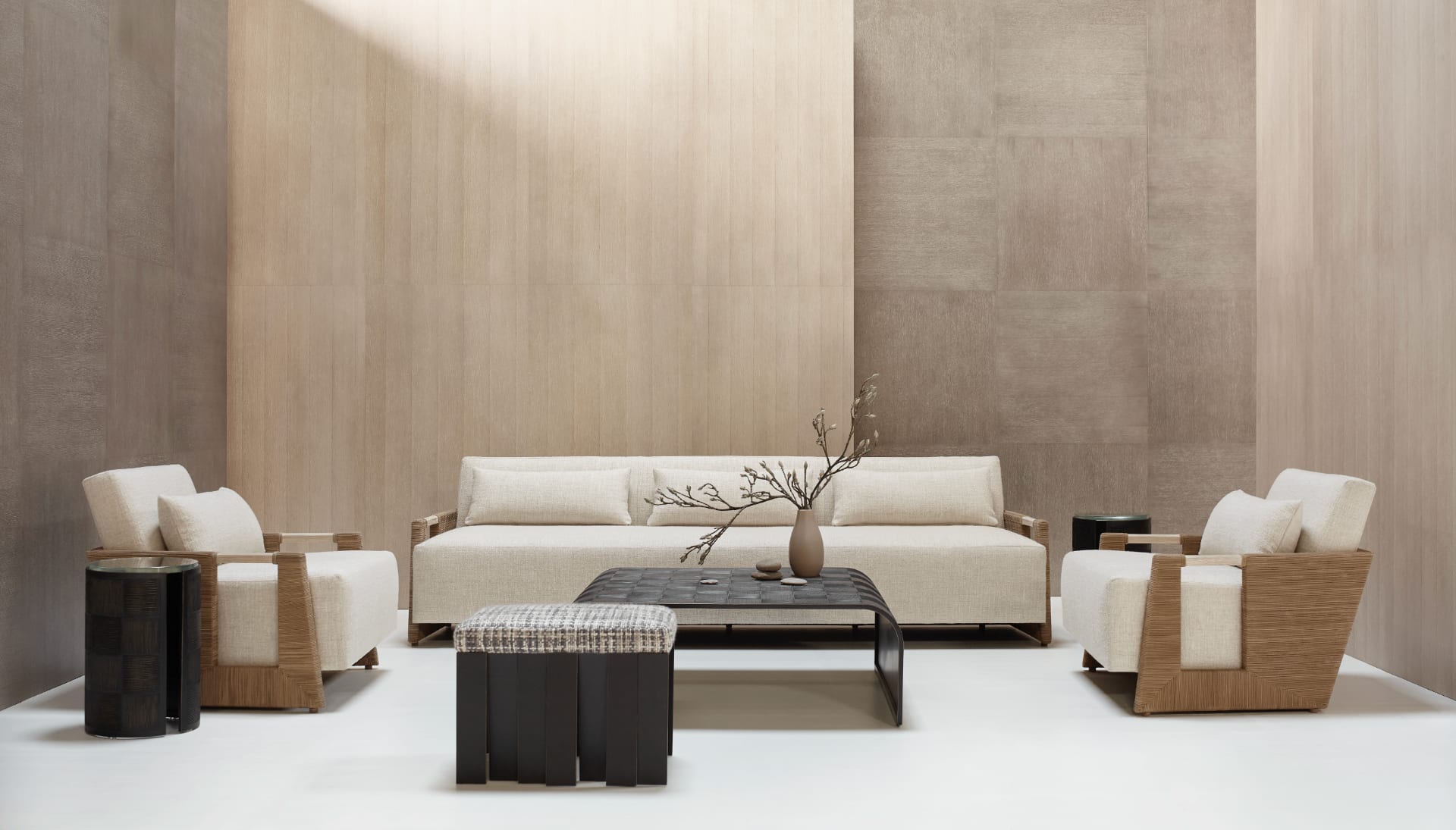
Part of what is being noticed about this work, particularly in northern European markets where minimalism has had a long run, is the warmth. The bench-made American hardwood piece is, in straightforward material terms, a warm object. The wood has grain, the finish has hand-rubbed depth, the proportion has a slight generosity that European modernism tends to avoid. In a room that is otherwise quite restrained, the warmth registers immediately.
The interior reading of cold minimalism — the all-white plaster room, the polished concrete floor, the absence of textile — has, in any case, been losing ground for several years. The replacement is not its opposite, but a more tempered idiom in which restraint and warmth coexist. Bench-made American hardwood furniture, with its weight, its grain and its sculptural confidence, sits unusually well in this register. It is not, in the European sense, modern, and it is not, in the American sense, traditional. It is, in fact, neither — which is why it travels.
Loud luxury, quiet permanence.
The distinction worth drawing, in the end, is between loud luxury and quiet permanence. The first is a category of finish and signature; the second is a category of method. Loud luxury can be produced quickly and identified at a distance, which is why so much of it appears in mass-photographed properties. Quiet permanence cannot be accelerated and rarely registers in a single image. It shows up over years, in how a piece holds its joinery, in how a finish takes the marks of use, in how a room containing the piece continues to feel inhabited a decade after it was first set up.
The American workshops that have always made furniture this way are, almost incidentally, the houses that the serious international market is now beginning to look at. The pieces are not new and the workshops are not new. What is new is the willingness of the rest of the world to understand American craftsmanship as something other than the popular caricature — and to take it, finally, on its own quieter terms.
The American workshop, properly looked at, is one of the quieter institutions of the international interior. It rewards being looked at twice.