.png)
The case for
American craftsmanship.
On restraint, sculptural form and provenance — and why a quieter register of American furniture houses is shaping the next decade of interior work.
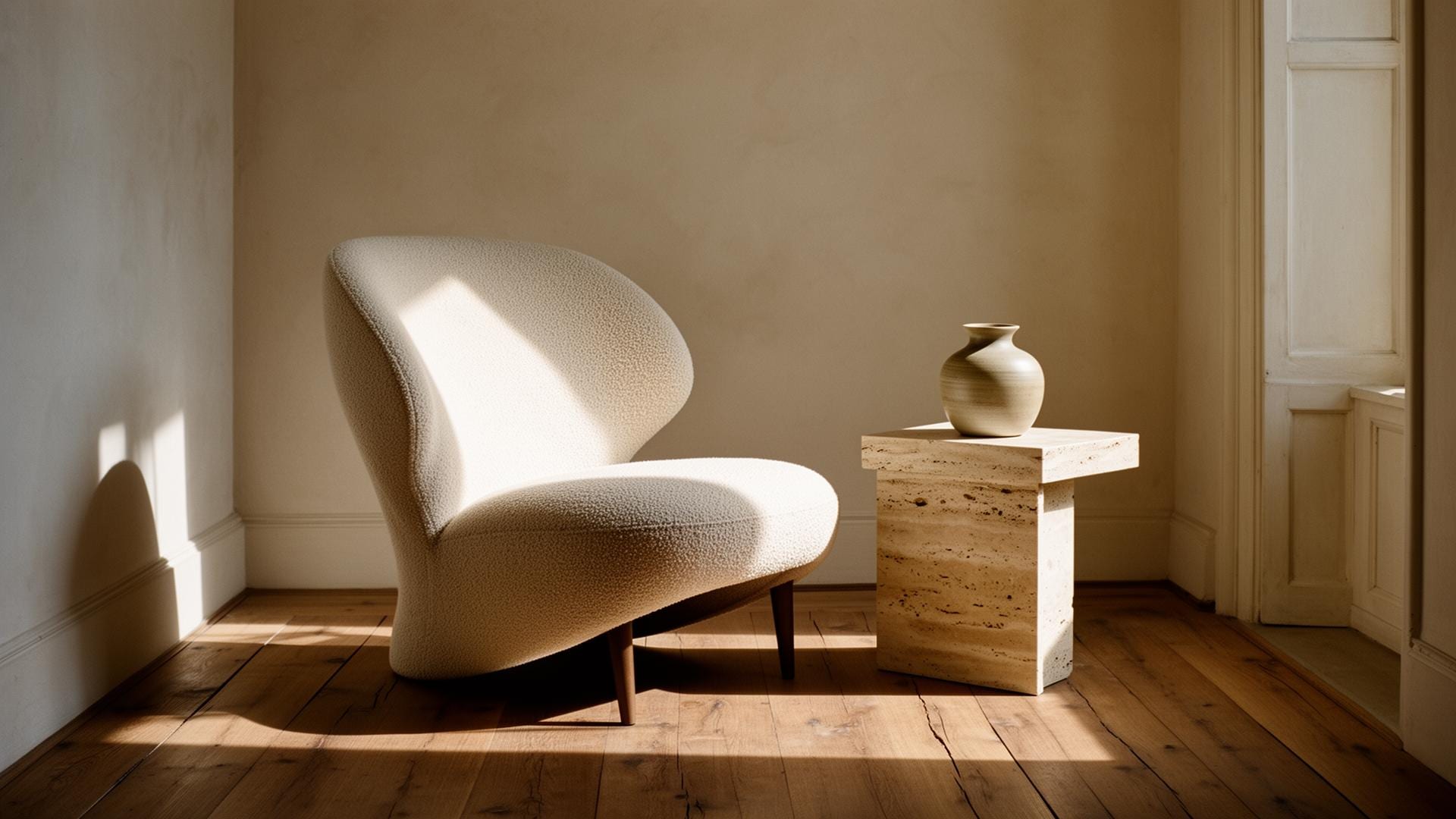
The premise running through serious interior work in 2025 is straightforward. Material integrity, considered form and a verifiable hand have replaced most of the older signals that stood in for luxury.
The houses meeting that brief most consistently happen to be American. Long catalogued as a regional category, American furniture is now being read internationally for what it has always quietly been: bench-built, materially literate, engineered to outlast the decade in which it was specified.
At Valley & Laurel we work in this register day to day, placing pieces from a small group of American houses into projects in which the working standard is permanence rather than presentation.
What used to be called quiet luxury has, in serious work, become the standard.
Material integrity in place of ornament.
The most considered rooms now identify themselves through material and proportion — rattan, rawhide, honed stone, figured walnut, cast bronze. Finishes are matte, hand-rubbed, tactile. Polish has receded; grain, fibre and patina hold the room.
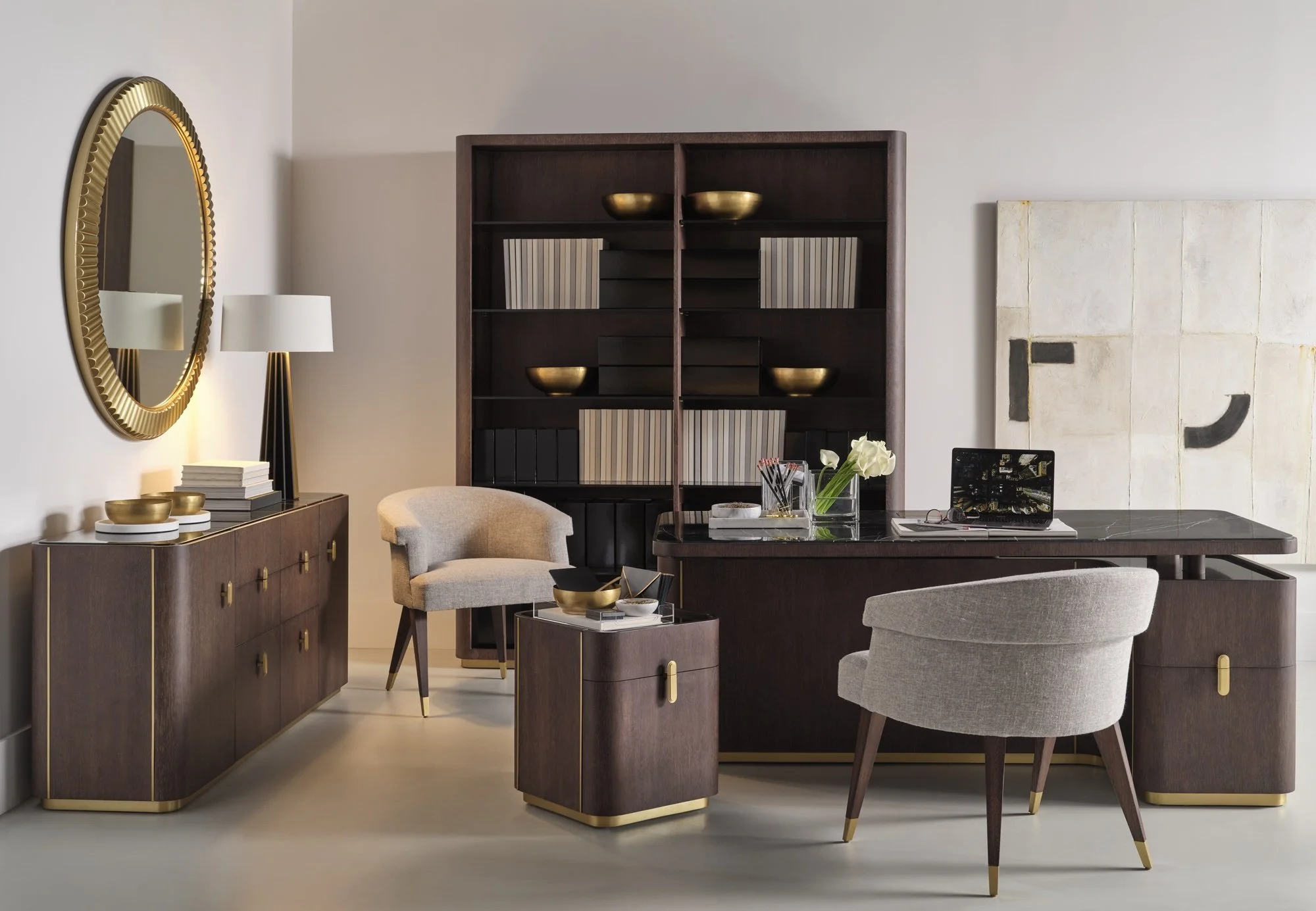
Barbara Barry's work for Baker reads as a précis of the shift — curved silhouettes in honey onyx, warm bronze and figured walnut, sculptural without ever turning declarative.
Sculptural rather than decorative.
The chair, table or console is increasingly read as a single sculptural presence rather than a set element. Wrapped forms, converging planes, envelope-inspired details — Baker Luxe's recent work is one of the clearer readings of this shift in the American canon.
The reference, where there is one, tends to be tailoring rather than decoration. Pleat, fold and seam become structural — the silhouette carries the room without recourse to ornament.
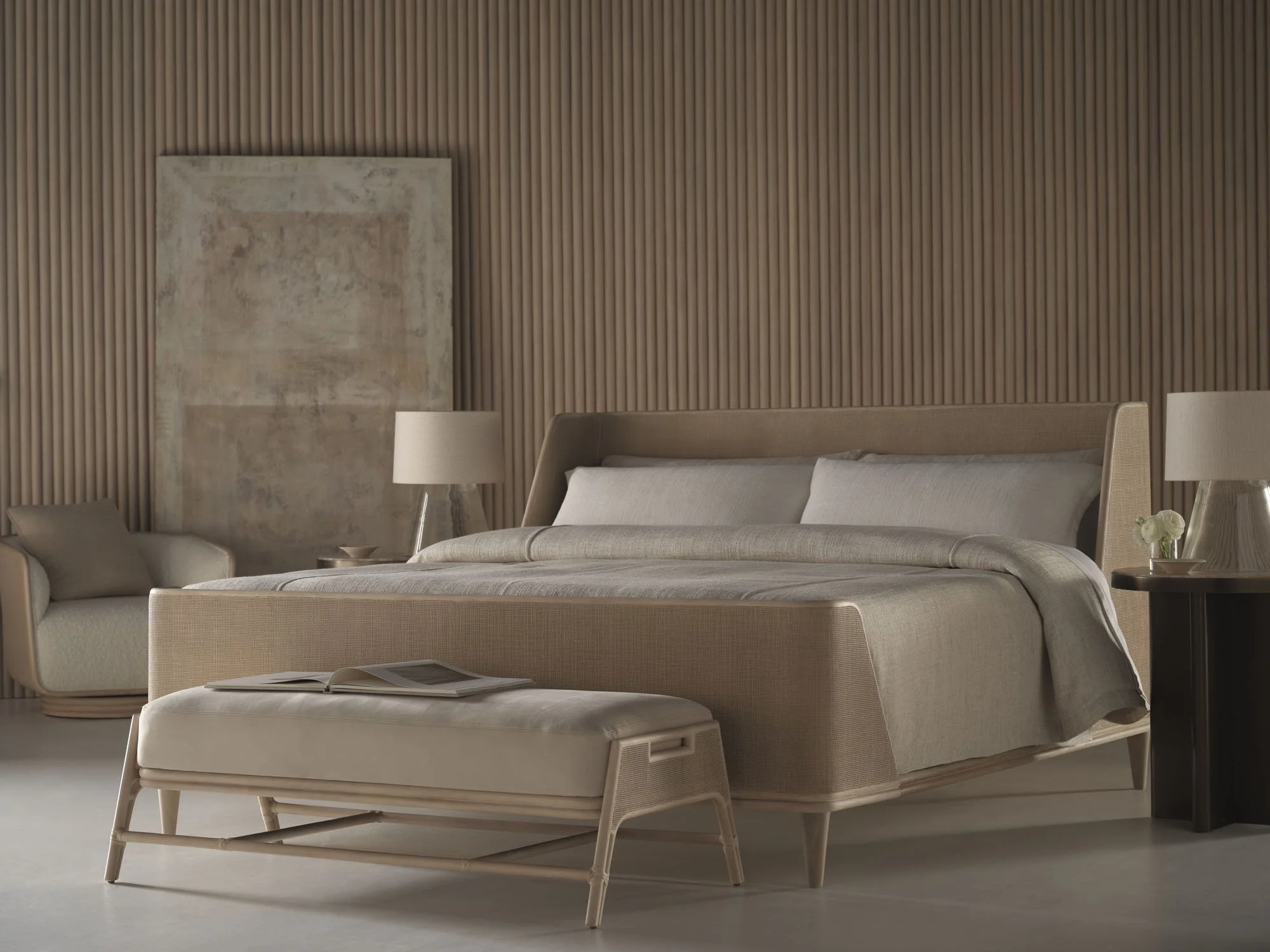
A well-resolved room reads at roughly the same pitch from ten feet and from arm's length. Material is the connective register — not pattern, not palette.
The international case for the heritage house.
Designers working between London, the Gulf and West Africa describe a similar brief — pieces with documented authorship, heritage houses over mass production, objects that read as inherited rather than seasonal, finish programmes that allow a piece to belong to a specific scheme.
The American houses tend to meet that brief because their workshops were never quite industrialised away. Bench-made, named maker, traceable supply — the conditions a future heirloom needs are largely still in place.
Made for the project, not pulled from the shelf.
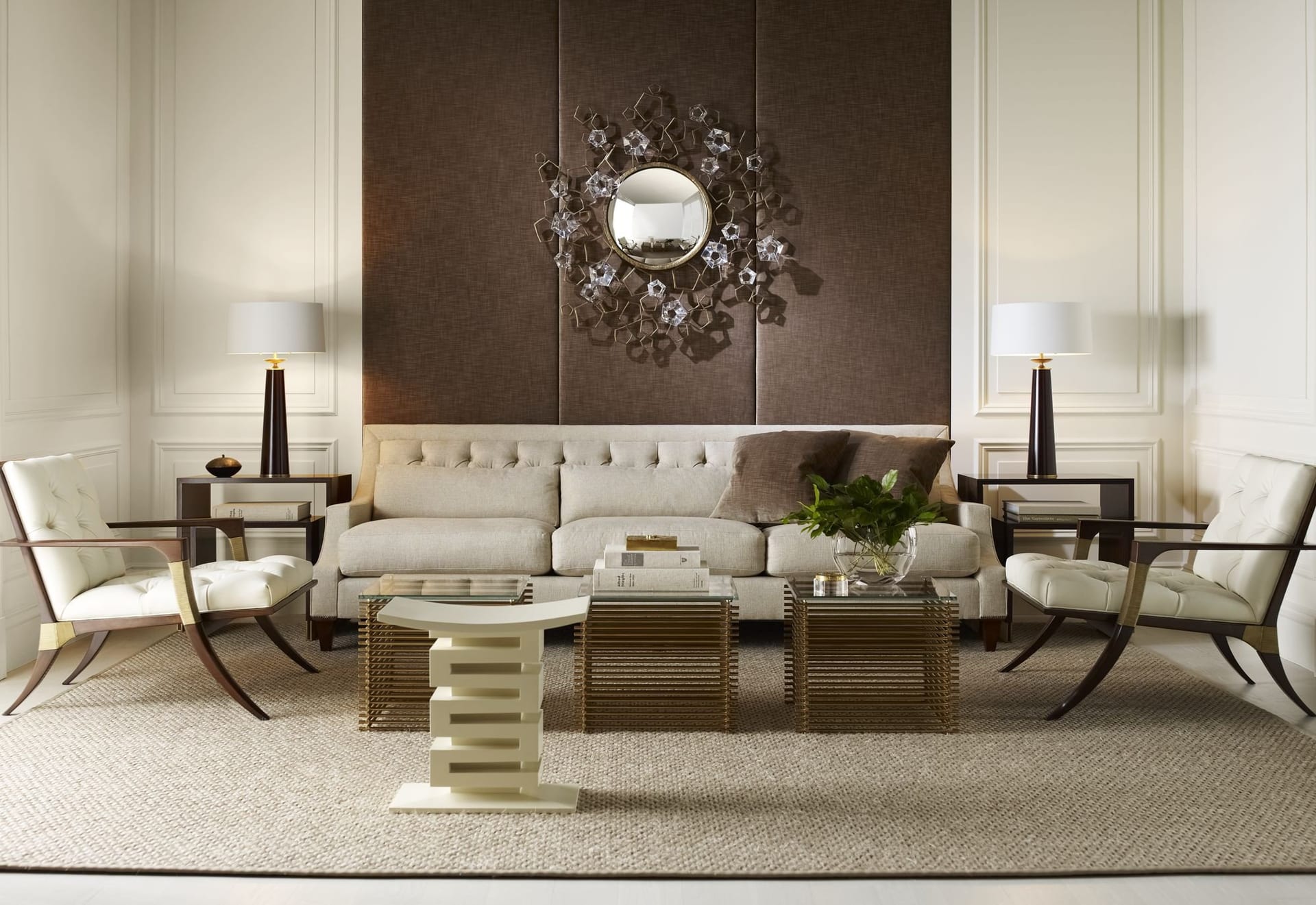
Specification in 2025 assumes adaptation — tiered finish programmes across wood, metal, stone and upholstery, bespoke dimensions, configurable casework, faster lead times on made-to-order. The level of accommodation that was once associated mostly with Italian ateliers is now a working condition of the American houses.
The practical effect for UK and international designers is that an American piece can be shaped to a specific room without the project waiting on the next season's catalogue.
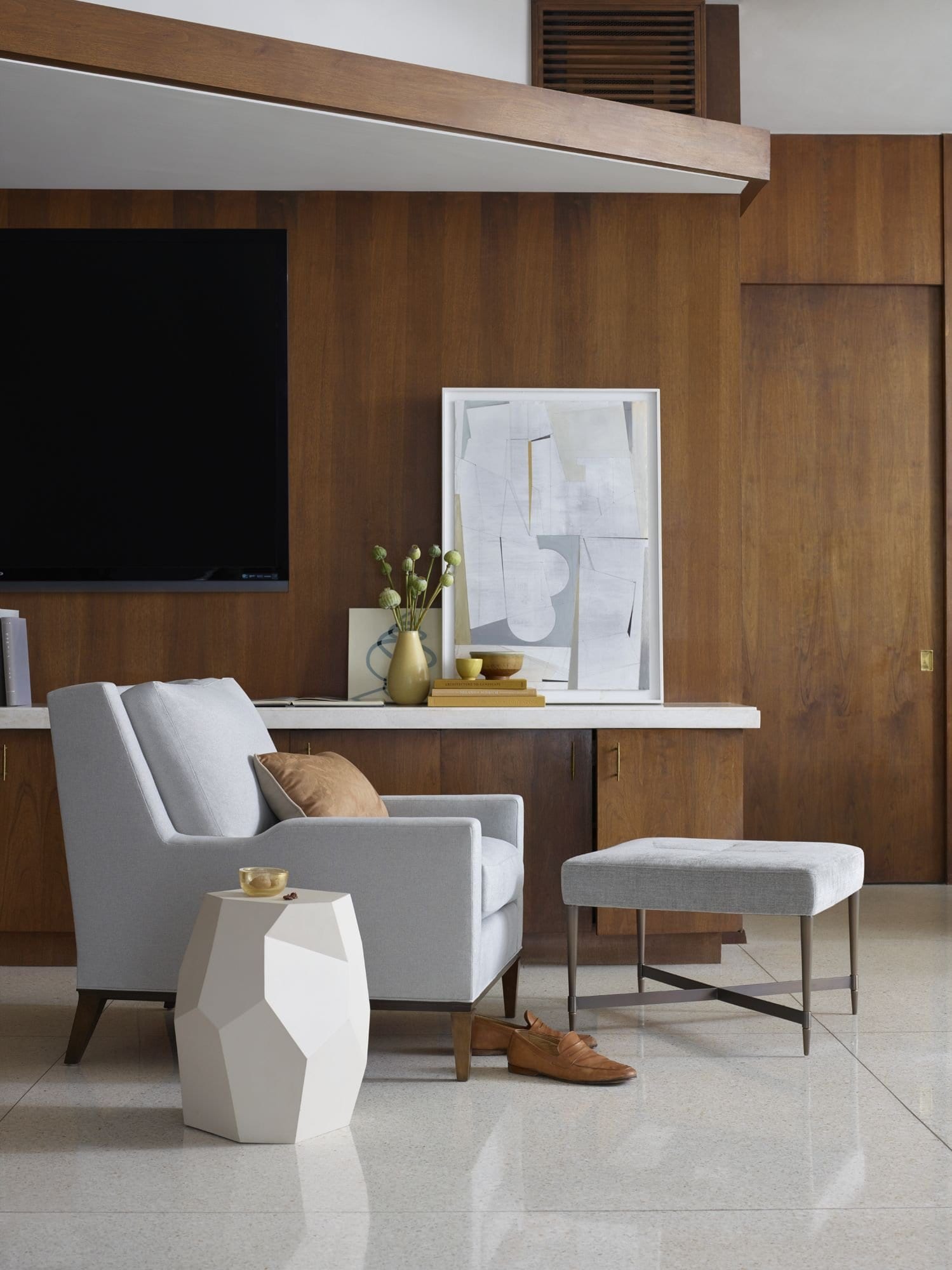
The project, rather than the product, has become the unit of work. Specification reads closer to authorship than to selection.
Less glitter, more grain.
Whether the project is a Knightsbridge townhouse or a Riyadh penthouse, the working principles tend to overlap: fewer statements, more material; less ornament, more proportion; global visual literacy held to local craftsmanship.
Most of the work now reaches London, Dublin and the Gulf through a small number of representatives — Valley & Laurel among them. The thread that runs through is the same: rattan, onyx, rawhide, hand-woven fibre, specified for the kind of room that is meant to outlast its specification.
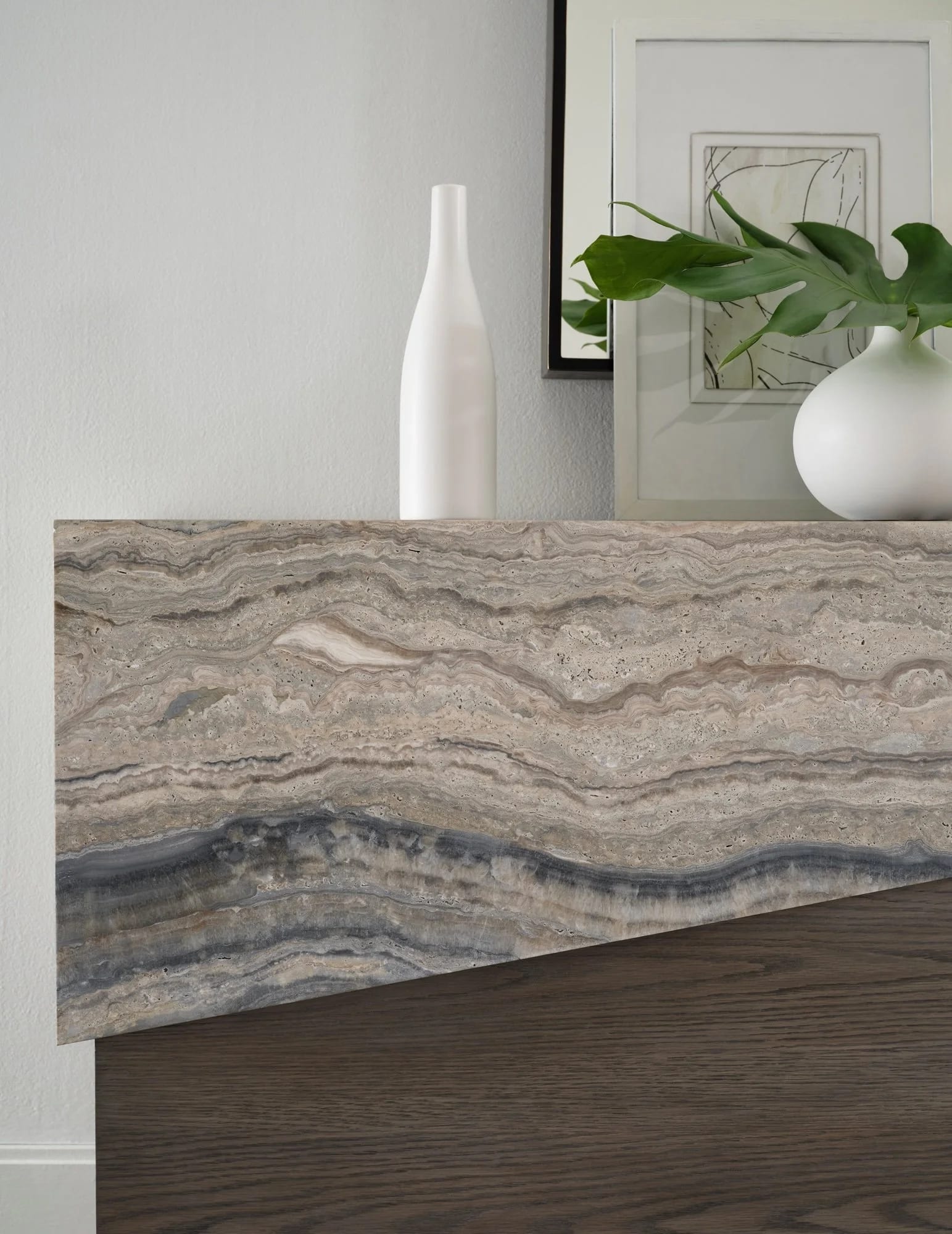
The next decade of this work will probably not be measured in surface. It will be measured in the houses that still know how to make things by hand.