.png)
Texture, quiet surfaces
and the architecture of calm.
On grasscloth, handwoven fibre and the slow architecture of rooms that prefer depth to declaration — a quiet argument for surface as structure.
The most considered rooms of the last few years tend not to announce themselves. They are quiet in the literal sense — fewer objects, lower contrast — but the deeper quietness is in the surfaces. The walls hold the light differently. The window does not interrupt the room so much as belong to it.
There is a temptation to call this minimalism, which it is not. Minimalism, in practice, tends to be the absence of things; what is happening in the better contemporary interior is closer to a deliberate presence of material. The room is restrained, but it is not empty. It has been given depth in another register — through texture rather than ornament, through surface rather than statement.
Texture, in this sense, is not a finishing touch. It is the quietest part of the architecture.
A calm room is rarely calm because it is bare. It is calm because its surfaces have been given enough depth to absorb the day.
The room as a study in material depth.
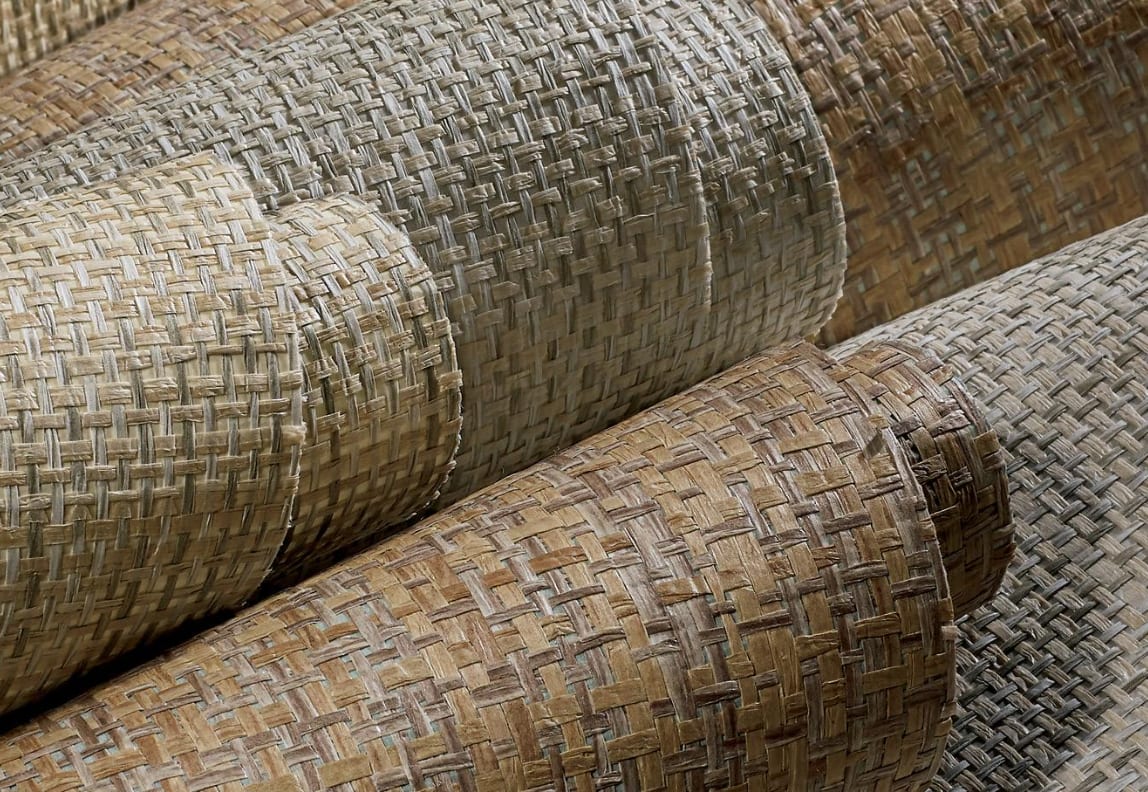
Walls are the largest surface in most rooms, and for a long time the assumption was that they should be the quietest — painted, flat, deferential. That assumption is loosening. A wall finished in grasscloth or a handwoven paperweave behaves very differently to a wall in emulsion. It reads as fabric rather than as background. The eye registers fibre direction, the small irregularities of the warp, the variation of dye uptake along a panel. None of it shouts. All of it gives the room something to settle against.
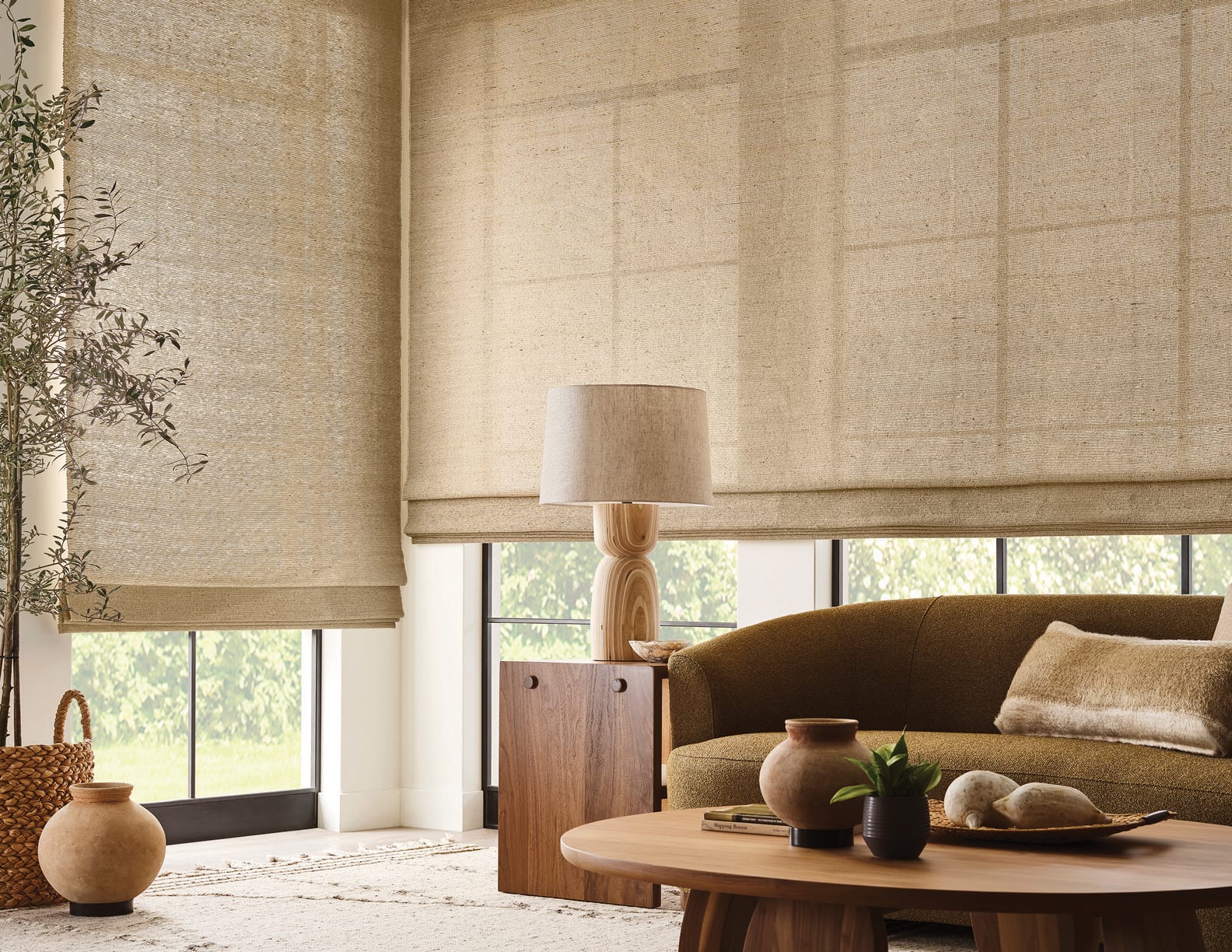
The same is true at the window. A handwoven shade is the opposite of a flat blind: where the synthetic panel cuts daylight cleanly into a controlled rectangle, the fibre shade diffuses it, lifts its temperature, and lets a measurable softness back into the room. It works less as a covering and more as a filter — closer in spirit to a paper screen than to a curtain.
Read together, a textured wall and a textured window stop behaving as separate surfaces. They begin to read as a single tactile envelope around the room. That envelope is what we tend, slightly imprecisely, to call atmosphere.
How natural materials hold a room together.
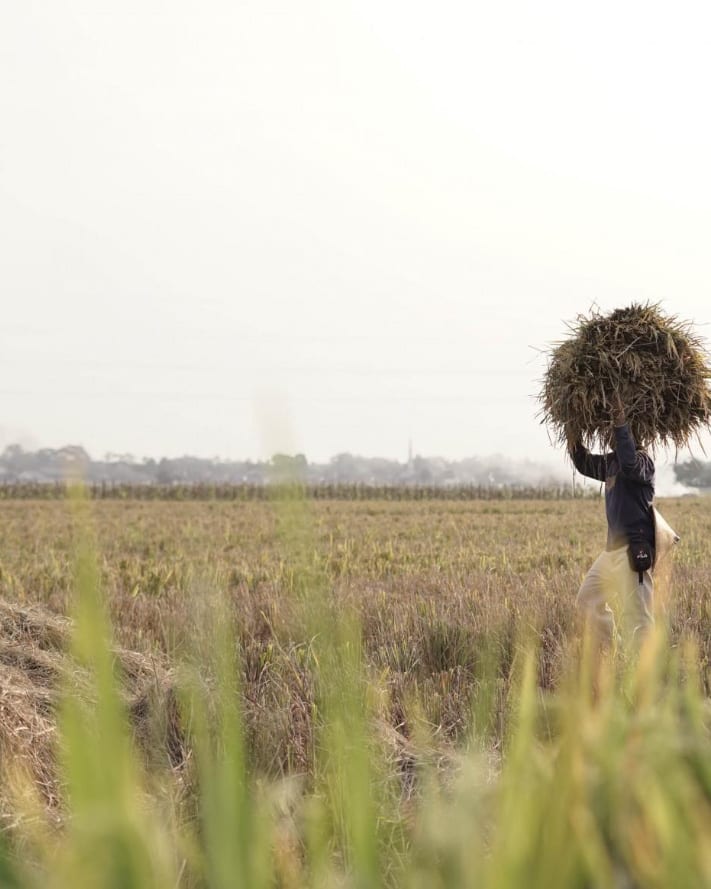
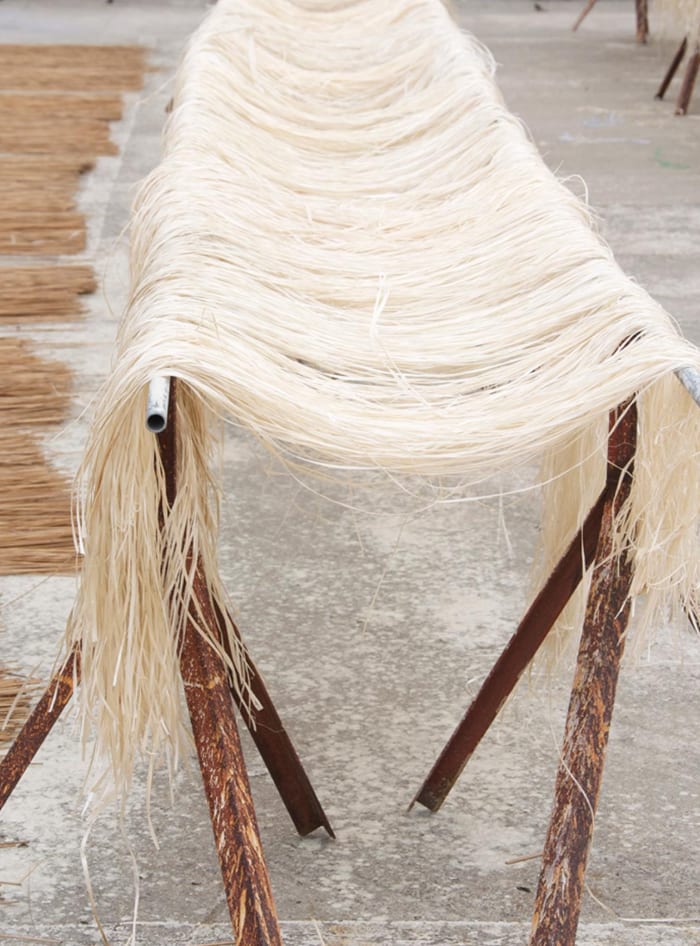
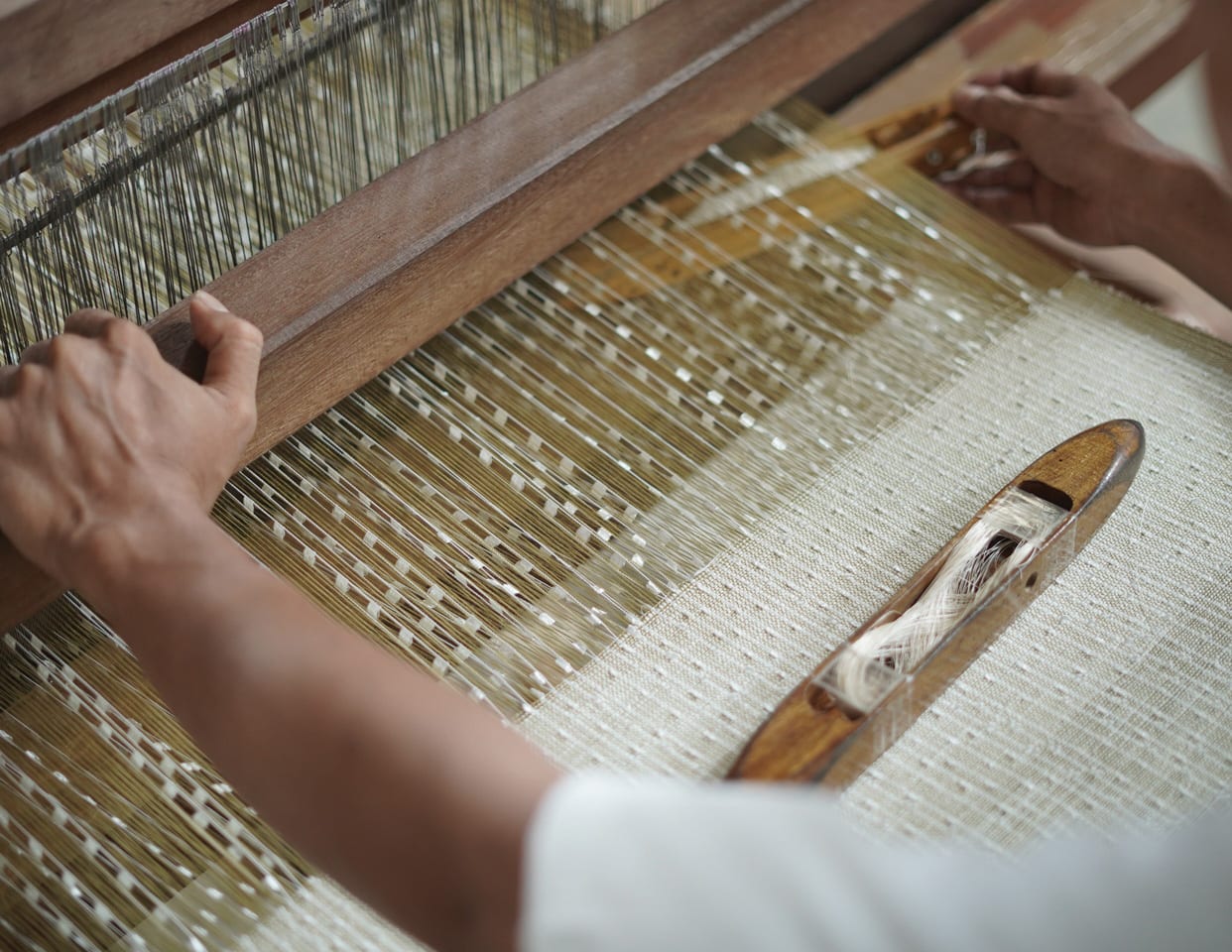
Natural fibre — abaca, sisal, jute, grass, paper-yarn — is not a uniform material. It carries variation from harvest to harvest, and from hand to hand at the loom. In a finished panel that variation reads as quiet movement across the surface, the way the grain of a sawn board reads against lamplight. It is, in the simplest sense, why these materials are restful to live with. They give the eye somewhere to go without asking for attention.
They also age unusually well. Synthetic finishes tend to begin at their best and slowly decline; natural fibres tend to do the opposite. Daylight warms them. Hands soften them along the edges that are touched most often. A wall of grasscloth that has lived in a room for ten years carries a record of that ten years — gently, without damage — and the room feels older than it is in the best sense.
This is, in the end, what is meant by a room that ages well. It is rarely a question of style. It is a question of whether the materials are the kind that deepen, or the kind that merely wear.
Why subtler rooms tend to last longer.
The decorative interior — heavy with pattern, with statement furniture, with a clear seasonal voice — tends to date in the way that fashion dates. The textured interior tends not to. The reason is partly visual and partly structural. Texture is a slower register; it does not depend on a moment. A wall of handwoven fibre in 2026 belongs to the same continuous tradition as a tatami panel, a tea-house screen or a nineteenth-century paperhanging. There is no current edition of it to date away from.
Restraint, here, is not a stylistic preference. It is a practical decision about longevity. The fewer decorative gestures a room is asked to carry, the more weight each of its surfaces is given. A quieter scheme demands more of its materials — and rewards better ones — which is why considered interiors tend, almost without exception, to spend their budget on the things you touch and the things you live against rather than on the things you look at first.
Houses such as Hartmann&Forbes have built an entire practice around this idea. Four decades of handweaving at the loom in the Pacific Northwest, refined into windowcoverings and wallcoverings made one panel at a time, exist in service of a single proposition: that the most important decorative decisions in a room are the ones that do not register as decoration at all.
Calm is not the absence of material. It is the presence of the right ones, held quietly in place.