.png)
The emotional architecture
of light.
A short meditation on the way natural light changes the behaviour of materials, the temperature of rooms, and the emotional life of a house through the course of a single day.
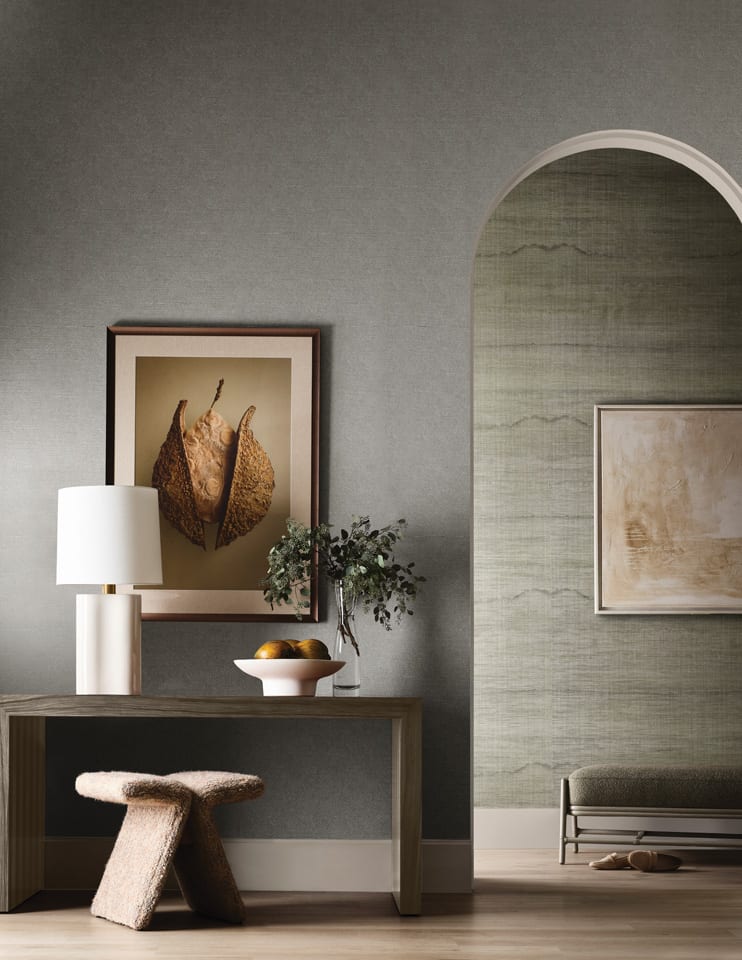
A room is, in the end, mostly light. Architecture decides where the light enters and how much of it is allowed in; materials decide what happens to it after that. Everything one tends to attribute to atmosphere — calm, warmth, depth, intimacy — is really a description of how the surfaces of a room are behaving under whatever quality of light is currently falling on them. The room is not a static object. It is a slow moving composition that the day rearranges from morning to evening, almost without help from anyone living inside it.
The houses that hold attention longest tend to be the ones that have been designed with this in mind. Not in any showy way — most of the architectural decisions involved are invisible to the photograph — but with a real attentiveness to how the room is going to be lit at six in the morning, at noon, at four, at eight. The materials that go into such a room are chosen, in large part, for the way they take light across that range. They are chosen, in other words, to behave interestingly through a day rather than to look correct in a single image.
Filtered, not flooded.
The single most consequential decision in a contemporary interior is how much light is allowed to enter unfiltered. The default of the previous decade — wide unobstructed glazing, often floor-to-ceiling — produced a particular kind of room. The light, unmediated, tended to flatten everything it landed on. Texture was washed out at midday and bounced back at evening as glare. The rooms photographed brilliantly in the architect’s catalogue and tended to feel oddly uncomfortable to inhabit.
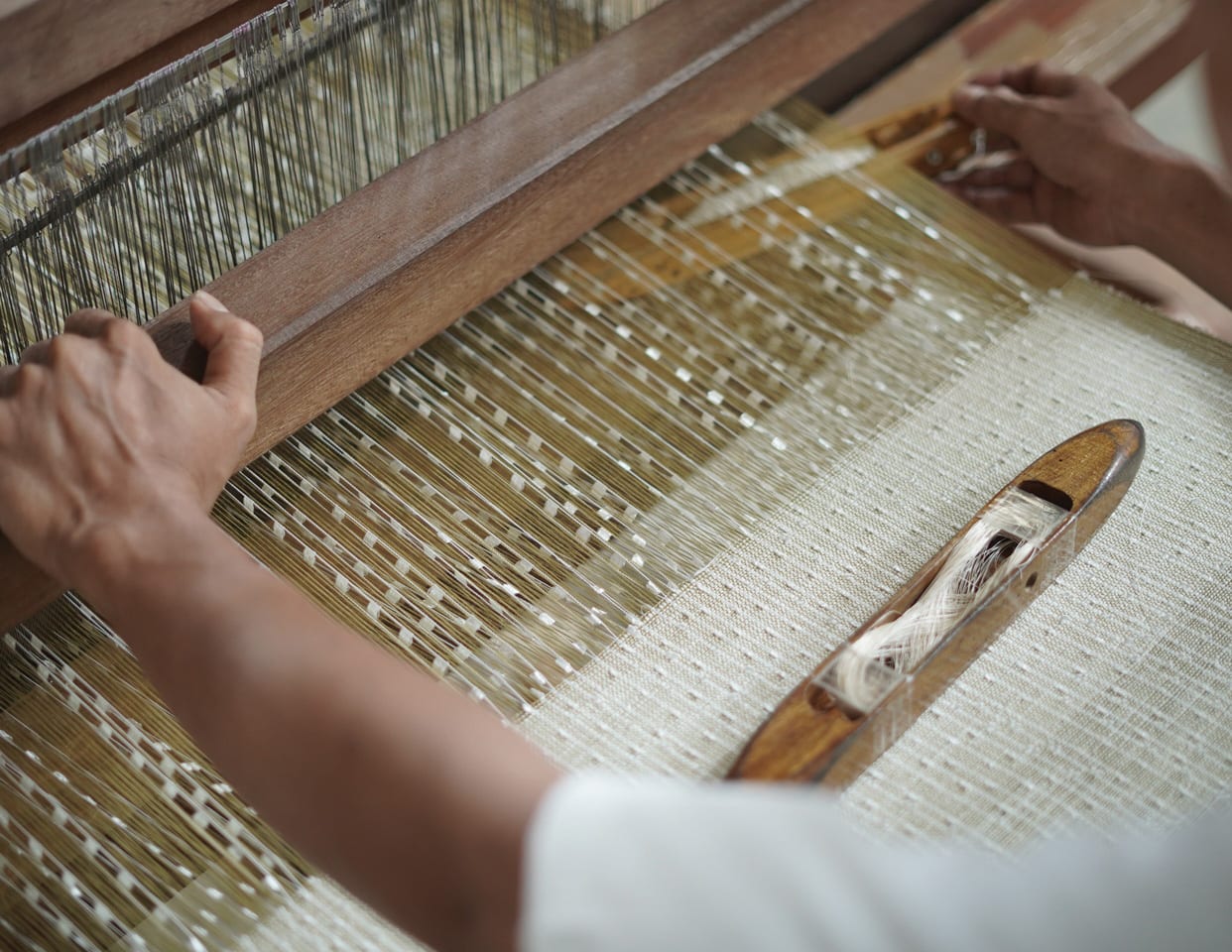
The slower interior is moving back to filter. A hand-loomed natural-fibre window covering — abaca, paper-yarn, grasscloth, woven jute — does not block light. It edits it. The fibre absorbs the harshness of midday and returns it as something warmer, softer and more diffused. It also tends to carry the colour of the day inside it. A grasscloth panel glows green in the early morning, oat in late morning, deep honey by mid-afternoon, and almost rust-coloured by sunset. The window covering is, effectively, the room’s second architectural element, after the wall.
Architecture decides where the light enters. Material decides what kind of room it becomes once it is inside.
Shadow as a material.
Shadow is a material in the same sense that fibre is a material — it is something the room is made of, and it can be specified. The depth of a shadow in a room depends on three quite particular things: the height of the ceiling, the texture of the surfaces and the quality of the light source. A flat-painted wall in a low-ceilinged room produces almost no shadow worth registering; a hand-finished plaster wall in a tall room with a deep window reveal produces shadow that moves through the day.
What good designers tend to do is design for shadow. The choice of a hand-finished plaster, of a wide-board hardwood floor with grain, of a hand-loomed fibre window covering, of a low-sheen rather than high-polish surface — all of these decisions are, among other things, decisions about shadow. The room is being asked to hold depth, and depth is carried by the small variations in surface that allow shadow to gather. A flatter, smoother room reads, in any light, as shallower than it actually is.
Matte and reflective, in proportion.
A room composed entirely of matte surfaces tends, at a certain point, to flatten. A room composed entirely of reflective surfaces tends, at the same point, to glare. The rooms that work hold the two registers in careful proportion. A predominantly matte envelope — plaster walls, wide-board oak, hand-loomed fibre at the windows, raw or sand-washed linen on the seating — is occasionally answered by a single reflective object. The bronze of a small lamp. The honed sheen of a stone-topped table. The gloss inside the well of a glazed ceramic vessel.
The reflective object, in this register, is not decorative. It is doing optical work. It catches the changing light of the day in a way that the matte surfaces around it cannot, and gives the room a small focal point of changing tone. A single bronze object on a mantel reads cool in the morning, warm by lunch, almost amber by evening. The room, through that one piece, advertises the time of day.
Morning and evening, two different rooms.
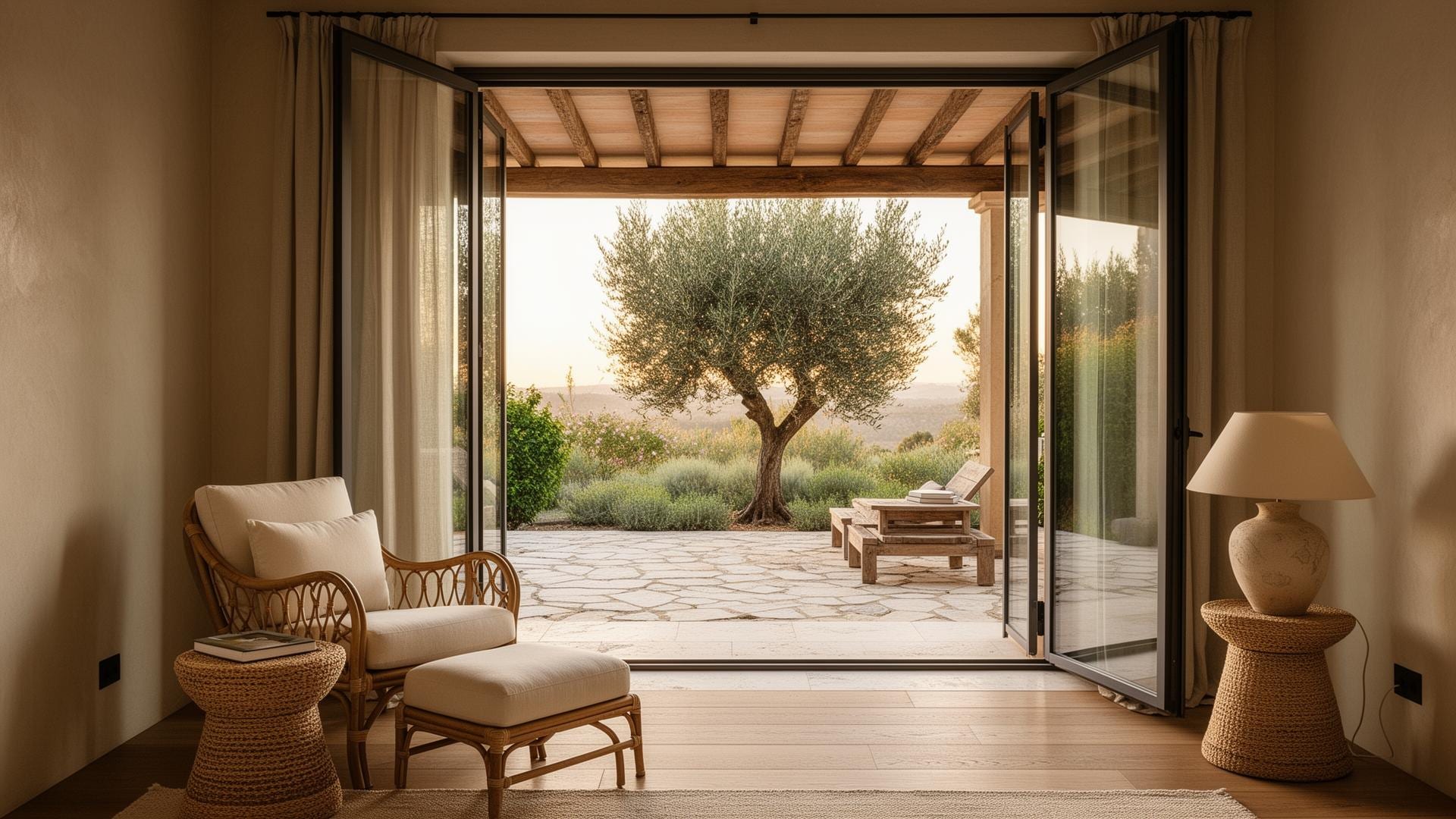
A house designed with light in mind is, in any meaningful sense, several houses. The morning version of the drawing room — cool, slightly silver, with the long shadows of eastern light falling across the floor — is not the same room one comes back to in the evening, when the western windows are lit warm and the same hardwood floor has gone almost honey-coloured. The materials have not changed. The relationships between them have. The hand-finished plaster that read pale and chalky at eight reads warm and almost buttery at six.
The houses that hold up emotionally are the ones that have been planned with these two readings in mind from the beginning. The rooms intended for morning use are oriented for morning light and dressed in materials that take it well — softer, cooler greys and oats, fibres that filter rather than flatten. The rooms intended for evening use are oriented and dressed for the warmer end of the day. The house, across the day, becomes a sequence of moods rather than a single mood, and the moods follow the light rather than the calendar.
Architecture as atmosphere.
The phrase architecture as atmosphere is doing a lot of work in studio conversations at the moment. What is meant by it, more or less, is that architecture and atmosphere are not separate stages of a project. The placement of a window is, simultaneously, a structural decision and an emotional one. The choice of a wall finish is, at once, a material decision and a decision about what the room will feel like at four in the afternoon. The texture of a window covering is both a fibre choice and a decision about the temperature of the early evening.
The houses that take this seriously tend to involve fewer decorative decisions, not more. There is rarely a strong accent colour. There is rarely a single statement object. The room is not asked to perform a particular look. It is asked, instead, to behave well across the hours of the day — to take morning light kindly, to hold the long shadows of late afternoon, to soften under lamp-light in the evening. The material decisions are made in service of this behaviour. The room, in the end, is a quiet collaboration between the architect, the maker of the window covering, the plasterer, and the sun.
A house designed this way is unusually patient with its occupants. It does not need to be looked at to be appreciated. It is, in the most literal way, atmospheric — and the atmosphere is made, day after day, by the slow collaboration of light and material that the room was quietly built to support.
Light is the one material no designer can install. Everything else in the room is, in part, a decision about how to receive it.