.png)
Beyond
indoor–outdoor living.
A short argument against the cliché of bringing the outdoors in — and for the slower, more architectural idea of designing inside and outside as one continuous material proposition.
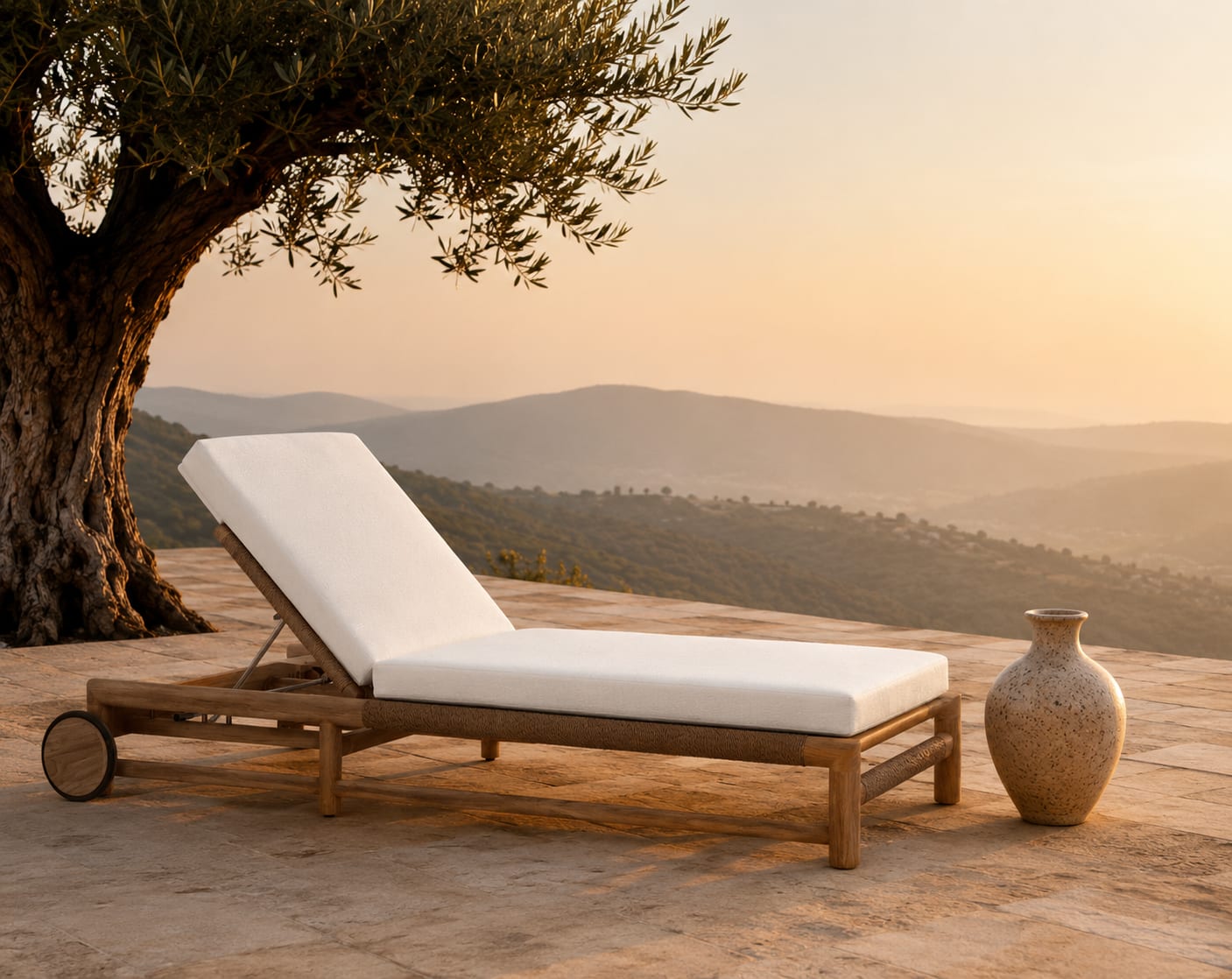
The phrase indoor–outdoor living has had an exhausting decade. It has been used to mean anything from a sliding door to a potted olive tree, and it has, in the process, lost any architectural specificity it might once have carried. The most interesting work being done now, on both coasts of the United States and across the Mediterranean, is essentially a quiet rejection of the phrase. The boundary between inside and outside is not, in the houses that matter, being blurred. It is being designed away.
The difference is real and it is structural. To bring the outdoors in is, by definition, an act of importation. The interior remains the interior; nature is invited as a guest; the boundary is preserved by the act of crossing it. The newer method works at a different scale entirely. The interior and the exterior are conceived as a single continuous environment, using the same palette of materials, lit by the same overall plan, intended to be lived in without much regard to which room one is in at a given moment.
Continuity of material.
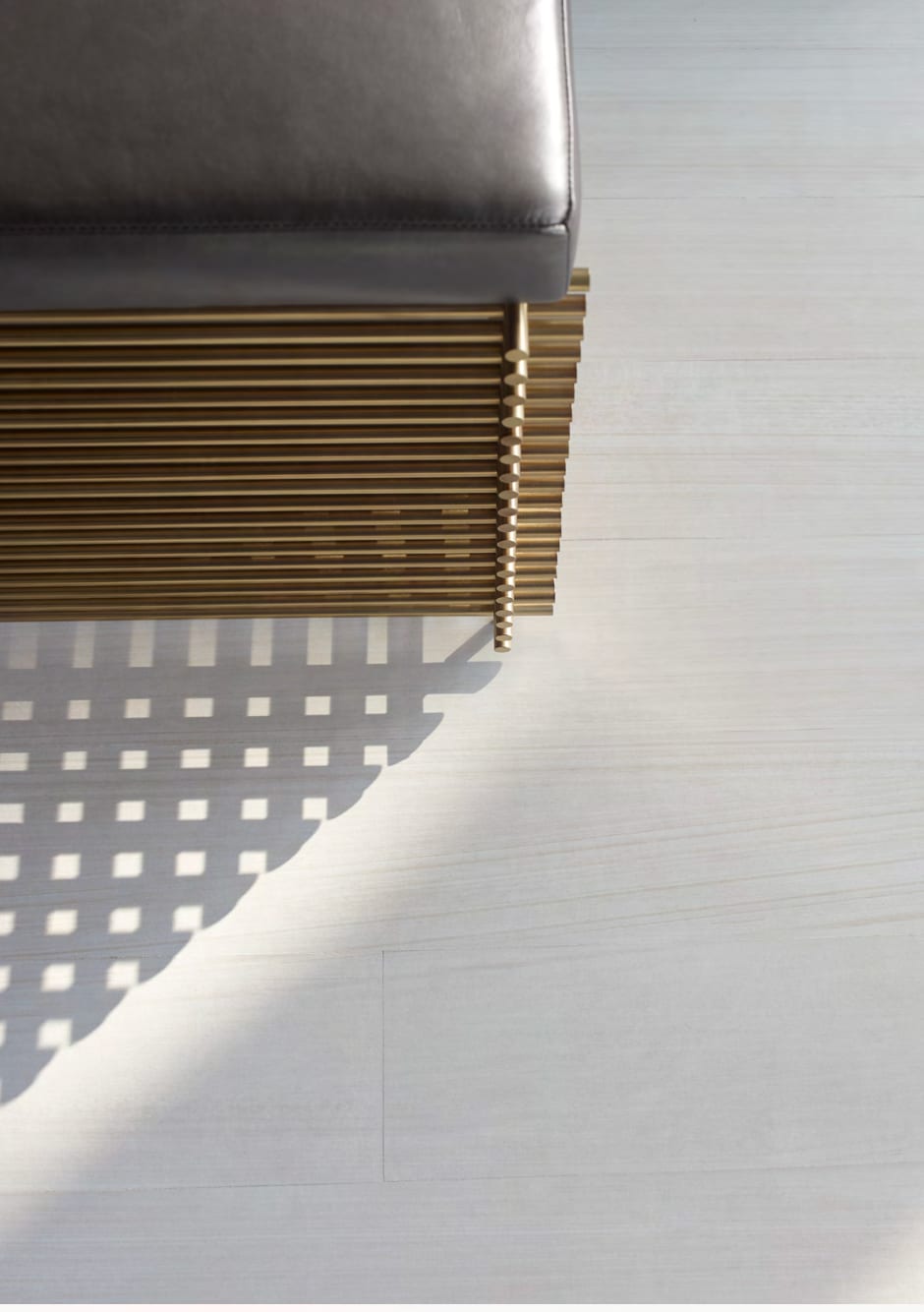
The first move, almost always, is material. The same stone flows from the loggia onto the kitchen floor. The hand-finished plaster of the interior wall continues, in a slightly more weather-tolerant version, around the courtyard. The hardwood ceiling of the family room moves out under the eaves of the terrace. The rattan and woven cane of the interior chairs reappears, in marine-suitable variants, on the exterior loggia. The eye finds no transition because, materially, there is none.
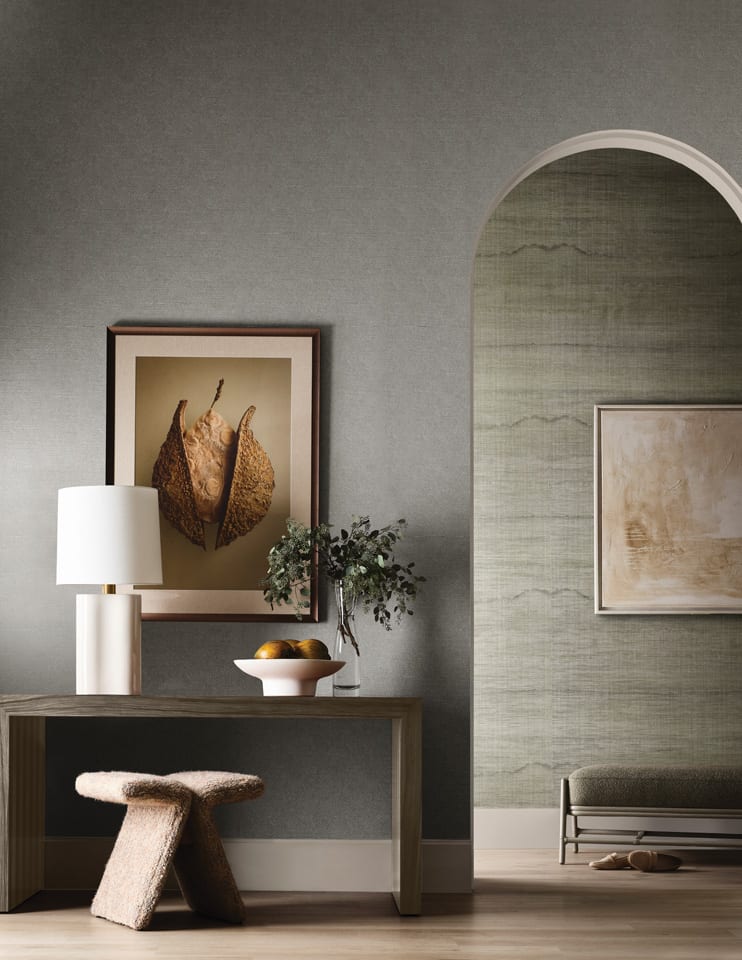
This is not, as it sometimes appears in renderings, a question of dramatic glazing. The houses that work this way often have quite traditional fenestration — paired French doors, deep windows, an arched opening or two. The continuity is not achieved by removing the wall. It is achieved by making sure that the materials on either side of the wall belong to the same family. The wall, in this case, is allowed to remain a wall.
The boundary is dissolved by what the materials share, not by how much glass has been used.
Outdoor rooms as actual rooms.
The other shift is in how outdoor space is conceived. The terrace, the loggia, the courtyard, the deep porch — these are no longer being treated as outdoor versions of the interior. They are being treated as rooms in their own right, with their own plan, their own seating arrangement, their own lighting plot, their own intended use. The outdoor sitting area is not a relocated drawing room. It is a sitting room that happens to be outside, with its own atmosphere and its own rules.
What this changes, in practice, is the furniture. The oversized synthetic sectional that dominated the outdoor market for a decade has been steadily displaced by something quieter and more architectural. Woven rattan and cane in marine-grade constructions, hand-built teak frames, woven natural-fibre cushions, occasional stone-topped tables — the register is identifiably the same as the interior, only dressed for weather. The room reads as a room.
Mediterranean influence, California restraint.
The geographies that have always understood this kind of living — coastal Italy, the south of France, the Catalan coast, the Greek islands, and quite separately, the older Spanish-influenced parts of California — are doing the influencing now. The houses being built in Montecito and Carmel are looking, more and more openly, at the courtyards of Apulian masserie and the loggias of Provençal farmhouses. The houses being built around Cap d’Antibes are looking, quite freely, at the restraint of Northern California.
What both traditions share is a refusal to overdress the outside. The Mediterranean courtyard tends to be furnished with a single long table, a few cane chairs and a strong shade structure. The California outdoor room tends to involve a low woven seat, a few stone-topped tables and a great deal of architectural planting. Neither tradition treats the terrace as an opportunity to perform; both treat it as a place to sit and read for an afternoon. The new outdoor interior, in serious work, takes its cues from these traditions rather than from the resort idiom that dominated the previous cycle.
Tactile outdoor furniture, weathered finishes.
The outdoor pieces being specified for the houses that matter are unmistakably tactile. Rattan and cane are central, in part because they have always been used outside in warmer climates and in part because they read in the same family as the interior fibre work. Hardwoods finished to weather openly — teak, oiled iroko, and increasingly thermally modified ash — are favoured over painted or sealed surfaces. Stone is honed rather than polished. Metals are allowed to oxidise; bronze, in particular, develops the kind of patina outdoors that no manufacturer can imitate inside.
The rejection of the synthetic outdoor lounger is, in a sense, the moment the outdoor room rejoined the rest of the house. The materials are now, in real terms, the same materials — only the finishes have been adjusted for the climate. The room reads as a room because nothing in it is asking to be a different category of object.
Emotional softness, outside.
The houses doing this best tend to introduce an emotional softness into outdoor space that the older idiom never really attempted. The terrace is lit for the evening as carefully as the dining room. The loggia is dressed with loose linen as readily as the bedroom. The garden room — a term being used again in serious practice, after a long absence — is allowed to feel as composed and as cared-for as any of the rooms inside.
What this produces is, in the end, a quite different relationship to outdoor space. It is no longer treated as an event — the house, plus an unusually nice afternoon — but as a continuation of how the house is actually lived in. The boundary between inside and outside, in the houses getting this right, is something one notices only on the rare day it actually rains.
The future of outdoor design is not louder furniture. It is the same materials, used a few feet further out.