.png)
The end of
decorative excess.
The interior conceived primarily as a statement is, very quietly, on the way out. What is replacing it is not minimalism, but something closer to material confidence.
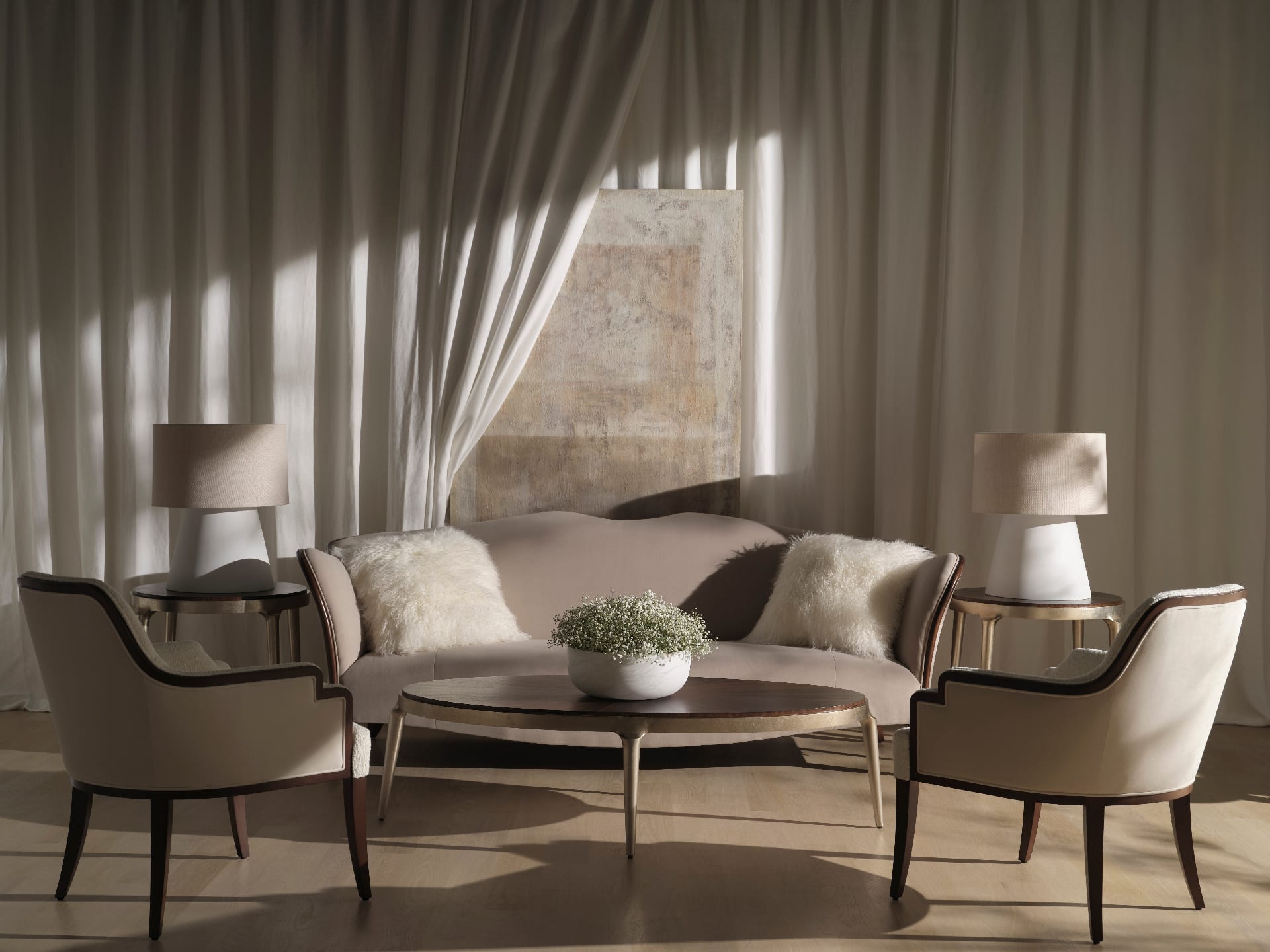
The decorative interior — the room conceived first as a performance — has had a very long run. For most of the twentieth century, and into the first two decades of this one, the assumption that an interior’s job was, before all else, to make a visible statement was rarely seriously questioned. The questions that were asked tended to be about which statement to make. Was the room to be aggressively contemporary, classically formal, theatrically maximalist, severely minimal? The categories shifted; the underlying premise — that the room was a thing to be looked at — did not.
What is happening now, in the work of designers operating at the upper end of the market, is the slow displacement of that premise. The room is no longer being conceived as a thing to be looked at. It is being conceived as a thing to be lived in, slowly and at length, by people who have already had enough of being looked at in their professional lives. The room is, more or less explicitly, being asked to be the opposite of a stage. The change in brief is not always articulated in those words, but it is unmistakeable in the rooms that emerge.
Restraint without the chill of minimalism.
The instinctive reading of a less decorative interior is that it must be a more minimal one, and the rooms now being produced make it quite clear that this reading is wrong. The new register is not minimal. The rooms are not empty; the surfaces are not bare; the walls are not white. There is, in fact, more material in these rooms than in the dramatically-decorated rooms they are replacing. What there is less of is ornament — the small, repetitive decorative decisions that, in the older idiom, did the work of announcing the room’s seriousness.
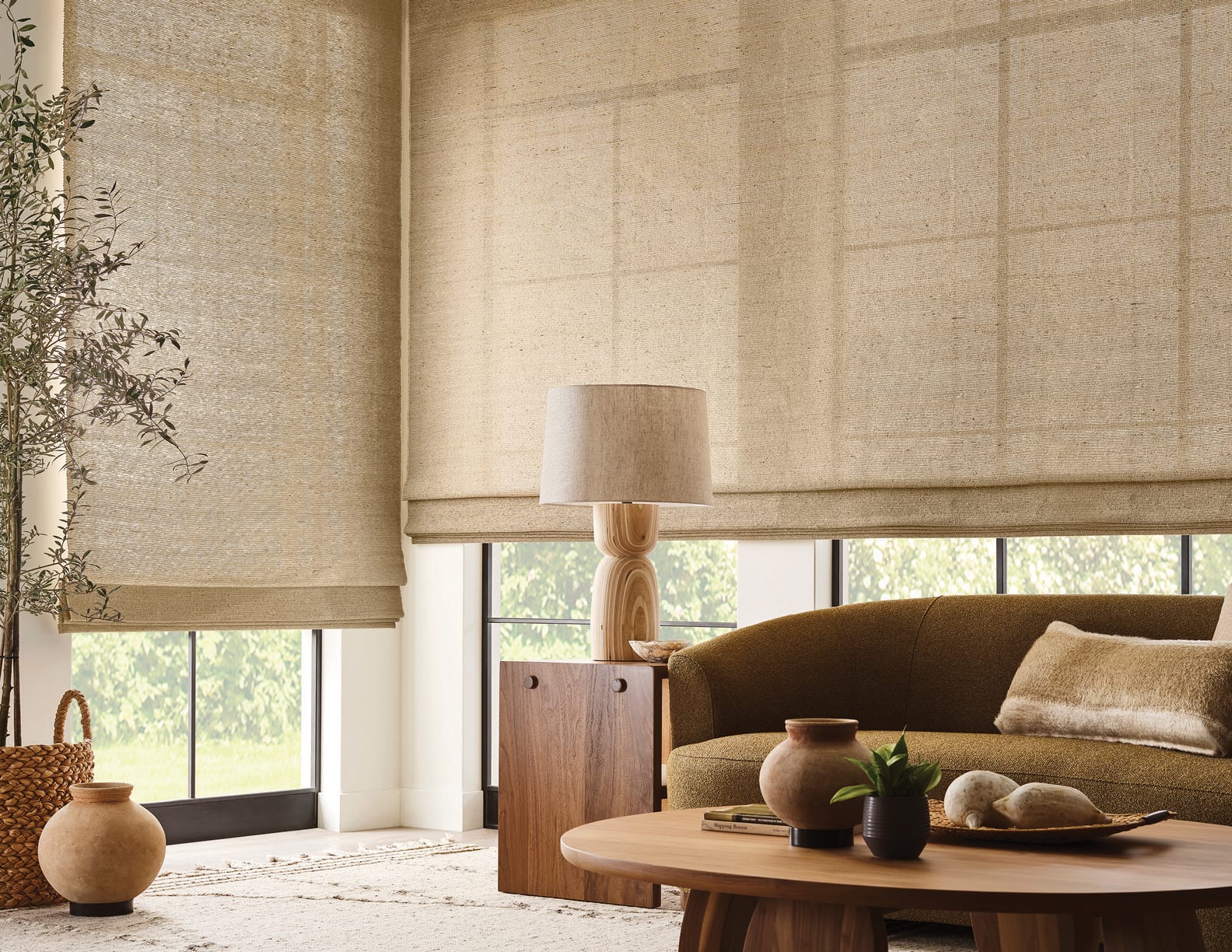
The replacement is texture. A room that, twenty years ago, would have carried that work through patterned wallpaper, carved plaster mouldings and a great deal of figured silk will now carry it through hand-finished plaster, a hand-loomed natural-fibre wall covering, and an architectural piece of bench-made hardwood furniture. The materials are, in their own way, no less decorative — a grasscloth panel carries quite as much visual interest as a printed wallpaper — but they are decorative through depth rather than through pattern. The eye reads them more slowly and tires of them less quickly.
Restraint, in the current sense, is not the absence of material. It is the absence of unnecessary statement.
Confidence rather than performance.
A confident room and a performative room are different objects. The performative room tends to have an obvious subject — a piece of art, a fireplace, a chandelier — that the rest of the room is arranged around. The confident room rarely has one. The composition is held by the relationship between several quite quiet decisions, none of which is asking to be the protagonist. There is no single answer to the question of what the room is about. The room is, in a sense, about itself.
What this signals at the level of taste is a real maturity. The interior is no longer being asked to do the work of self-presentation that the people living in it are quite capable of doing without it. The status is not in the chandelier; the status is in the materials, the proportion and the level of craft involved in the making of every piece in the room. None of these things is read by the casual visitor. All of them are read, immediately and continuously, by the people who actually live there.
The architecture of the settled room.
A settled room — one that gives the impression of having arrived at its current configuration through a long conversation rather than a single decision — is a much more architectural proposition than a styled one. The structure has to be there. The plan has to make sense at the level of how the room is used, not how it photographs. The proportion has to hold across very different times of day. The surfaces have to wear well, because the room is intended to keep being the same room a decade from now.
This is why the work of the more thoughtful contemporary designers is, in spite of appearances, more demanding than the work of the previous generation. A decorated room can be assembled from anything, more or less, that catches the eye on the day; a settled room has to be specified from a much smaller set of materials and a much more carefully defined set of pieces, and it has to be willing to accept that several of the most-photographed elements of a contemporary scheme are simply not going to appear in the final room. Restraint is, in this sense, an act of discrimination rather than of subtraction.
Texture is what is left when ornament is removed.
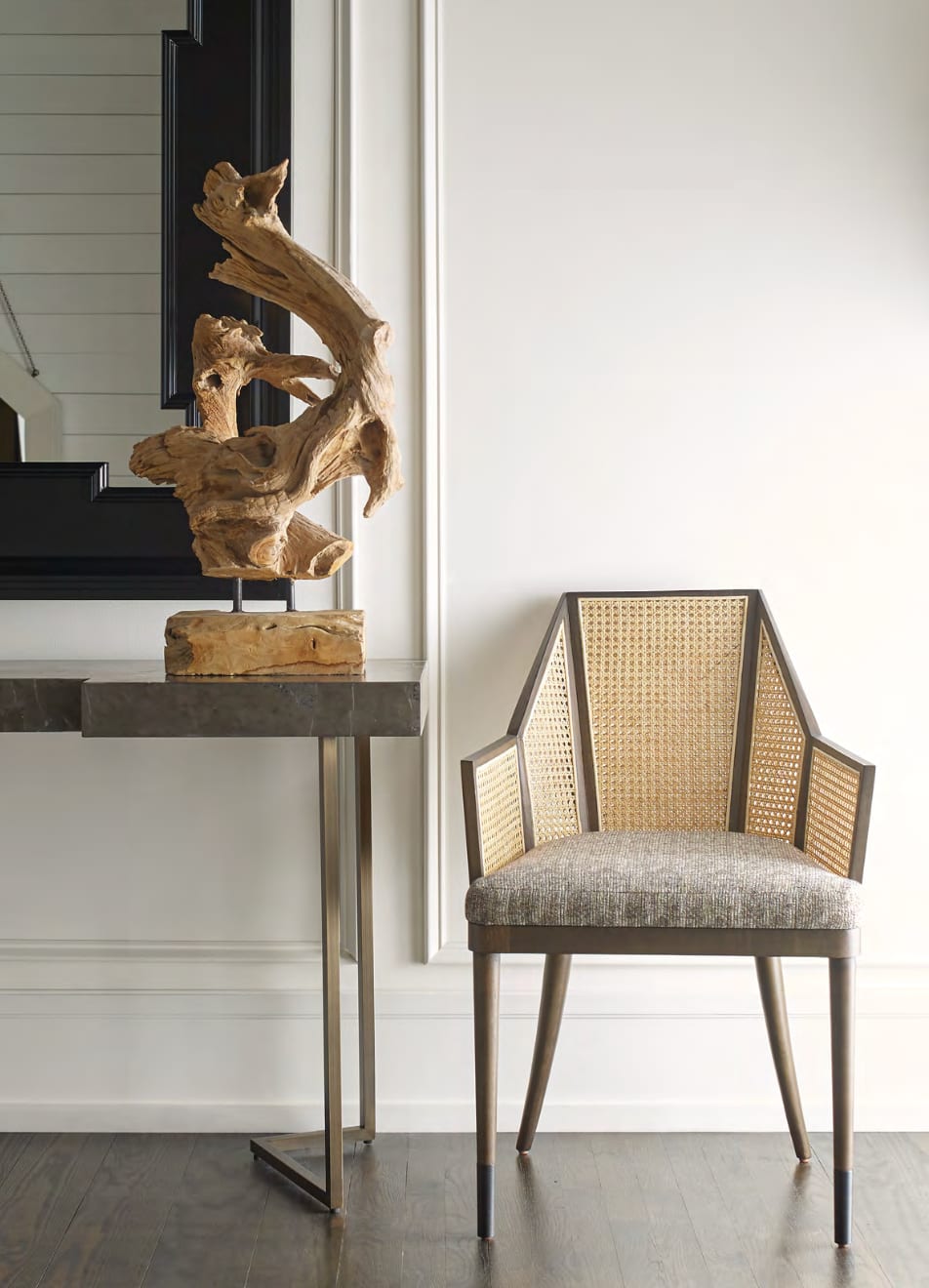
Walk through a room from the new register and the absence of ornament is striking only at first. Within a moment or two, the depth that has been put in its place takes over. A hand-finished plaster wall, looked at attentively, carries dozens of small variations of tone within a single colour-name. A grasscloth panel reads, depending on light, as three or four different shades of the same fibre. A wide-board oak floor moves in slow waves of grain across the length of a room. None of these surfaces is doing anything dramatic. All of them are doing a great deal, continuously, in a register the eye can register at any distance.
What this tends to produce is a room that is interesting to look at without being a room that demands to be looked at. The distinction matters. The decorated room asks for attention; the textured room rewards it. People can come into the textured room without having to participate in its display, and can leave it without owing it a comment. This sounds like a small thing and is, in practice, a great deal of what makes the new register feel both more modern and more humane than the older one.
Emotional sophistication, taken seriously.
The phrase that recurs in studio conversations about this shift is emotional sophistication, and the phrase is reasonably accurate. What is being designed for, more openly than at any point in recent decades, is how the room makes the people living in it feel. The brief includes calmness, ease, a quality of stillness, the absence of unnecessary stimulus. These are not the kinds of things one used to write into an interior brief, and they are now appearing in serious project documents with some regularity.
What follows from such a brief is a room of much greater subtlety than the decorated room ever achieved. The emotional weight of an interior is carried by very fine things — the temperature of the light, the depth of the shadow in a corner, the quality of silence the materials permit. None of these can be specified in a swatch. All of them are unmistakable when the room is finished. The end of decorative excess is, in this sense, the beginning of a more accurate kind of design — one that attends to what a room actually does, rather than to what it appears to be about.
The interiors that emerge from this attention are quieter than the rooms they are replacing, and they are also, almost without exception, more fully resolved. They tend not to be the rooms one talks about most loudly on leaving. They are the rooms one talks about, instead, two months later, on a quieter occasion, when the conversation turns to where one would actually like to be sitting. That, in the end, is the more interesting measure.
The interior’s job is no longer to make a statement. It is, much more quietly, to make a place.