.png)
Hartmann&Forbes,
and the question of light.
On grasscloth, abaca and the way a hand-woven window covering quietly changes the temperature of a room — and tends to keep doing so for the life of the building.
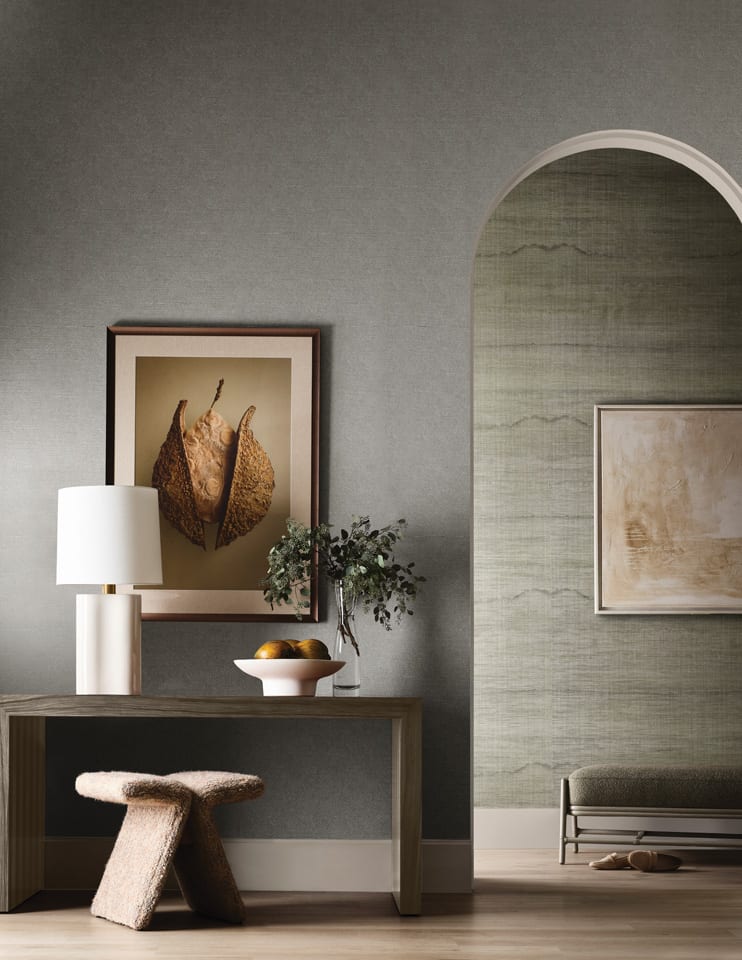
A window covering is rarely thought of as architecture. In a room dressed by Hartmann&Forbes it tends to behave like one — the quietest structural element in the scheme, and the surface that decides how the room is read.
The house works in hand-woven natural fibre — grasscloth, abaca, jute, paper-yarn, sisal — drawn into shades, draperies and wall coverings on bench-built mechanisms. Four decades of work have been spent refining a single discipline: fibre, weave and finish, calibrated to the light a particular room actually receives.
The result is a window covering that does not announce itself. It tempers daylight rather than blocks it, and warms the wall rather than dresses it. The room is held by material, not by ornament.
Light is the first material in a room. Everything else is specified against it.
Grasscloth, abaca, and the discipline of weave.
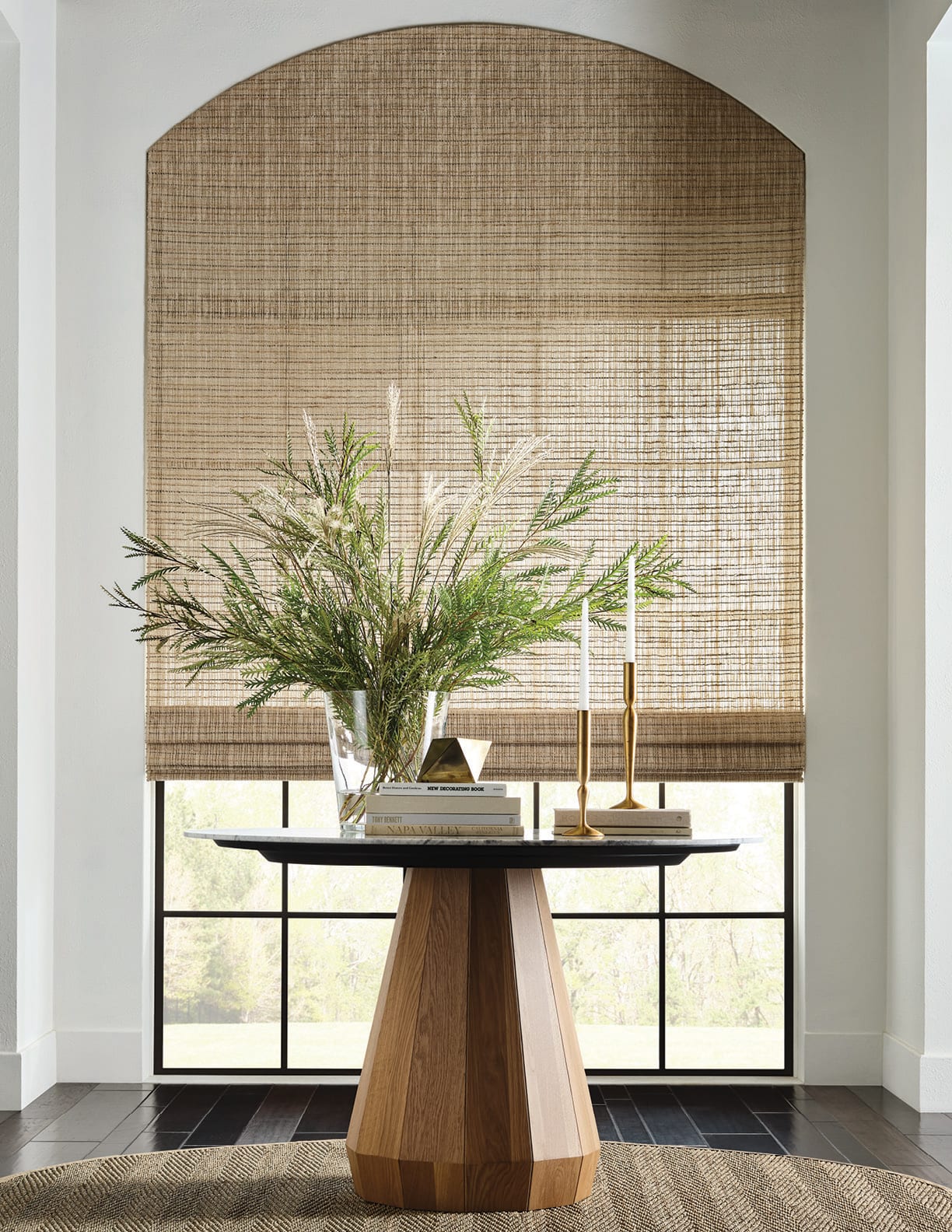
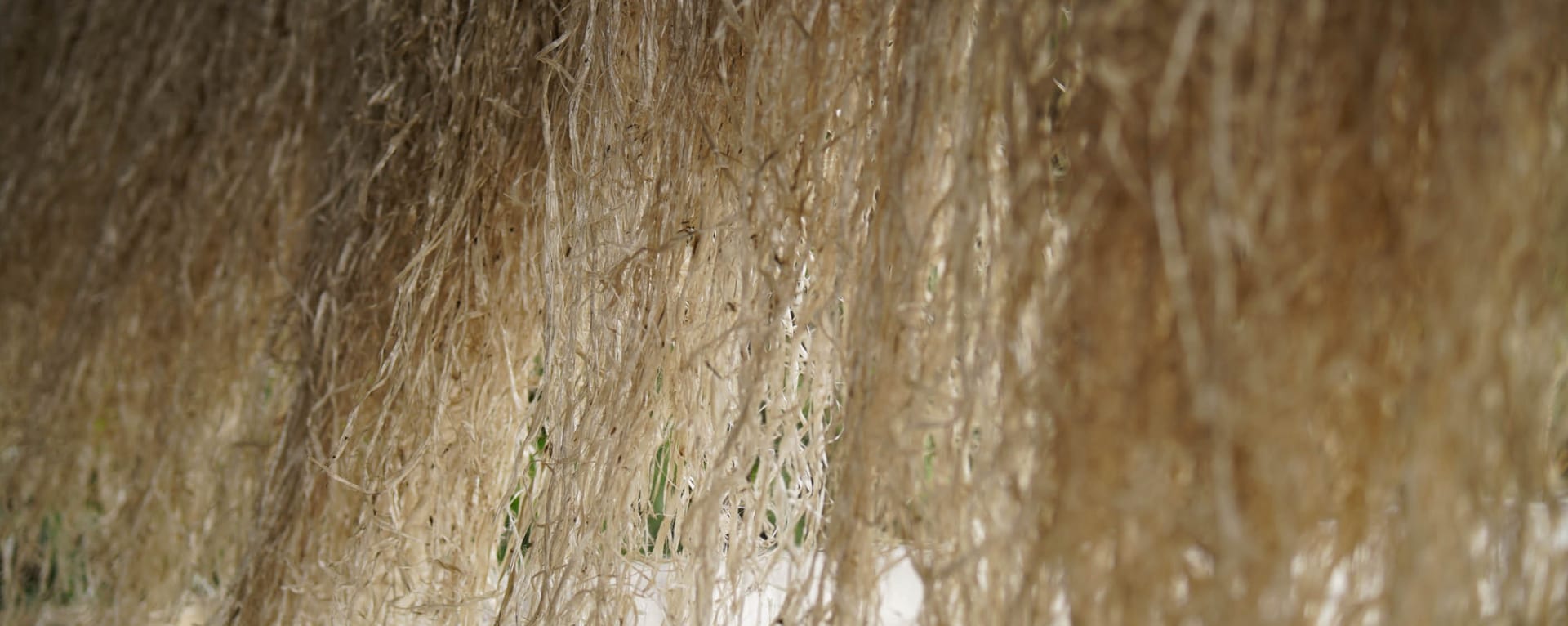
Each fibre answers a slightly different question. Grasscloth — spun and woven by hand — gives a low, warm filter; daylight passes through it carrying the temperature of late afternoon for most of the day. Abaca, drawn from the leaf-stalk of a banana relative, weaves to a tighter, more architectural plane and reads as a quiet textile wall. Jute and paper-yarn sit between the two, calibrating openness against weight.
Weave is the second decision. A loose plain weave admits and softens; a tight twill closes the room down by a degree. Specified correctly, a single shade will shift the apparent colour temperature of a room by hundreds of kelvin without anyone touching a lamp.
What a window covering actually does.
A correctly specified shade is doing four things at once: governing luminance, governing colour temperature, adding acoustic softness, and changing the tactile reading of the wall around the window. The first two are obvious; the second two are most of the reason a room with hand-woven fibre at the window feels calmer than one in synthetic flat-panel.
The shade trims the high end of the daylight curve, removes the cool blue cast of overcast hours and absorbs a measurable portion of the room's reverberation. The hand-woven surface also extends the material vocabulary of the room — woven fibre at the window reading against woven fibre underfoot, against the grain of bench-made hardwood, against the patina of cast bronze.
Bench-built mechanisms, made to last the building.
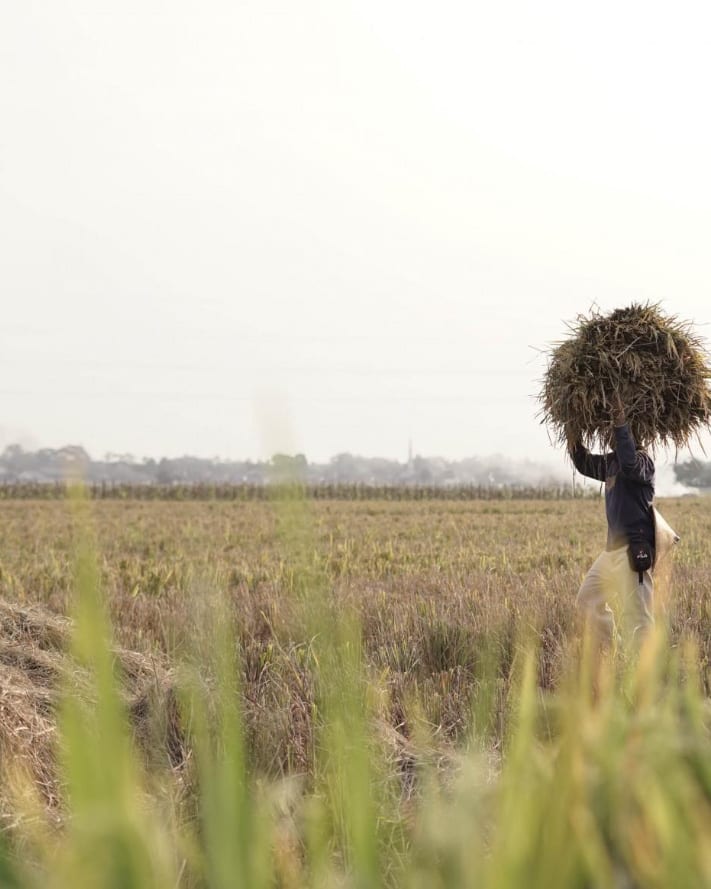
The fibre is one half of the work. The other is the mechanism — Roman, roller, drapery and panel — built in Oregon to a tolerance more usually associated with cabinetry than with soft-goods. Headrails are concealed, hems are weighted to fall true, the operating hardware is engineered for the life of the room rather than the season.
In specification it matters. A hand-woven shade is a long-life element of the building, and ought to be ordered and installed with the same seriousness as the joinery or the floor.
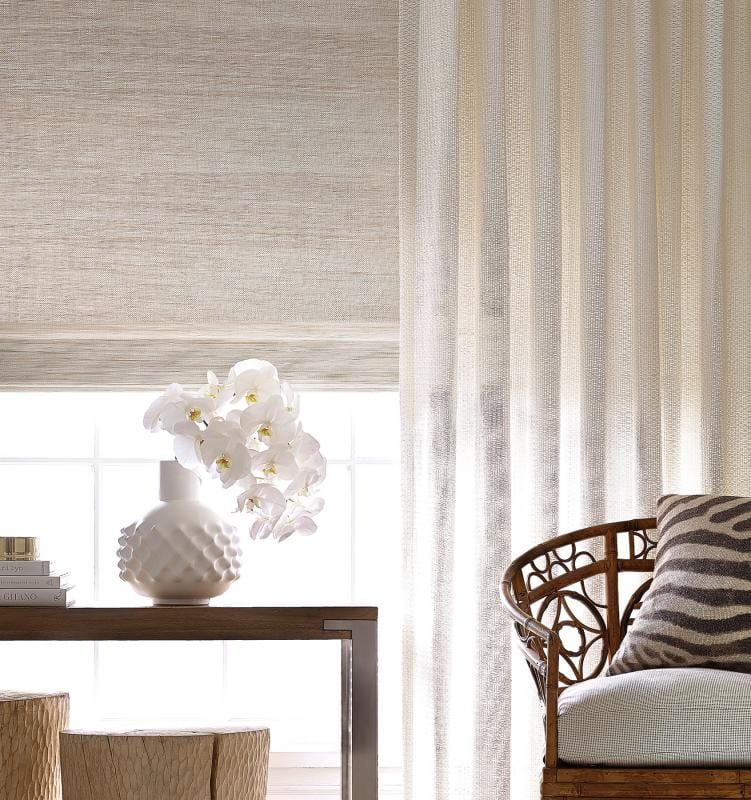
Across a long elevation, a single specification of weave and fibre quietly resolves what would otherwise read as a row of competing apertures.
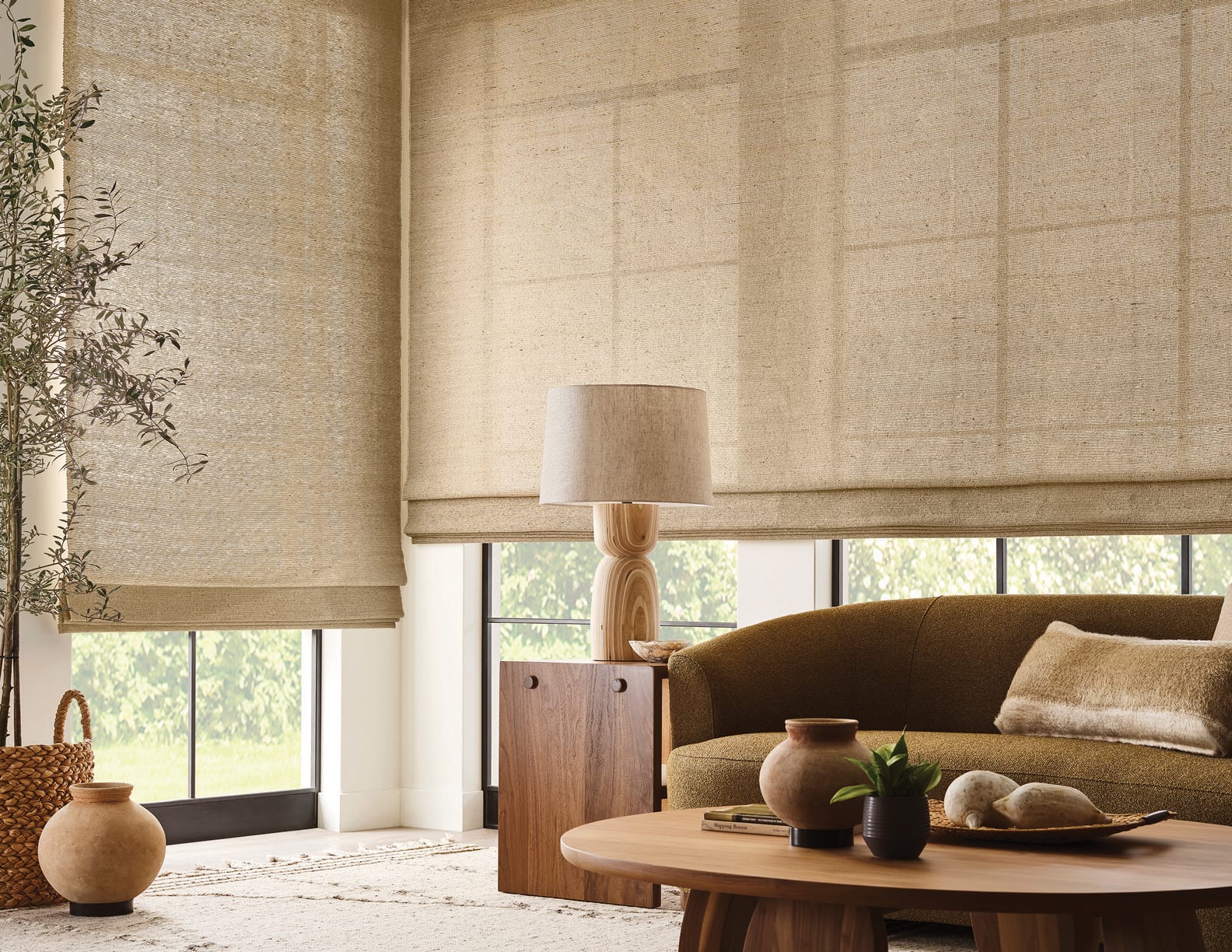
Specify the light first. The rest of the room tends to compose itself against it.