.png)
The interior
as refuge.
A short essay on the home as a place to come back to — and the slow, almost unannounced shift in serious interiors from spectacle to sanctuary.
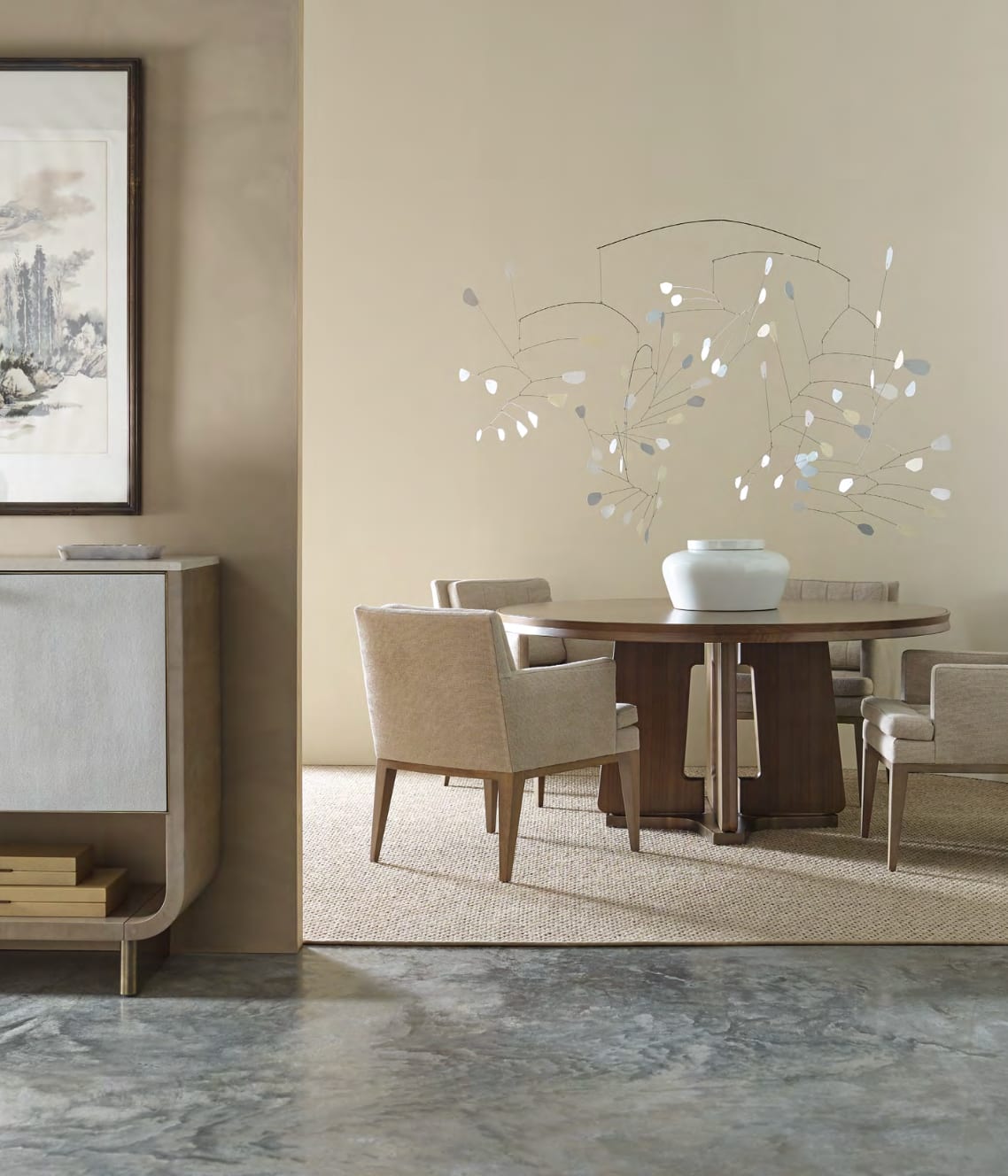
One of the more striking developments in serious interior work over the last few years has been the steady repositioning of what a luxurious house is actually for. The house as exhibition — built to be photographed, walked through and admired — has not entirely gone away, but it has become a markedly less interesting brief. The clients commissioning the most considered work today are asking, almost without exception, for something quieter. They want a house to come back to. The brief, in some cases, includes the word sanctuary. More often it includes the simple observation that the house should feel, on entry, like a place where the day can finally be put down.
This is not a small change. For a great deal of recent history, the principal job of a luxurious interior was to communicate something — wealth, taste, aspiration, membership — to whichever subset of visitors came through it. The new principal job is, in plain terms, to look after the people who actually live in the room. The shift is from performance to care.
A response to the speed of everything else.
It is difficult to discuss this shift without acknowledging what is happening outside the house. Contemporary life is, by most measures, the most stimulating environment human beings have ever inhabited. Phones are luminous and continuous. Work arrives at any hour. Cities are saturated in signal — visual, auditory, informational — and the public surfaces of those cities have become almost entirely advertising. The cumulative load on the nervous system is real, and it has become, for the first time in any sustained way, a topic in serious design conversations.
The interior is the only environment most of us have any real authority over. It has, by direct consequence, become the place where the volume of contemporary life is to be put down. This is, in some ways, an extraordinary historical inversion. The house used to be the place where ambition was displayed and the world outside was the place where one was supposed to find ease. The current arrangement is closer to the reverse. Ease is now a domestic discipline, and the interior is being asked, quite explicitly, to manufacture it.
The room one comes home to is doing nervous-system work, whether the brief admits it or not.
The materials of refuge.
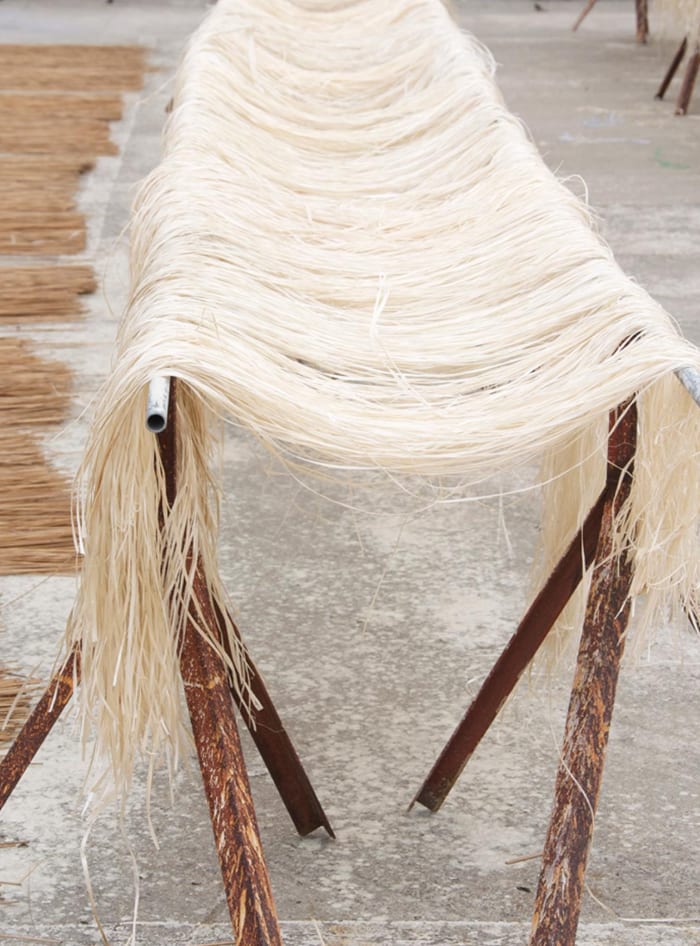
A house designed as refuge tends to draw on a fairly consistent set of materials. The walls are almost always finished by hand — plaster, lime-wash, occasionally a hand-loomed natural-fibre wall covering — because these finishes absorb light and sound in a way that paint cannot quite match. The floors are wide-board hardwood, oiled or waxed, with a slow grain that catches the changing light of the day. The window coverings are hand-loomed natural fibre — abaca, paper-yarn, grasscloth — which filter and warm the light rather than blocking or admitting it in flat sheets. The textiles are heavy and natural — wool, raw linen, soft cotton, undyed leather — chosen as much for the way they take sound out of the air as for the way they look.
None of these decisions is decorative in the conventional sense. Each is, in the most literal way, a piece of environmental specification. The room is being designed to be quiet, in a sensory rather than an acoustic register — to absorb the visual, auditory and tactile noise of the day, and to hand back, in their place, a slow, even, warm atmosphere. The materials are chosen because they perform this work better than the available alternatives.
Filtered light, slower hours.
The most consequential decision in any refuge interior is, almost without exception, what happens at the windows. A flat-glass opening floods a room. A hand-loomed natural fibre panel filters it. The difference is not subtle. A filtered room receives the light of the day in a softened, slightly warmer register; the harshness of midday is edited out; the long, raking light of late afternoon is allowed in but softened across its passage; the room carries, for most of the day, a quality of light that the unfiltered version simply cannot produce.
What this does for the people inhabiting the room is more than aesthetic. Filtered light is, in the literal sense, easier to be in. The eye is not asked to adjust constantly between bright and shaded surfaces. The body, which is continuously and unconsciously responsive to light, is allowed to settle. Time slows down inside such a room almost in spite of one’s intention. People sit longer than they had planned. Conversations extend. Reading takes the place of scrolling. The slowing is, in part, an effect of the light.
Emotional safety, designed in.
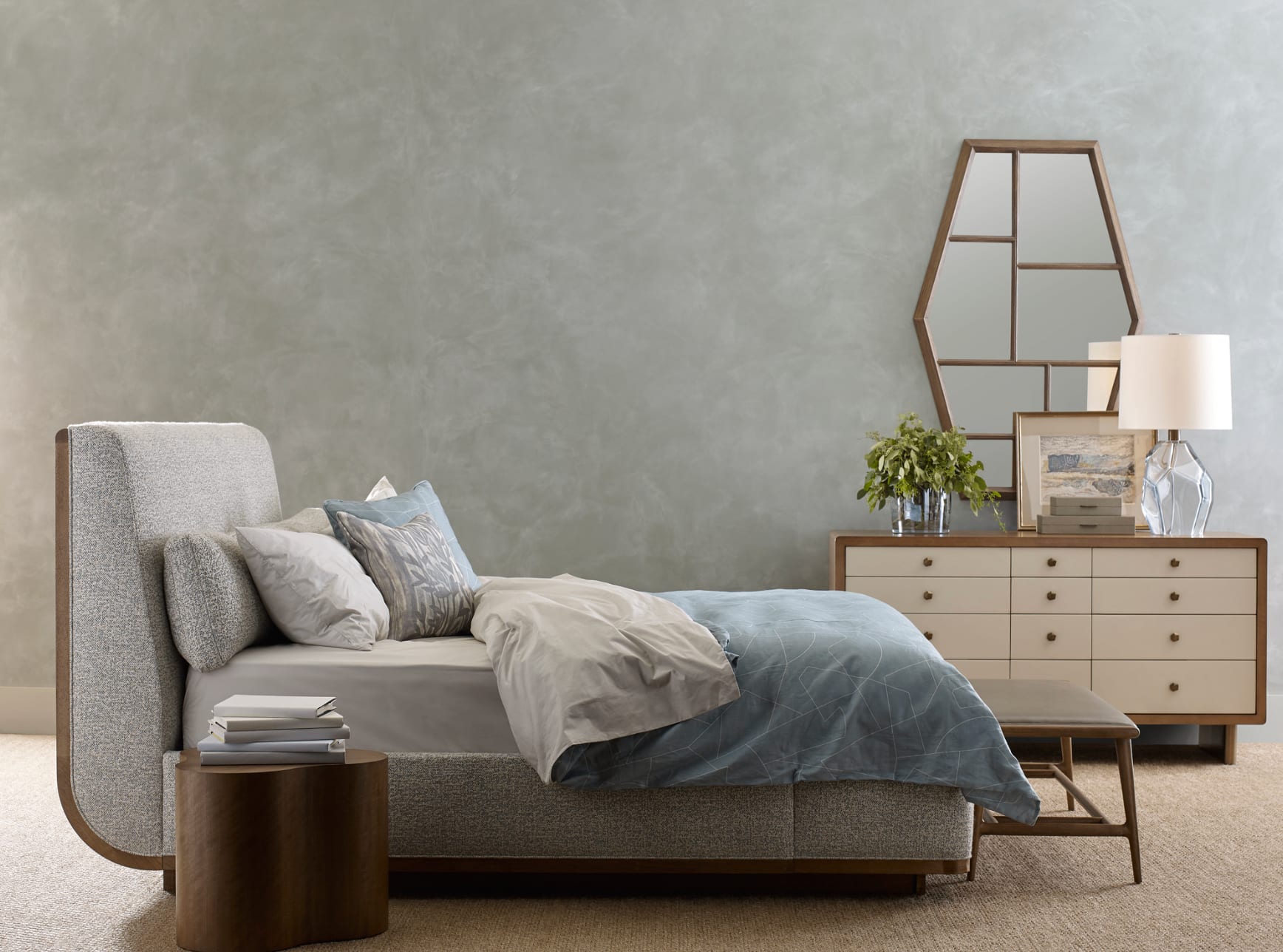
Emotional safety is not a phrase that most interior designers would have used about their work twenty years ago, and it is one a number of them now use without embarrassment. What is meant by it, in practice, is a collection of quite specific decisions. The lighting is warm and dimmable from a single point. The seating is deep enough to be properly sat in rather than perched on. The textures are forgiving. The temperature of the room is calibrated, and stable. There are quiet places to be alone within larger rooms, and there are larger rooms large enough to receive several people without forcing everyone into the same conversation.
The cumulative effect of these decisions is a house in which, almost unconsciously, the body relaxes on entering. The shoulders drop. The breathing slows. The eye stops scanning. None of these effects are accidental. All of them are the consequence of careful environmental design. They are not visible in a photograph. They are unmistakable in the room.
The luxury that does not announce itself.
The interior as refuge is, by its nature, a quiet form of luxury. It does not photograph as ostentation; it cannot be summarised in a single image; it is not legible to the casual visitor on the way through. The materials are expensive — hand-finished plaster, hand-loomed natural fibre, bench-made hardwood, heavy raw linen — and the craft hours involved in installing them are very real, but none of this is announced. The expense is internal to the room.
What this signals, at the level of taste, is the maturation of a particular kind of client. The earlier model of luxury required visibility. The current model treats visibility as more or less beside the point. The measure of the house is no longer whether it impresses the visitor but whether it does its real domestic work for the people living in it — whether it offers, day after day, the quality of refuge for which it was, in the more honest briefs, explicitly designed.
The interior, taken seriously, is not a backdrop to someone’s life. It is one of the few environments that can meaningfully shape the way a life is felt. The rooms that understand this — the rooms that absorb, soften and slow the day — are doing something the decorated rooms of the previous cycle never quite attempted. They are caring for the people inside them. That, in the end, is what makes them luxurious.
The home that looks after the people who live in it has always been the most luxurious one. The current generation is the first in a long time to be saying so out loud.