.png)
Window systems, mechanics
and the invisible discipline of a room.
On ceiling conditions, recesses and mechanics — and the quieter decisions, taken early, that decide how a room behaves for the life of the building.
The window is one of the few elements of a room that is architectural and operational at the same time. It is part of the building, and it is something the occupants will touch every day. The decisions made around it tend to be either forgotten about, or made twice.
In practice the more interesting window treatments are specified in the same conversation as the joinery and the ceiling, not at the end of the project as a soft finish. When a treatment is brought in late — after the recess depth is fixed, after the ceiling plane is set, after the electrical is closed — the room narrows to whatever can be made to fit. When it is brought in early, the building works for the treatment, rather than the other way round.
This is not a question of luxury. It is a question of sequence.
The treatment is rarely the problem. The problem is usually something the building decided about it before anyone was asked.
Ceiling, recess, glazing — before treatment.
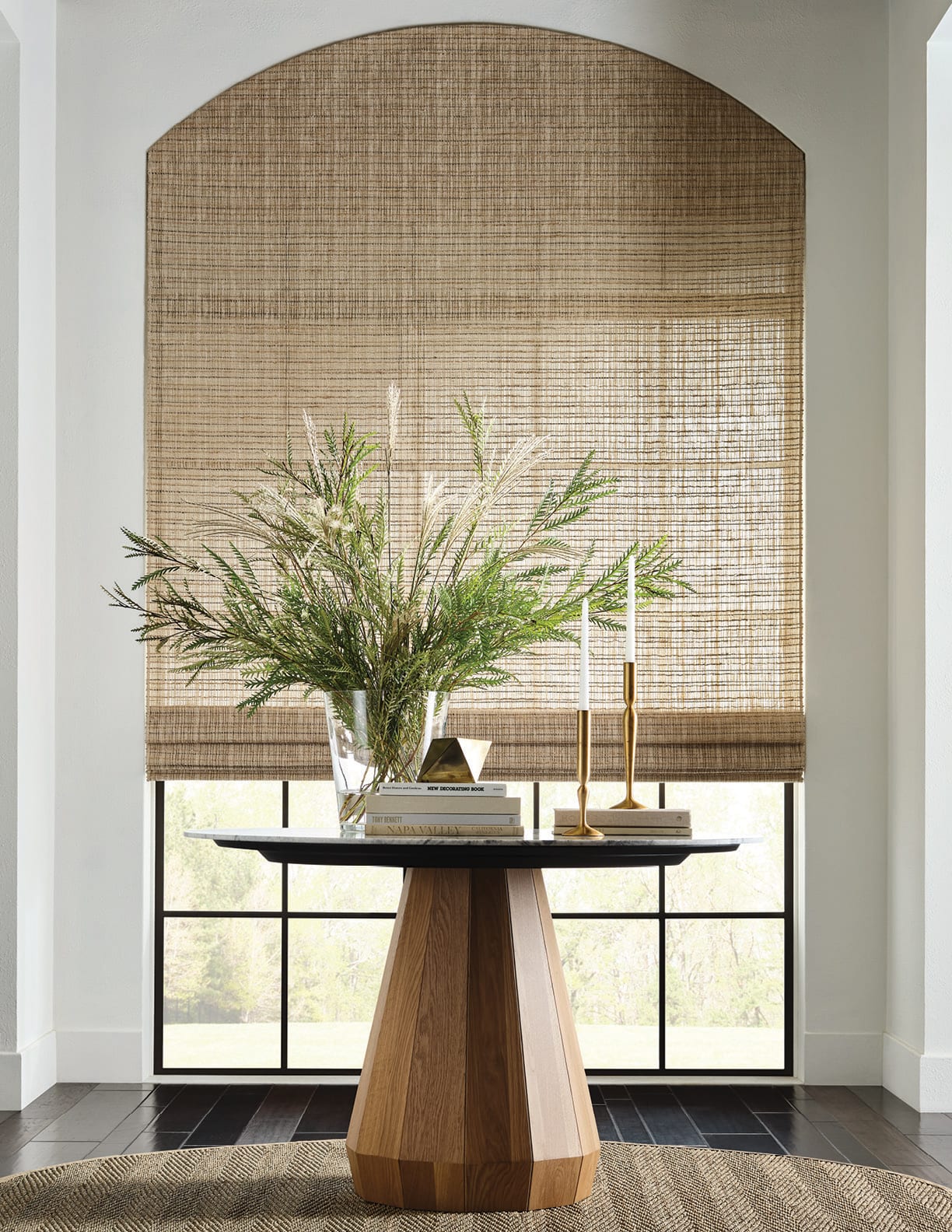
A specifier looking at a window early in a project is really looking at a small constellation of decisions. The ceiling plane determines whether a treatment will sit inside the architecture or be added to it. The recess depth determines what kind of mechanism, headrail and stack can be concealed. The glazing — its depth, its mullions, its proximity to a return wall — determines what can actually pass in front of it without compromise.
These details are unglamorous. They are also the difference between a room in which the window treatment reads as part of the building, and one in which it reads as an attachment. Most of the specification errors that show up later in a project trace back to a decision that was, in retrospect, architectural rather than decorative — a recess that forgot to allow for the headrail, a stack height that swallowed the head of the window, a ceiling line that left no clean place for a track to live.
Manufacturers who work seriously in this field publish guidance about it. Hartmann&Forbes's own short survey of common specification errors is the kind of document that quietly repays a read at the early architectural stage — not because the errors are difficult, but because most of them are easier to design out than to design around.

Privacy, light, view — held in balance.
No window does only one thing. It admits light, it gives a view, it offers — or does not offer — privacy. Most rooms ask for a different balance of those three at different hours of the day, and at different points in the year. A treatment that ignores the balance tends to be over-used in one direction and disliked in the others. A treatment that respects it disappears.
The specification question is usually less about taste than about use. A primary bedroom may need full privacy at one level and diffused daylight at another — which is an argument for a layered system rather than a single panel. A drawing room with a long view rarely wants anything that reads as a curtain in the daytime; it tends to want a filter that softens the glare without disclaiming the view. A working kitchen wants something that can be operated quickly and forgiven for being operated daily.
In each case the question is the same: how often will this be touched, by whom, and in service of what. Answered honestly, that question tends to specify the system before any of the aesthetic decisions are made.

Manual, motorised, and the long second life of a window.
The choice between a manual mechanism and a motorised one is more often a question of scale and use than of style. Within reach, at a single window, a well-built manual system tends to be the right answer — fewer points of failure, lighter feel, quieter in operation, easier to service. Across a wide elevation, at height, or where the treatment is operated several times a day, a motorised system stops being a luxury and starts being the lower- maintenance proposition over a fifteen-year horizon.
What matters in either case is that the mechanism has been engineered to outlast the moment. A headrail built to cabinetry tolerances, hardware drawn from the same vocabulary as a serious door closer, hems weighted to fall true after a decade of use — these are the parts of a window treatment that the room will never see, and that the room will quietly rely on for as long as it stands.
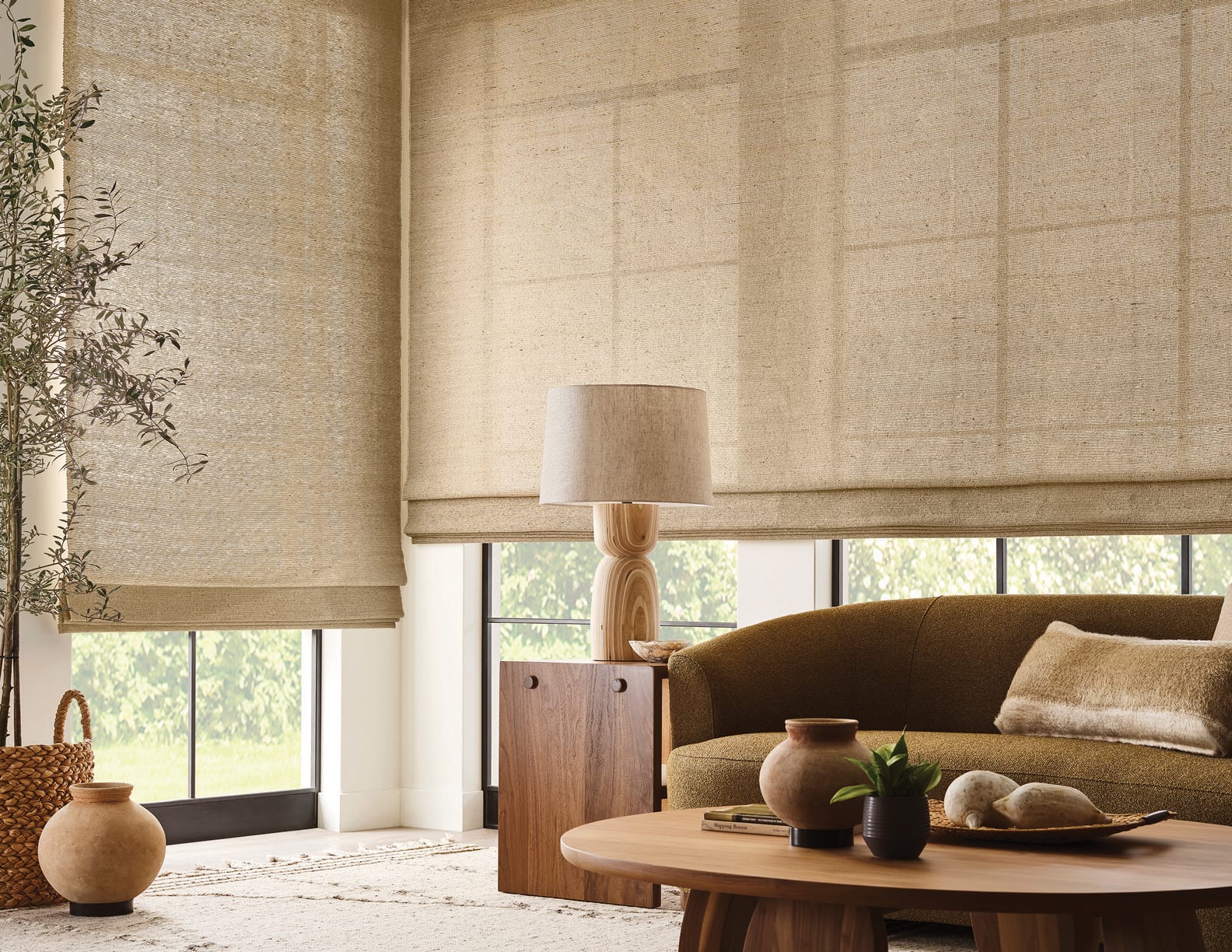
Hartmann&Forbes's working method is instructive here. The fibre is handwoven in the Pacific Northwest, but the mechanism is engineered alongside it, in the same workshop, to the dimensions of the specific window. The point of that integration is not romantic. It is that a natural-fibre shade is a long-life element of the building, and ought to be ordered, installed and serviced with the same seriousness as the joinery or the floor.
The discipline of a window is invisible by design. What is left visible is the room.