.png)
On the spectrum,
and why a single room may hold all of it.
A short argument for the layered interior, and against the idea that a room must commit to a single style. On where bench-made hardwood, cast bronze and woven natural fibre meet in the same room.
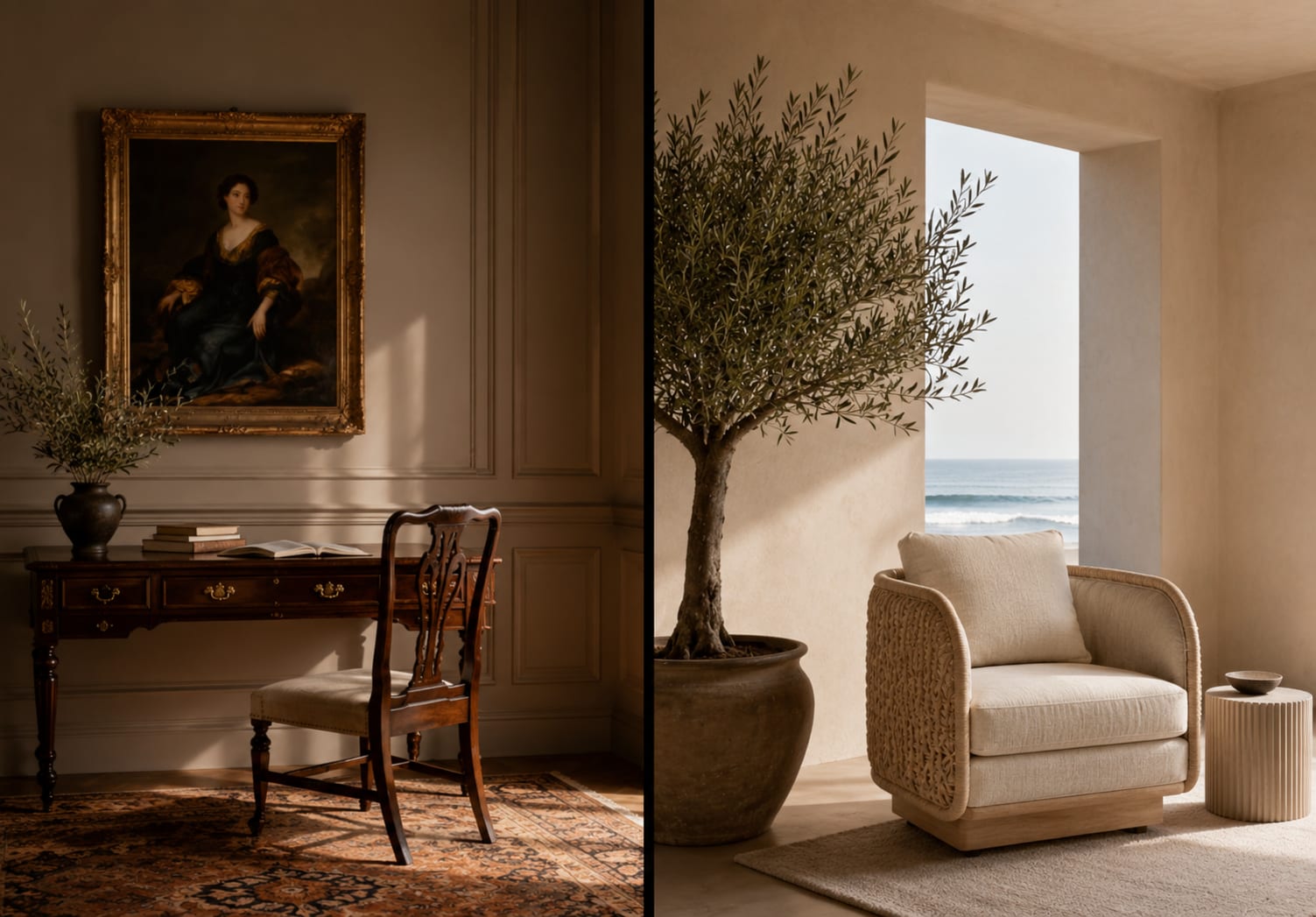
The rooms that hold up over time are rarely the most consistent ones. They tend to carry a wider span — period and contemporary, hardwood and woven fibre, weight and lightness — settled into a single, legible reading.
An interior that commits to a single style — only mid-century, only traditional, only minimal — is easy to catalogue and difficult to live in. Style applied as a complete idea tends to flatten a room: everything answers at the same pitch and nothing carries weight against anything else.
The longer-lasting scheme tends to work the other way around. It composes by contrast — bench-made hardwood against contemporary upholstery, cast metal against the openness of a woven fibre — so the room reads architecturally rather than thematically.
A room held together by one style is decorated. A room held together by proportion tends to be lived in for longer.
A room reads at three registers.
There is the structural layer — the case piece, the dining table, the architectural chair — usually carried by the joinery and weight of bench-made hardwood. There is the tactile layer — upholstery, rug, window covering in linen, abaca, grasscloth or wool — which sets the temperature of the room. And there is the smaller, more deliberate layer of bronze, stone, lacquer or glazed ceramic, which works as punctuation rather than decoration.
When the three are tuned to the same proportion, period tends to stop being the question. A carved sideboard sits easily beside a contemporary sofa; a cast bronze table holds its own next to an eighteenth-century chair. The eye reads architecture rather than era.
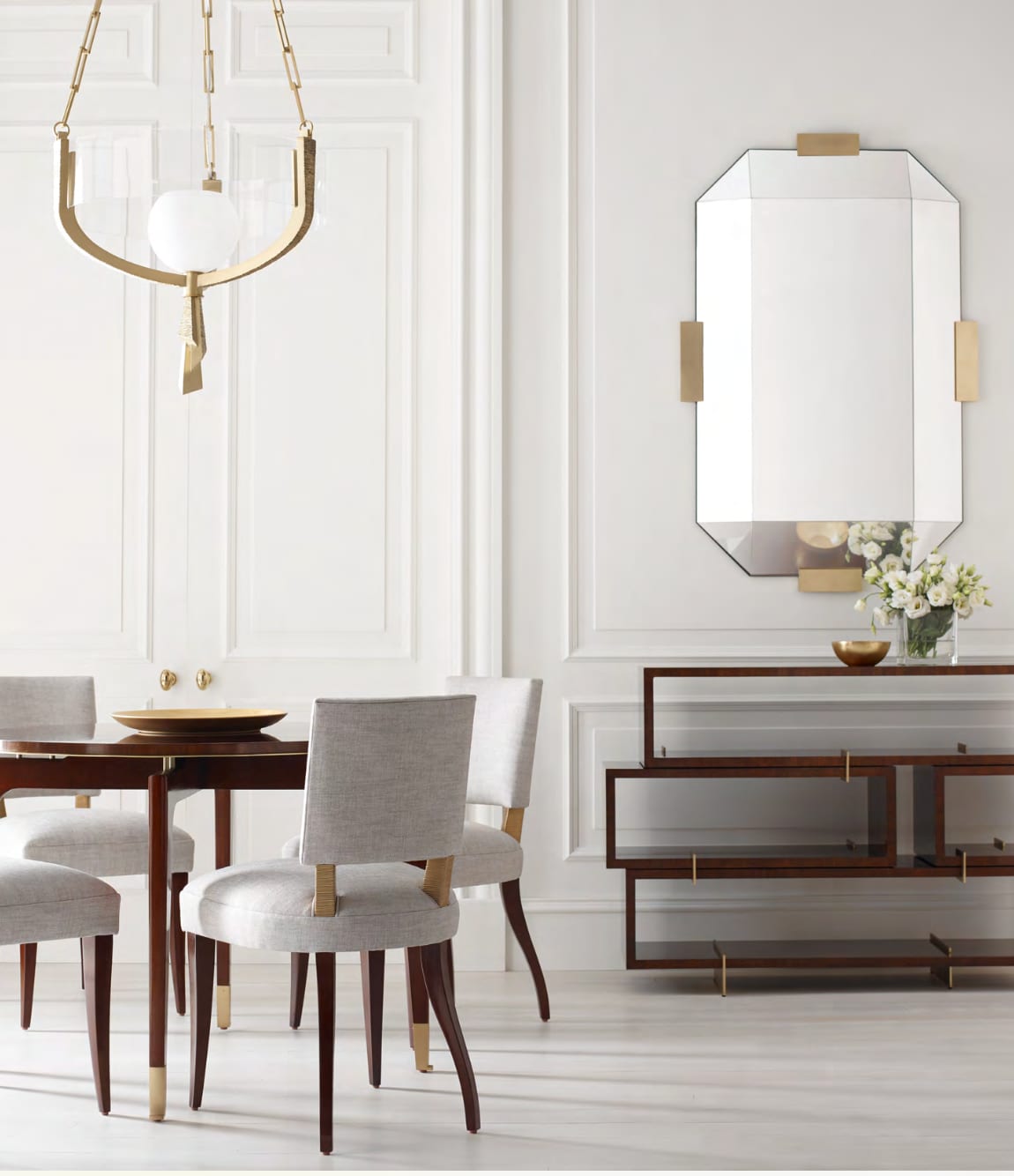
A hardwood breakfront, a contemporary upholstered sofa and a single cast-bronze table — placed in proportion — tend to read more confidently together than any of the three would alone.
The catalogued room is a thinner room.
A fully period interior reads as a museum set; a fully contemporary one reads as a showroom. Both photograph well and tend to live thinly. The friction that makes a room architectural — one register pressing against another — has been removed in advance.
The collected interior accepts that a house is assembled over time. The carved hardwood was inherited; the sofa was specified last year; the bronze object was bought on a trip and kept for a decade. The discipline is in palette and in scale, not in agreement with a single idea.
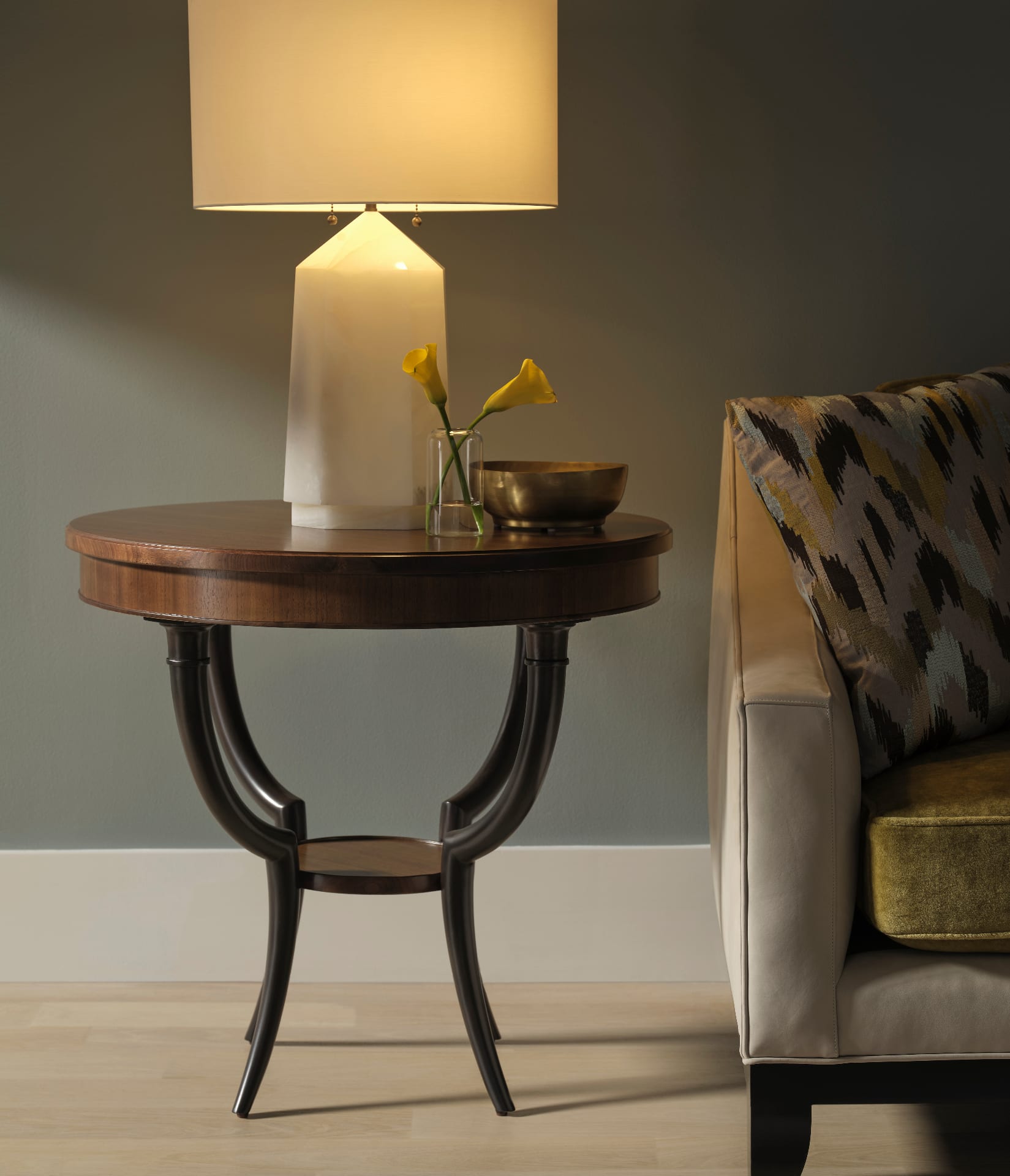
Specify the room, not the style.
In practice the spectrum tends to come down to three decisions. A single structural anchor — usually a bench-made hardwood case piece or table — sets the weight of the room. A quieter envelope of wall, floor and window — natural fibre, plaster, linen — keeps the temperature warm rather than chromatic. A small number of harder objects in bronze, stone or glazed ceramic are placed for proportion, not for effect.
Everything else can be drawn from across the spectrum. Period and contemporary stop being opposing categories and become materials, available in the same scheme.
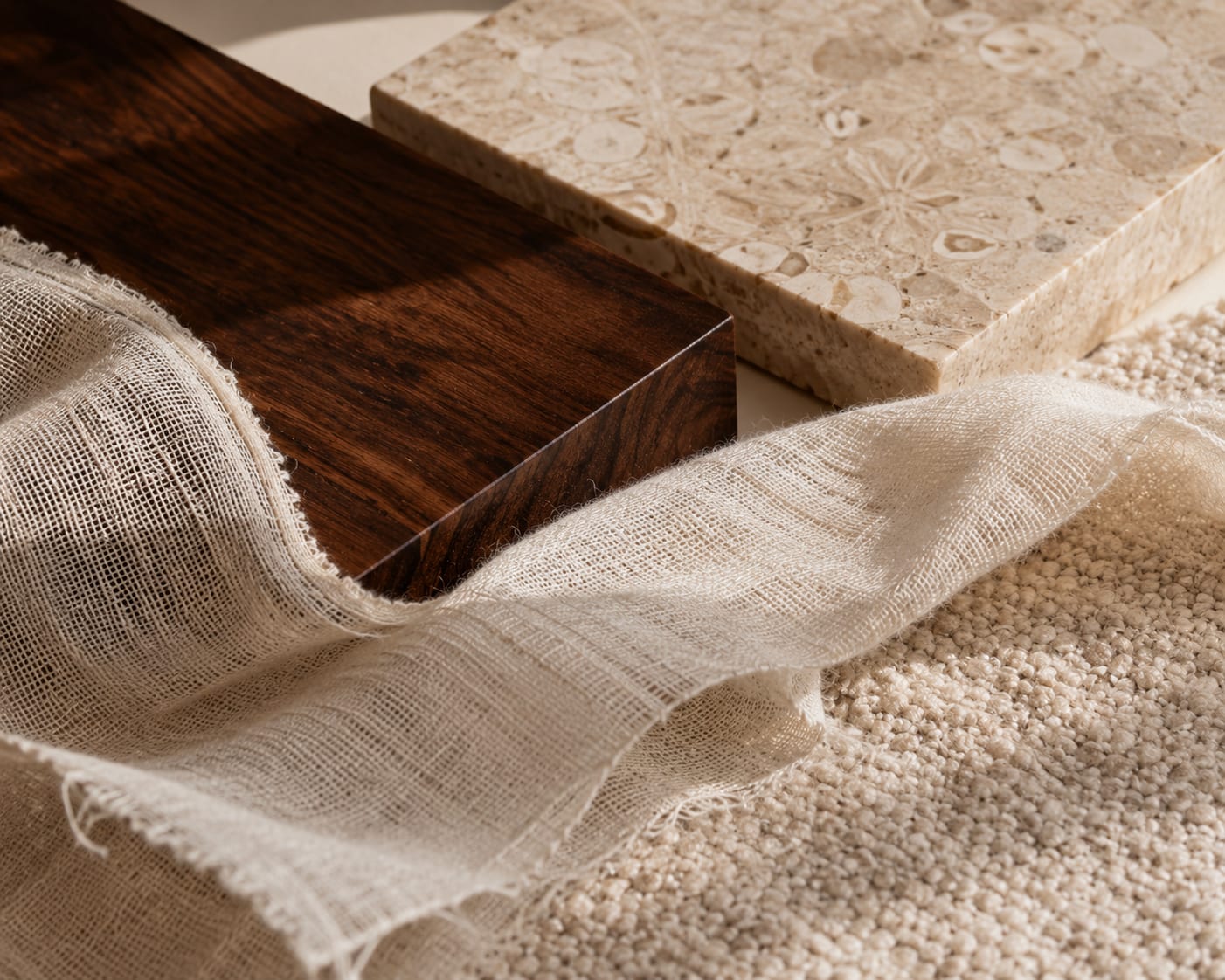
Material — not period — tends to carry a layered room. Woven fibre, hardwood, bronze and stone share a register that almost any decade can be drawn into.
A room can hold the entire spectrum, provided the proportion has been decided before the style.