.png)
The new
formality.
Symmetry, structure and dark hardwood are returning to interiors — but in a register so much softer than the formality they are usually compared to that the word itself may be the wrong one.
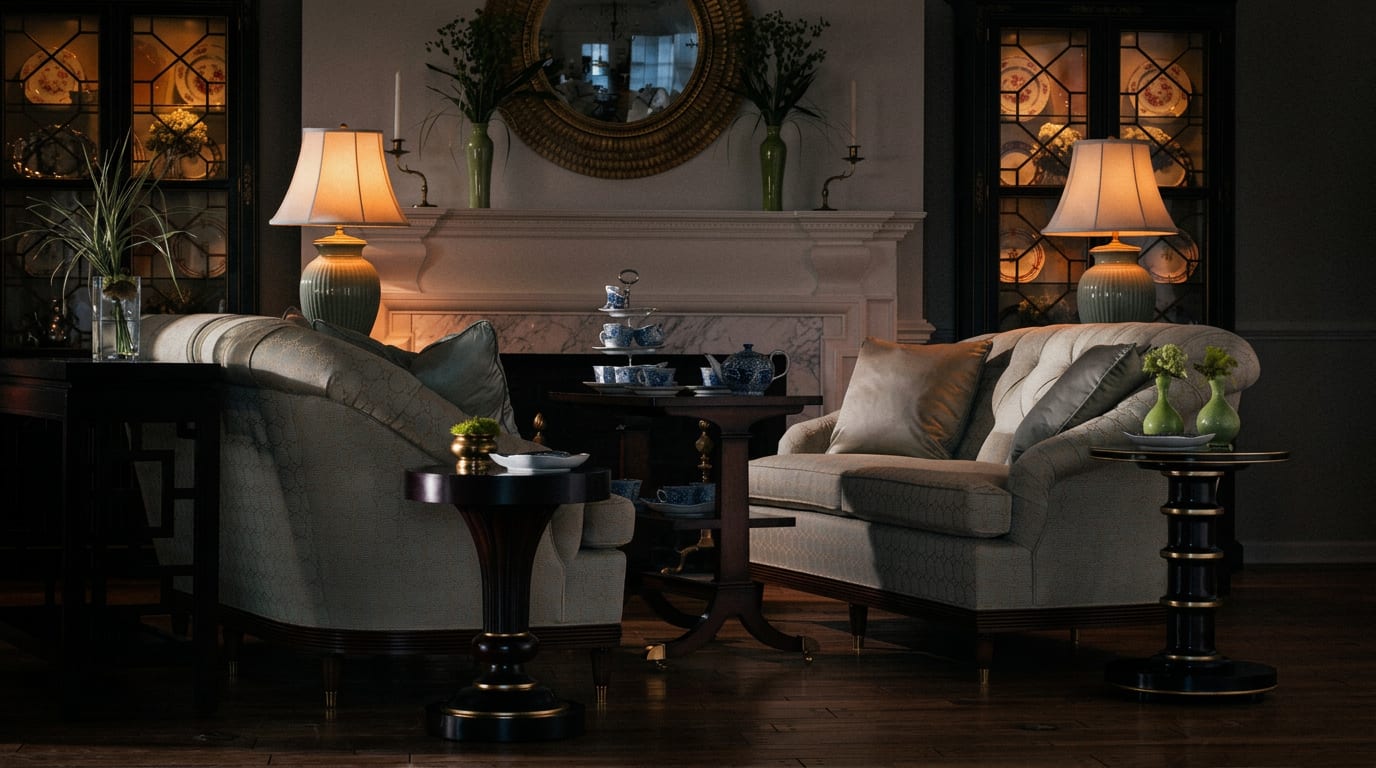
For most of the last decade, formality in interiors has been a word designers have either avoided or apologised for. It carried the wrong associations — heavy drapery, gilt finish, the dining room used three times a year — and the alternative, casualisation, had the wind behind it. Living rooms melted into kitchens; dining tables were rebranded as work surfaces; the symmetrical arrangement was steadily replaced by the deliberately asymmetrical one.
That movement has, quietly, run its course. The houses now beginning to be commissioned are explicitly architectural again. They have rooms with names. The drawing room is back, the library is back, the formal dining room — used regularly rather than occasionally — is back. The furniture being specified into them is heavier, darker and considerably more structural than anything from the casual period. And yet none of it feels inherited. The new formality is a softer thing than the old formality. It carries fewer rules and almost no ornament. It is structural rather than decorative.
A return to architecture, before a return to style.
What is returning, more than anything, is architecture. The first sign is plan. Rooms have walls. Doorways are framed. A fireplace has a real surround rather than a drywall recess. The ceiling has a cornice, modest but present. None of this is stylistic in the period sense — the houses are not pastiche — but the bones of the house are again being asked to do work.
Furniture follows. Once a room has structure, it can hold structural pieces. A bench-made hardwood breakfront, a long dining table cut from a single board, a pair of carved armchairs facing one another across a hearth — these become legible objects in a room with proportion. They tend not to read in a casual interior because there is nothing for them to press against. The new formality is not, in the first instance, an aesthetic decision. It is a structural one.
Formality is what happens when a room is allowed to have a skeleton again.
Darker woods, again.
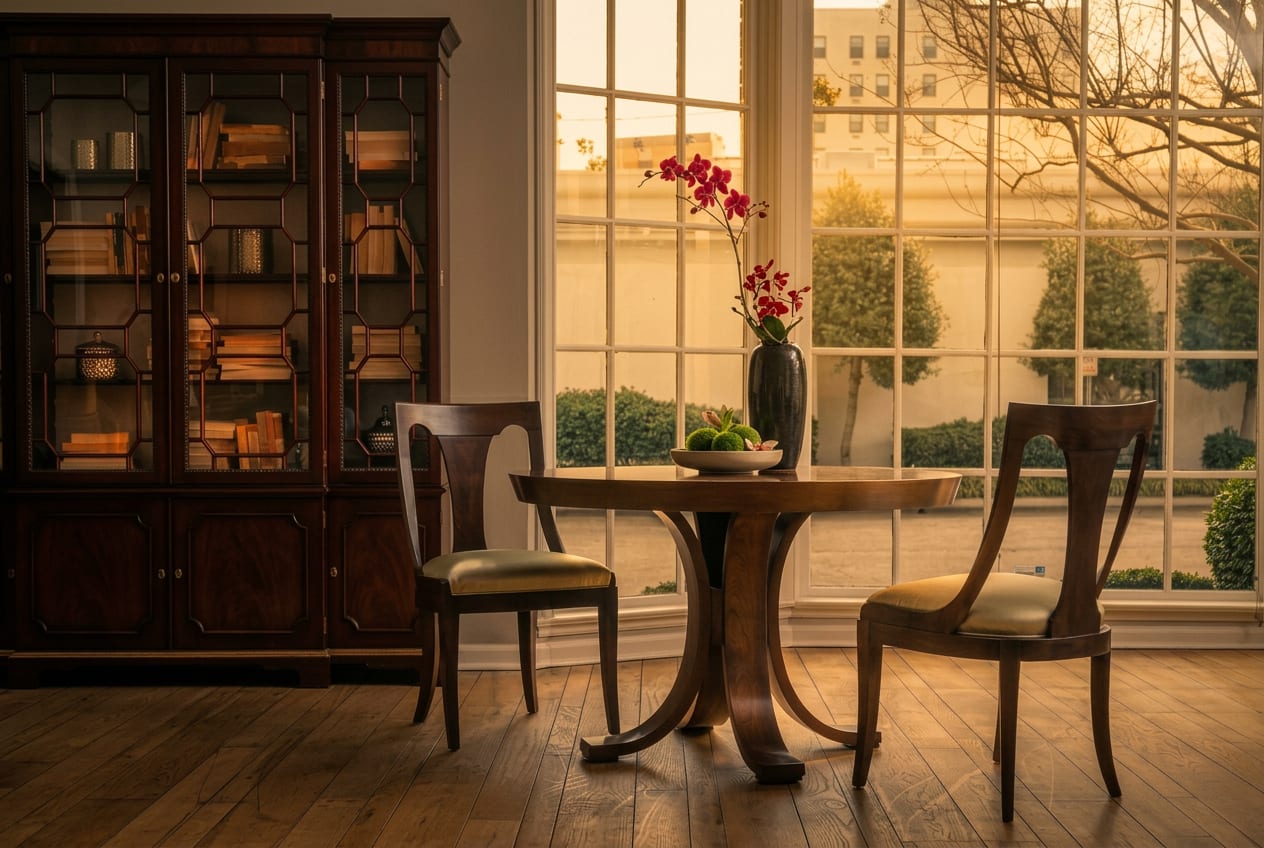
The pale oak of the previous decade — bleached, white-washed, almost colourless — is steadily giving way to the darker hardwoods that the great American workshops have always cut. Walnut, particularly, is back; mahogany is creeping back at the edges; rosewood, used sparingly, is back in cabinetry. The difference from the older formality is in finish. The wood is rarely high-polished. It is hand-rubbed to a low sheen, sometimes oiled, sometimes very lightly waxed. The grain is allowed to read.
A dark hardwood piece in a room with hand-finished plaster walls and a wide-board floor does something specific. It anchors the room without darkening it. The contrast is between the weight of the wood and the lightness of the surfaces around it. The room reads architecturally — as a composition of mass and light — rather than tonally.
This is also why a single bench-made hardwood piece can do so much in an otherwise restrained scheme. The piece carries the weight that allows the rest of the room to be quiet. Without it, the room tends to drift; with it, the room is fixed.
Symmetry as ease, not as discipline.
Symmetrical arrangement is one of the more curious things designers have begun, again, to admit to using. For a long time the symmetrical pair — two armchairs facing one another, two lamps flanking a console, two paintings hung in mirror — was the marker of an over-formal room and was avoided almost on principle. The objection has, in practice, evaporated. Designers describe symmetry now as restful rather than rigid. The eye finds the pair and stops looking for the counter-balance.
What the new formality avoids is the doubling-down on symmetry that produced the over-formal interior of an earlier era. The pair of chairs is symmetrical; the table between them is not. The flanking lamps are matched; the wall behind them is asymmetrical. The room makes a small order in places where order is calming and lets the rest of the room behave.
Tailored rather than upholstered.
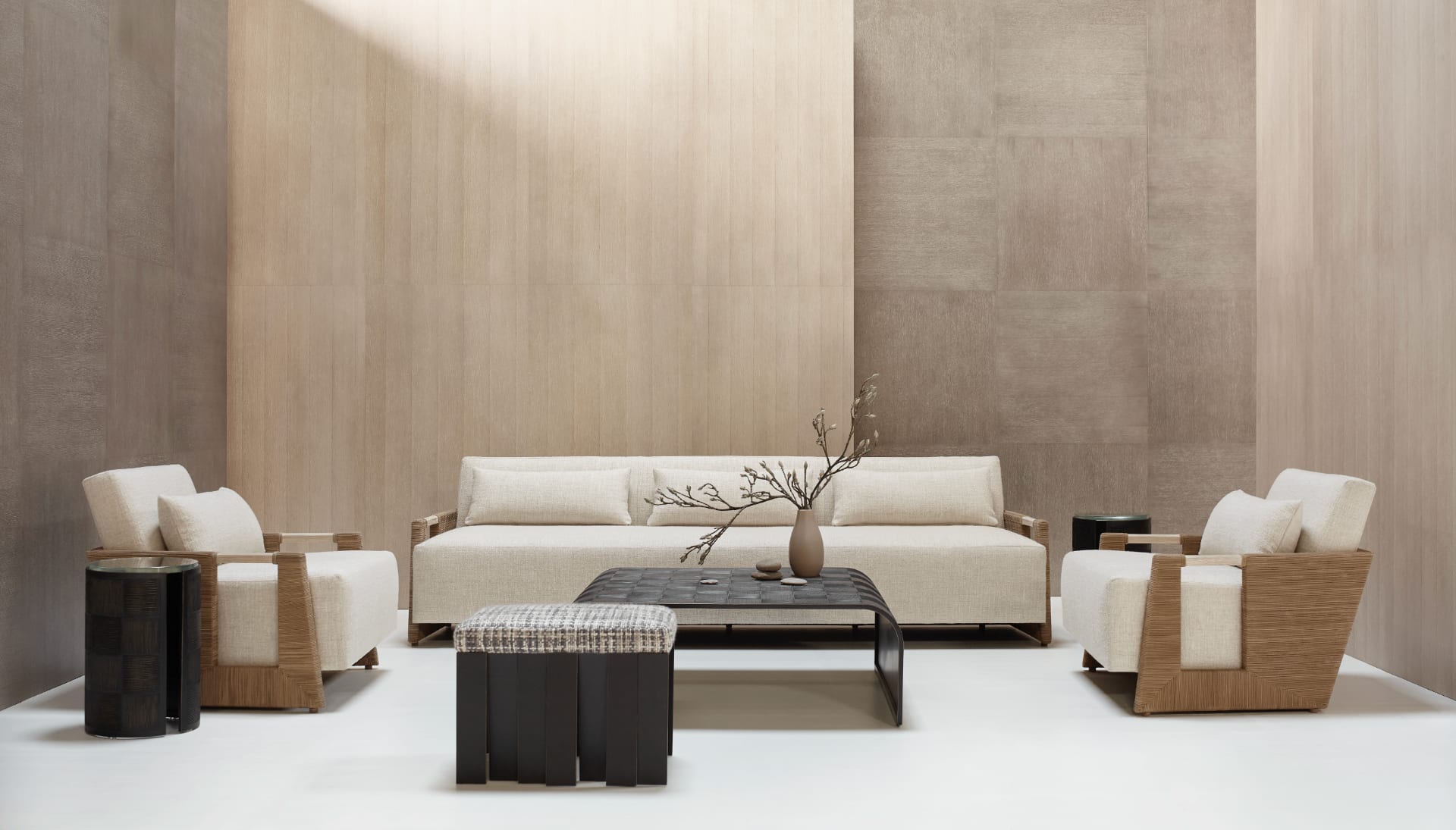
Soft furnishings have undergone a parallel adjustment. The oversized, over-cushioned upholstery of the casual period — deep seats, loose covers, an absence of structural line — is giving way to seating that is more clearly drawn. Backs are tailored. Arms have shape. Cushions are firmer and less numerous. The materials are heavier — substantial linens, raw wool, leather — and the silhouettes are unmistakably architectural.
The change is partly a question of how the room is going to be used. A drawing room that is genuinely a drawing room — used for conversation, occasionally for music, regularly for reading — is not the same room as the deep-cushioned media space that masqueraded as a drawing room for a decade. Tailored seating reads more naturally in the first room than in the second.
A balance between classical and contemporary.
The most interesting work in this register tends to refuse the binary that the word formality usually implies. The rooms are not period; the rooms are not contemporary. They use classical forms — the architectural chair, the bench-made breakfront, the long hardwood table — and place them within a contemporary envelope of plaster, natural fibre and quiet stone. The result is a room that feels permanent without feeling old.
Permanence is, in fact, the word that recurs in studio conversations. The new formality is, in part, a response to interiors that aged out of fashion within a few seasons. A carved hardwood case piece does not date in the same way a curved upholstered sofa with no clear lineage dates. It was built for a long horizon, and a room built around it tends to inherit that horizon.
The new formality is, in this sense, an emotional rather than a stylistic position. It accepts that a house should outlast the decade in which it was furnished. It accepts that some rooms should feel important. It accepts that there is real comfort in structure. And it does all of this in a register so soft — natural fibre, hand-finished plaster, low-sheen hardwood, raw linen — that the word formality almost has to be redefined to describe it.
The new formality is, in the end, a return to rooms that know what they are for.