The JournalLondon Notes / Decorex 2026 · Fall 2026

The Room Changes With the Light

On atmosphere, materiality and the quiet relationship between furniture, architecture and the light that brings them together.

The Beach House at Decorex 2026: a woven-front bar beneath rope pendants, upholstered seating in the foreground and a window framing a coastal view

Photograph: @nicksmithphoto

There is a particular quality to a room in the early morning. The light is softer, the edges gentler, the atmosphere still. By midday, those same surfaces appear sharper, their colours clearer and their textures more pronounced. As evening approaches, the room changes again. What once felt open and expansive becomes intimate and enveloping.

Nothing within it has moved. Yet our experience of it is entirely different.

It is this relationship between light and the spaces we inhabit that sits at the centre of The Beach House, an immersive installation presented by Homeplay at Decorex 2026, with interiors conceived by Hill House Interiors.

Through an extraordinary compression of time, visitors experience the changing light of an entire day in just three minutes. Lutron's Ketra intelligent lighting recreates the progression from morning to evening, while integrated sound and carefully concealed technology contribute to the illusion of a coastal retreat.

Yet, beyond the technical accomplishment, the installation raises a more interesting design question: how much of what we perceive as atmosphere belongs to the room itself, and how much is created by the light in which we experience it?

i.

An interior that moves with the day

We tend to understand interiors through a relatively fixed lens. A photograph captures a considered composition, often at precisely the moment when the light is most flattering. Furniture, finishes and architectural details are arranged to communicate a particular feeling.

But a home is not a photograph.

Its character shifts throughout the day, as natural light moves across surfaces, shadows lengthen and the relationship between materials changes. A room that feels fresh and expansive in the morning must also accommodate the intimacy of an evening spent entertaining.

At The Beach House, Hill House Interiors has created an environment in which those changes become the experience itself.

Rather than presenting a single, perfected moment, the room invites visitors to consider how an interior evolves.

“I love that feeling when you walk into a room and it immediately changes your mood,” says Helen Bygraves, Founder Director of Hill House Interiors. “That was really what I wanted to create here: a sense of escape, of having arrived somewhere special. But it also needed to feel completely liveable. I wanted people to look around and think, ‘I could actually imagine living like this.’”

This is perhaps the most compelling aspect of the installation. It places the experience of inhabiting a room ahead of the experience of simply looking at one.

ii.

The material conversation

Light does not interact with every surface in the same way.

A polished finish reflects it. A woven material catches it in the irregularities of its construction. Upholstery absorbs and softens it, while natural stone reveals variations in tone and texture as the direction of illumination changes.

The material palette at The Beach House offers a particularly interesting study in these relationships.

Natural rattan, abaca rope, braided fibres, bouclé upholstery and fossilised shell sit alongside considered architectural finishes. Individually, each has its own character. Together, they introduce a richness that comes not from ornamentation, but from the contrast between their surfaces.

The sculptural softness of upholstered seating sits comfortably beside the structure of woven furniture. Natural rope introduces movement and shadow, while stone and shell provide a different, more solid expression of texture.

These materials are compelling in their own right, but they become particularly expressive when seen under different qualities of light.

A weave that appears quietly understated during the day can reveal unexpected depth in the evening. A pale upholstered surface can move between crisp definition and a warmer, more diffused appearance.

It is a reminder that material selection is never entirely independent of lighting. The two are part of the same design decision.

“What I find fascinating is how completely the changing light alters the mood of the room,” says Bygraves. “The colours, fabrics and textures reveal something slightly different at each point in the day, yet everything still feels beautifully connected. I’m particularly pleased with the material palette because it has that lovely sense of cohesion, whether you’re experiencing the freshness of the morning light or the warmth and intimacy of the evening.”

The Beach House at Decorex 2026: shuttered windows framing a coastal view, a rope-hung woven wall light and a wall-mounted surfboard, seen over a woven sofa toward the woven-front bar
Photograph: @nicksmithphoto
iii.

Furniture as a way of living

The Beach House is conceived as a place for gathering, entertaining and retreating from the pace of everyday life.

Within such a setting, furniture must do more than complete the visual composition. It establishes how the room is occupied.

The depth of a sofa, the orientation of a chair and the relationship between seating and occasional tables all influence the way people move, settle and interact.

Beautiful furniture may initially draw someone into a space. Comfort, proportion and the ease with which the pieces work together are what encourage them to remain.

For the installation, Hill House Interiors brought together furniture and lighting from two American design houses represented exclusively in the UK by Valley & Laurel: Baker McGuire and PALECEK.

Their differing design languages offer a study in how contrast can create cohesion.

Baker brings a sense of tailored refinement and McGuire introduces its distinctive vocabulary of natural fibres and woven craftsmanship while PALECEK contributes a tactile, material-led sensibility.

The interest lies not in making the pieces appear identical, but in allowing their individual characters to coexist within a shared architectural setting.

“I’ve sat on every single piece, which is always my test, and they really are incredibly comfortable,” says Bygraves. “Beautiful furniture should never ask you to choose between form and function. The pieces that endure are the ones that have presence in a room, but also invite you to sit down, relax and actually live with them.”

That balance gives the room a more natural sense of permanence. An interior assembled through complementary materials, silhouettes and traditions often feels more personal than one dictated by a single aesthetic.

A woven wall light hung from braided natural rope, glowing against layered wall textures in The Beach House at Decorex 2026A handwoven cylindrical pendant in fine natural fibre, lit against woven wall panelling in The Beach House at Decorex 2026
Photograph: Photographs: @nicksmithphoto
iv.

When technology becomes invisible

The technology behind The Beach House is sophisticated, but the design ambition is deliberately understated.

The sound is concealed within the architecture. The lighting changes without demanding attention. The mechanisms responsible for the experience recede, allowing the room itself to remain the focus.

This is an important distinction.

Technology in a considered interior should not necessarily announce its presence. At its most successful, it makes the experience of a space more intuitive, more comfortable and more responsive to the lives unfolding within it.

The Beach House explores the possibility that technical innovation and traditional craftsmanship can exist in conversation rather than competition.

The artistry of a handwoven chair is no less relevant in a technologically advanced room. Arguably, it becomes even more important, providing a sense of permanence and human touch against an environment that is constantly changing.

v.

Beyond the moment

Perhaps the most valuable lesson of The Beach House is also the simplest.

We should not design a room for one moment of the day.

We should consider how it feels in the morning, how its materials respond to afternoon light, how its furniture encourages conversation in the evening and how the atmosphere shifts when the outside world begins to disappear.

Because an interior is never entirely static. It is shaped continuously by light, by people and by the rituals of everyday life.

And sometimes, the most revealing thing about a room is not what changes within it, but what remains beautiful as everything around it changes.

The Beach House is presented by Homeplay at Decorex 2026, 11–14 October, Olympia London. Interior design and creative direction by Hill House Interiors, with Lutron intelligent lighting, Sonance architectural audio and bespoke joinery by Matthew Hill Bespoke. Valley & Laurel contributed eight furniture and lighting pieces from Baker McGuire and PALECEK.

THE PIECES, CONSIDERED INDIVIDUALLY

Eight Pieces, One Interior

A closer look at the Baker McGuire and PALECEK pieces selected for The Beach House — and the material conversation they create together.

The Beach House works because its material language is shared rather than matched. Across the eight Valley & Laurel pieces, woven fibre, upholstery, rattan, rope and fossilised shell repeat in different weights and scales. Considered individually, each object has a distinct role; together, they help establish how the room is occupied, how light moves through it and where the eye comes to rest.

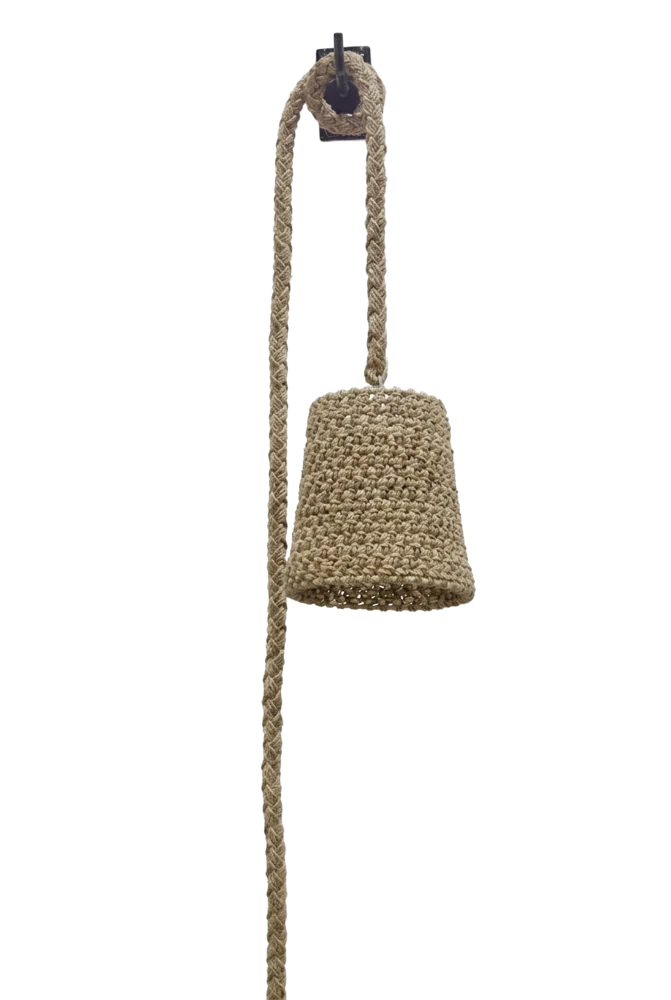
Green Oaks Wall Light — PALECEK, product cut-out

1.   PALECEK

Green Oaks Wall Light

SKU 2716-01

Natural

9"D × 9.5"H + 148" rope / 22.9 × 24.1 cm + 375.9 cm rope

A suspended woven wall light whose long natural rope makes the fixture part object, part line drawing. In The Beach House it catches and releases light across the wall, turning the weave itself into a source of shadow and texture.

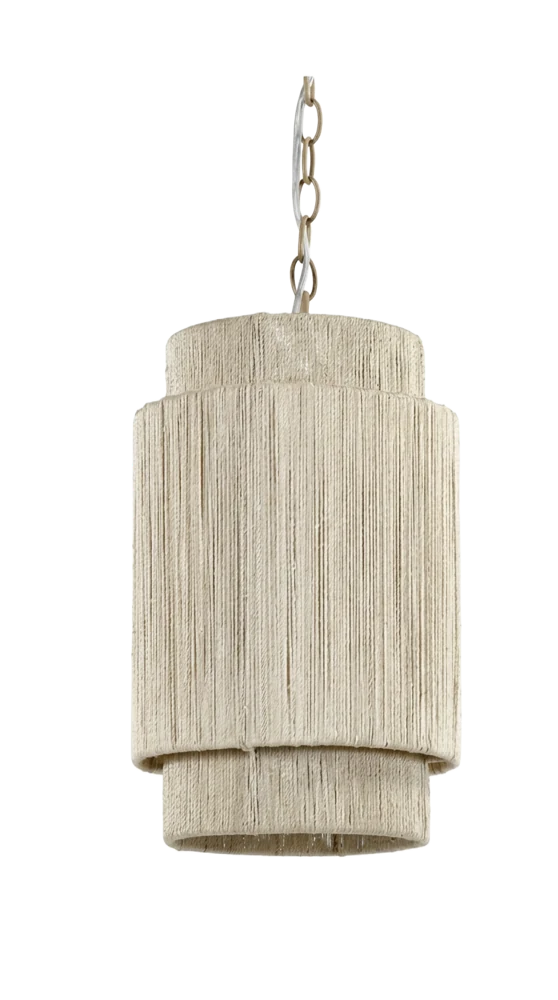
Everley Pendant, Small — PALECEK, product cut-out

2.   PALECEK

Everley Pendant, Small

SKU 2438-79

Natural fine abaca rope; taupe finished chain

10"D × 16"H / 25.4 × 40.6 cm

Fine abaca rope softens the pendant's cylindrical geometry. Grouped above the bar, the repeated form gives the ceiling rhythm while the fibre prevents the light from feeling hard or overly architectural.

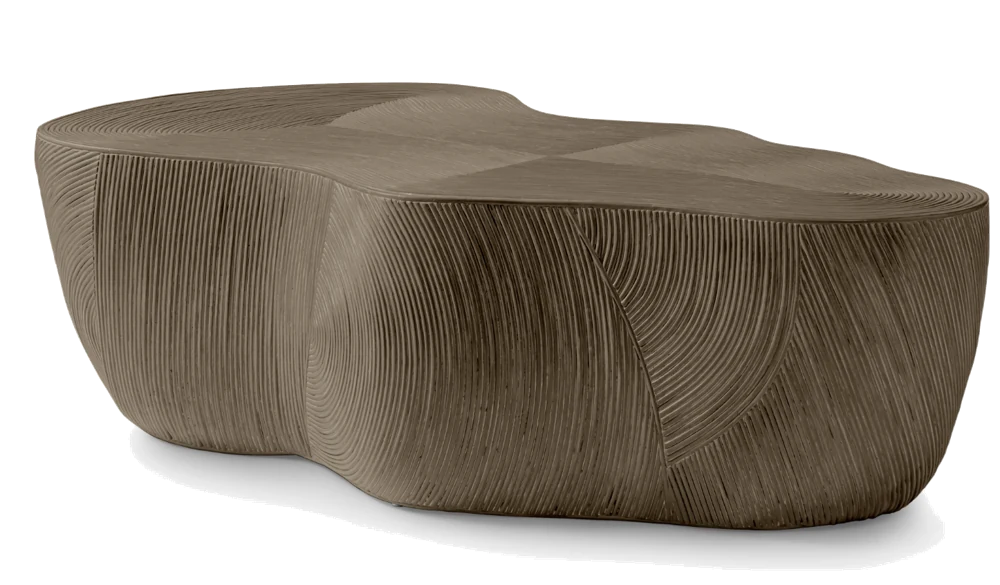
Fairfax Rattan Coffee Table — PALECEK, product cut-out

3.   PALECEK

Fairfax Rattan Coffee Table

SKU 7421

Light Walnut

60.5"L × 38.25"W × 18.5"H / 153.7 × 97.2 × 47 cm

Its broad, low profile anchors the seating group without closing it down. The rattan surface introduces another direction of grain into a room already rich in woven material.

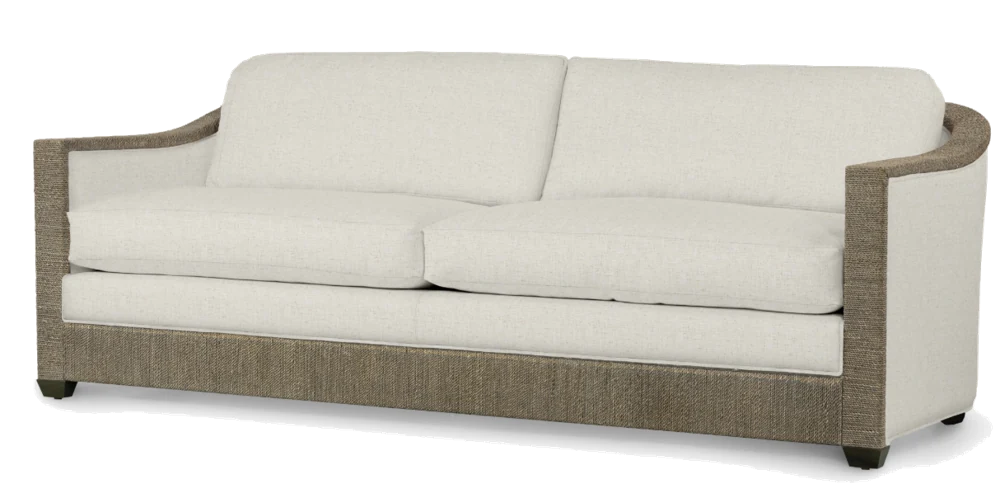
Pearson Sofa, Ash Grey — PALECEK, product cut-out

4.   PALECEK

Pearson Sofa, Ash Grey

SKU 7248-89

Ash Grey; Chunky Weave in Oatmeal

86"W × 35.5"D × 29"H / 218.4 × 90.2 × 73.7 cm

A quiet upholstered anchor within the room. Its generous scale and restrained palette allow the surrounding woven surfaces, lighting and occasional pieces to remain legible while giving the interior somewhere to settle.

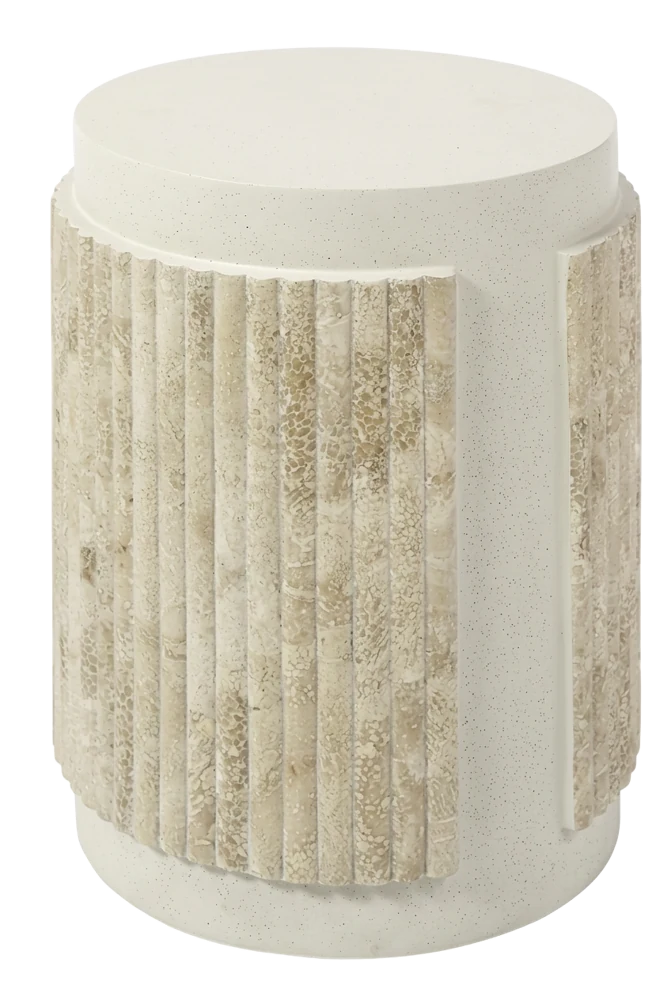
Tides Outdoor Side Table, Small — PALECEK, product cut-out

5.   PALECEK

Tides Outdoor Side Table, Small

SKU 7165-79

14"D × 19"H / 35.6 × 48.3 cm

Small in scale but useful in the composition, the Tides table brings a sculptural, ribbed surface beside the softer seating. It is an example of how a supporting object can add texture without asking to become the focal point.

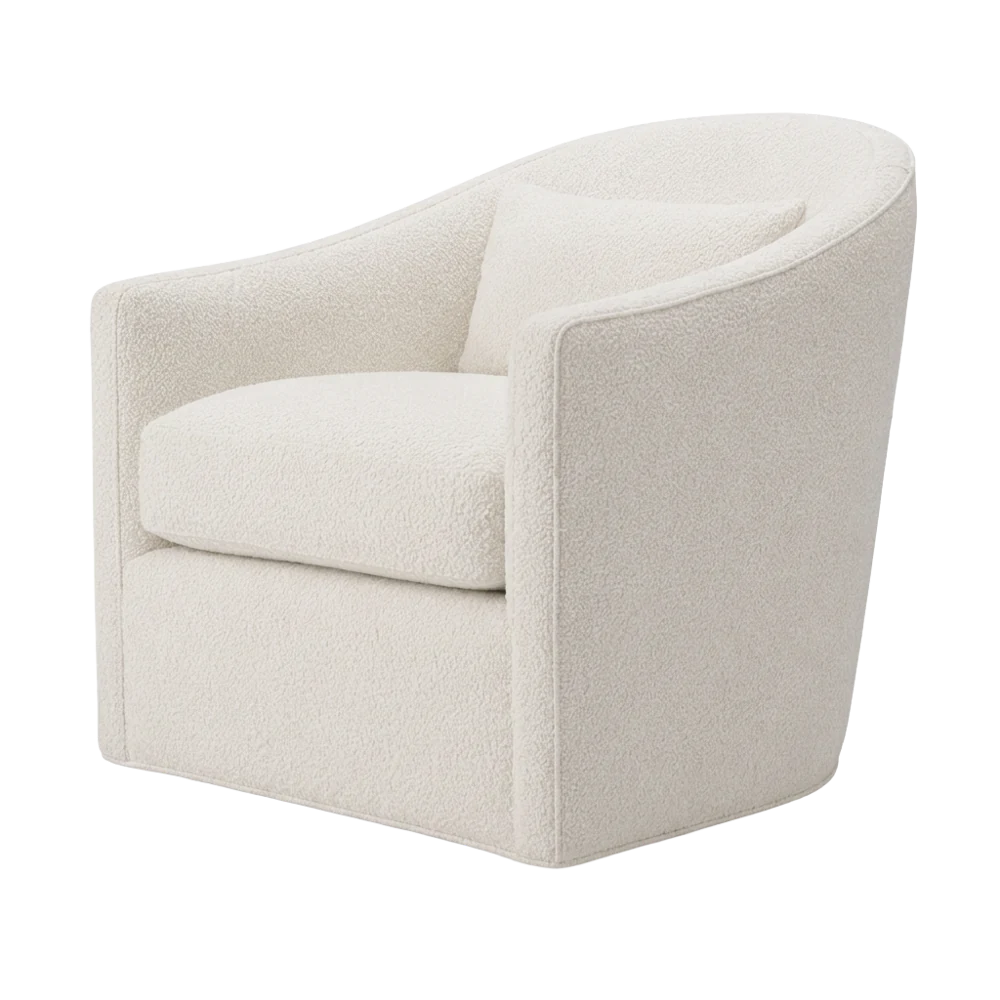
Dima Chair — Baker McGuire, product cut-out

6.   Baker McGuire

Dima Chair

SKU BA6234C

Baker Fabric 21-444, Bouclé

31.5"W × 33.4"D × 23"H / 80 × 86.4 × 76.2 cm

The Dima's rounded upholstered form brings tailored softness into a scheme dominated by line and weave. Its bouclé surface absorbs light rather than reflecting it, changing subtly as the room moves from day to evening.

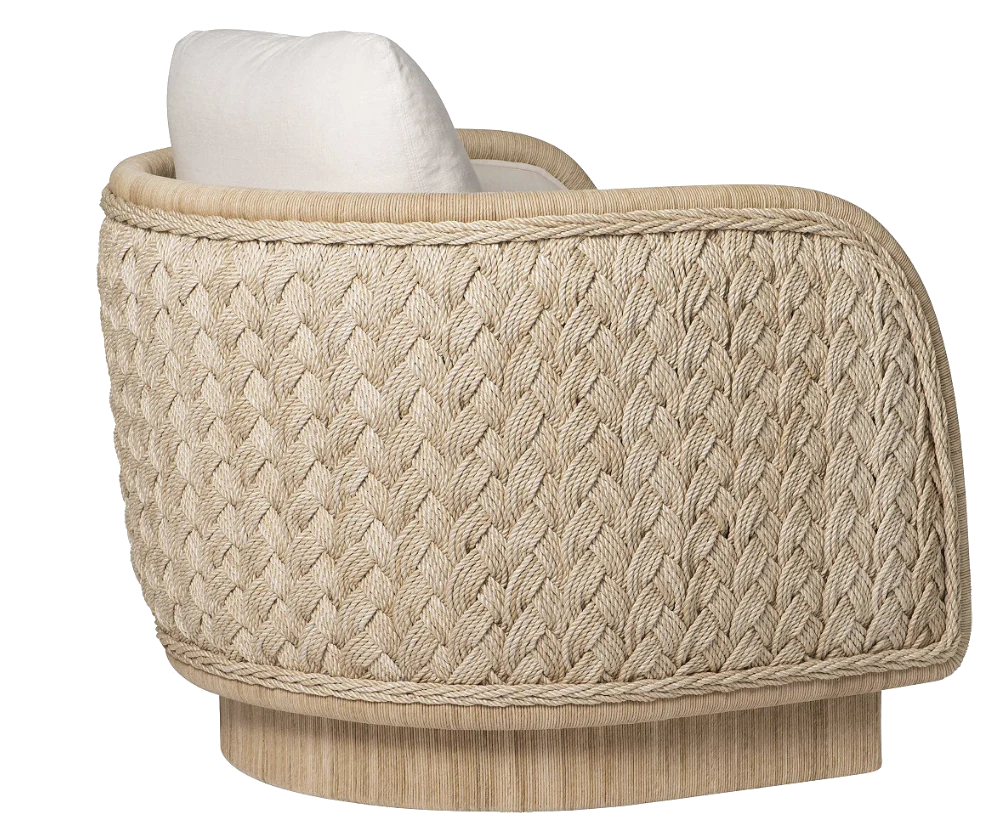
Coastal Braided Swivel Lounge Chair — Baker McGuire, product cut-out

7.   Baker McGuire

Coastal Braided Swivel Lounge Chair

SKU MCA106

Baker Fabric 21-441

32.5"W × 34.5"D × 29"H / 82.6 × 87.6 × 73.7 cm

Braided natural material frames a deeply upholstered seat, bringing McGuire's craft vocabulary into a form intended for genuine comfort. The swivel base also allows the chair to respond to the room rather than impose a single orientation on it.

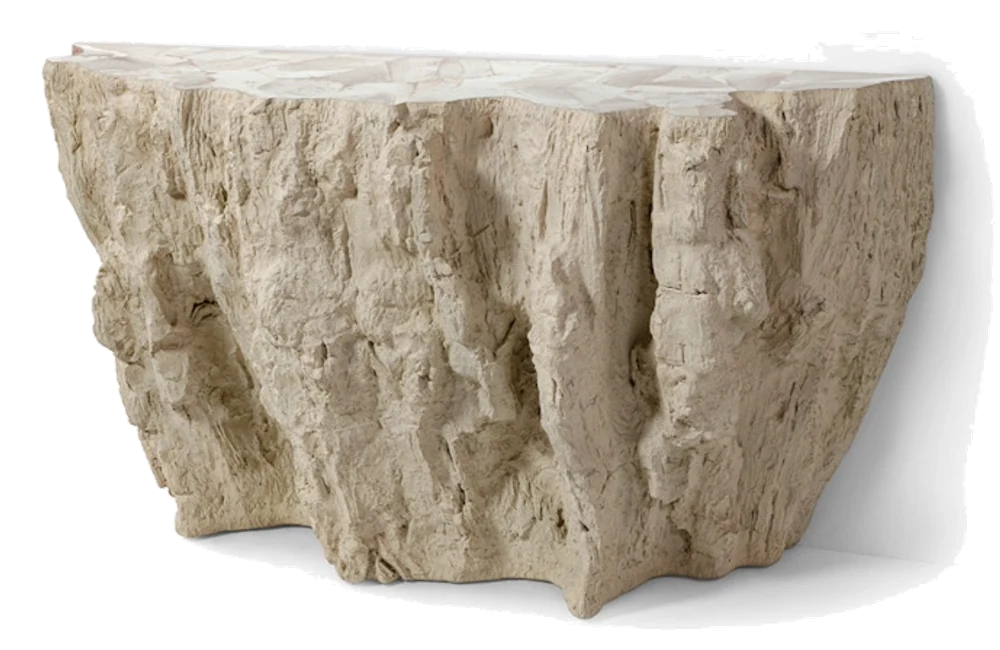
Camila Fossilized Clam Console Table — PALECEK, product cut-out

8.   PALECEK

Camila Fossilized Clam Console Table

SKU 7996-79

59.75"L × 18"W × 32.5"H / 151.8 × 45.7 × 82.6 cm

A substantial console whose fossilised clam surface gives the room a denser, mineral counterpoint to rope, rattan and upholstery. Its interest lies in that contrast: a solid, irregular material placed among much softer fibres.