.png)
The weight
of wood.
On walnut, oak and the slow return of darker timbers — and the way a single hand-rubbed hardwood piece can settle a room that nothing else seems to be able to.
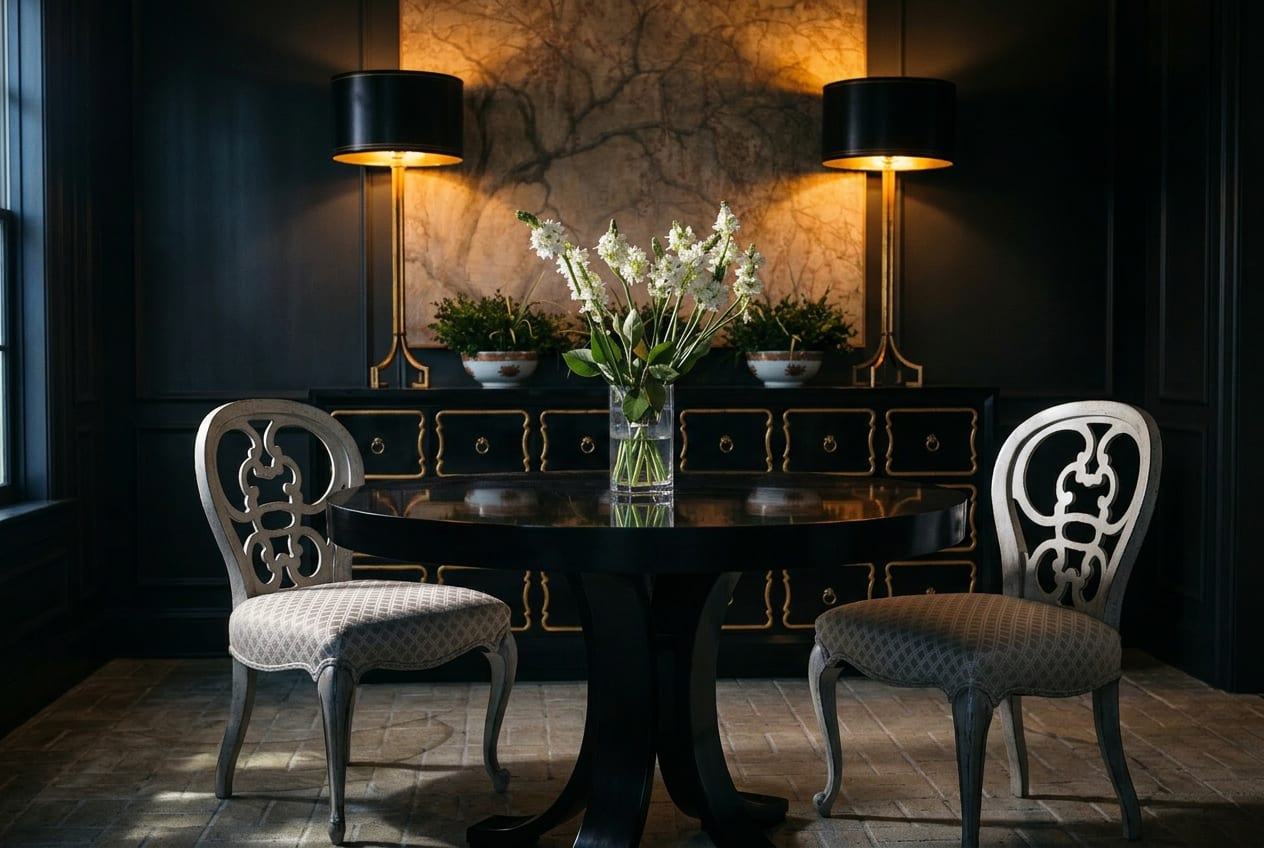
Wood is one of those materials that interior writing tends to treat as a backdrop — the floor, the cabinetry, the doors — and almost never as the principal subject of a room. This is, on inspection, a strange omission. The pieces of furniture that hold a room together are, more often than not, made of wood; the proportion of a room is, in many cases, set by a single hardwood object; the warmth and weight of an interior almost always comes back to how the wood in it has been handled. To think about a room without thinking about wood is to ignore most of what is doing the architectural work.
For something close to fifteen years, the conversation about wood in interiors was almost entirely about lightening it. Bleached oak, white-washed pine, limed ash and the various Scandinavian derivatives dominated the floor plans of serious houses, and the case furniture went the same way. The rooms were unmistakably bright; they were also, increasingly, weightless. A house could be assembled entirely of pale woods and hand-finished plaster, and many were, and the result was a kind of room that floated rather than settled. The eye had nothing to come back to.
The return of darker timbers.
What is now happening, quietly and with some confidence, is a return of the darker hardwoods. Walnut is the clearest example. The wood has been, for the better part of a century, the principal material of the great American workshops, and it has been waiting, patiently, for the appetite to come back to it. It has. A bench-made walnut breakfront, a long walnut dining table, a pair of carved walnut armchairs — these are appearing in serious contemporary schemes with some regularity, and they are appearing as the deliberate counterweight to a quite restrained envelope of plaster, fibre and stone.
Mahogany is creeping back at the edges, particularly in smaller pieces — a side table, a writing desk, a single carved chair — and rosewood, used very sparingly, is back in cabinetry. Ebonised finishes, almost completely absent from the previous cycle, are reappearing in the work of designers who want the architectural weight of dark wood without the historical specificity of mahogany. Across all of these, the finish is consistent. The wood is hand-rubbed to a low sheen. The grain is allowed to read. Nothing has been sealed under the kind of high-build lacquer that turned the surface into a mirror.
A single piece of dark hardwood does, in a quiet room, what fifteen smaller objects in a louder room cannot.
Wood as emotional architecture.
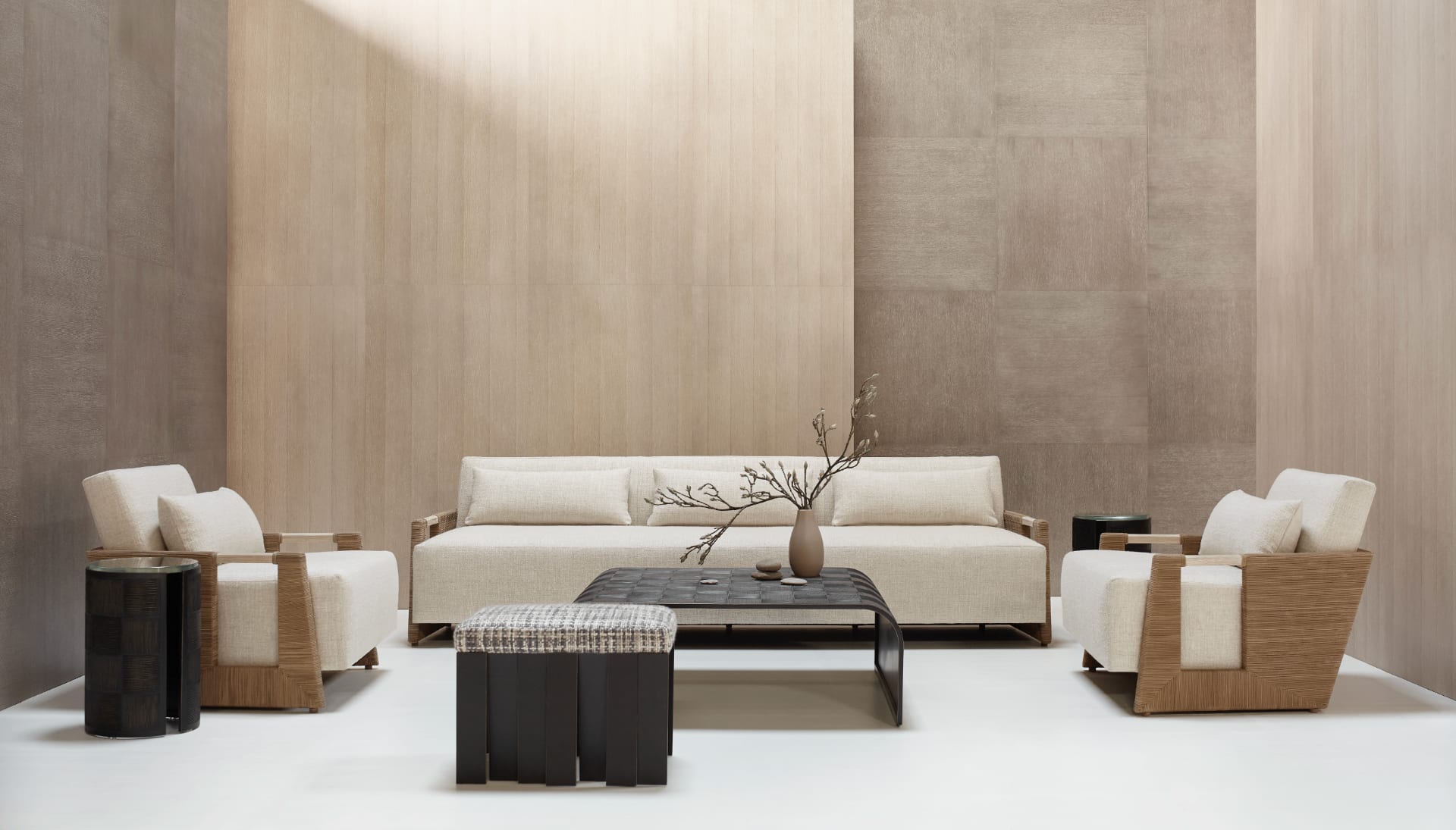
What a serious wooden piece does in a room is structural in more than the obvious sense. It carries weight literally — a hand-built walnut breakfront is unmistakably a heavy object — and it carries weight emotionally, in that the room organises itself around it. Quite without trying, the eye keeps returning. The composition of the rest of the room, the placement of the seating, the height at which the art is hung, the position of the lamps — all of these tend to take their cue from the hardwood object in the room. The wood, quietly, becomes the architecture.
The emotional content of dark hardwood is also unmistakable. The material reads as warm before the eye has had time to catalogue why. Part of the warmth is the colour, certainly, but a great deal of it is the depth of grain — the way the surface is, on inspection, never a single tone but a slow gradient of related tones — and the slight sheen of a hand-rubbed finish, which catches light without bouncing it back. A room with one such piece in it is, almost without fail, a warmer room than the same room with no such piece. The temperature shift is real and is registered by the body as much as by the eye.
Joinery, and the slow object.
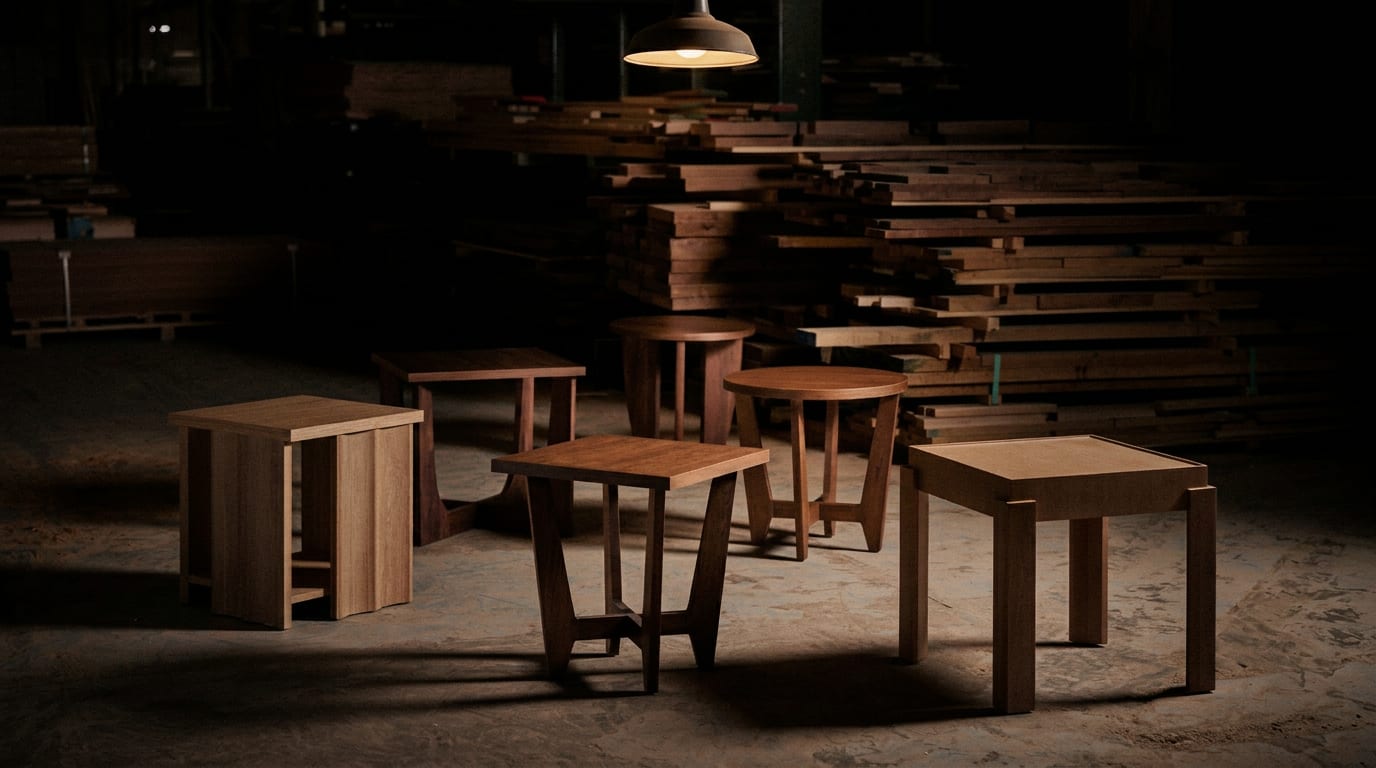
The pieces of wooden furniture that carry the most emotional weight tend, almost without exception, to be the pieces that have been made the slowest. A bench-made hardwood case piece from a serious workshop will involve weeks of skilled labour. The frame is cut from kiln-dried stock that has been sitting in the workshop for months before it is touched. The joinery is mortise and tenon, dovetail or finger-jointed by hand. The carving, where there is carving, is cut by a craftsman whose apprenticeship took years. The finish is rubbed in, by hand, in a series of layers, until the surface develops its low, characteristic sheen.
The American workshop tradition that still makes furniture this way — concentrated, historically, in western Michigan and the broader Grand Rapids region — has had a quiet century. The pieces that come out of it are, in real terms, slow objects. They were not made to be replaced inside a decade and were not, in most cases, made for the contemporary tendency to redecorate every three or four years. They were made to be inherited. A house that contains one or two such pieces inherits, with them, a quite different relationship to time.
Tactility, and the way wood ages.
Wood is one of the few materials in a contemporary interior that genuinely improves with use. A hand-rubbed walnut surface darkens slightly along the edge most often handled. The brass pull on a hardwood drawer develops a warm patina over the years, and the wood beneath it softens, almost imperceptibly, in colour. A wide-board oak floor walks itself into a slightly different finish along the path that is most commonly taken. None of these changes is a fault. All of them are part of the slow, irreversible domestic record that the interior accumulates over time.
The tactile dimension is, in this sense, also a temporal dimension. To choose a hand-rubbed hardwood piece is to choose to live with an object that will quietly record the years of its own use. This is the opposite of the high-build lacquer finish, which exists, in part, to ensure that the object looks the same in fifteen years as it looks on delivery. Both are valid choices; they are not the same choice. The current register, more openly than the previous one, is willing to choose the object that ages.
Sculptural rather than ornamental.
What contemporary designers tend to do with the returning weight of dark hardwood is treat it sculpturally rather than ornamentally. A single architecturally proportioned hardwood object is doing almost all of the heavy lifting in a room that is otherwise quietly composed. The wood is not being asked to repeat itself across multiple pieces. There is rarely a matching set. The wooden table, the wooden case piece, the wooden chair — each is allowed to be itself, in different woods if the scheme calls for it, and the room is held by the cumulative weight of the individual pieces rather than by their visual agreement.
The result is a kind of room that has not been seen much in twenty years. The walls are quiet. The floor is warm. The textiles are restrained. And, set into all of this, two or three pieces of seriously made hardwood carry the room with a kind of architectural confidence that nothing else available to a contemporary designer can quite match. The weight of wood is, it turns out, one of the things the interior had been missing.
Wood is the one material in the contemporary interior that gets better in the years after it is installed. The rooms that take it seriously are the ones that get better with it.