.png)
Where beauty
whispers.
The neutral interior, considered as a study in texture rather than absence — boucle and patina, rattan and stone, linen and bronze.
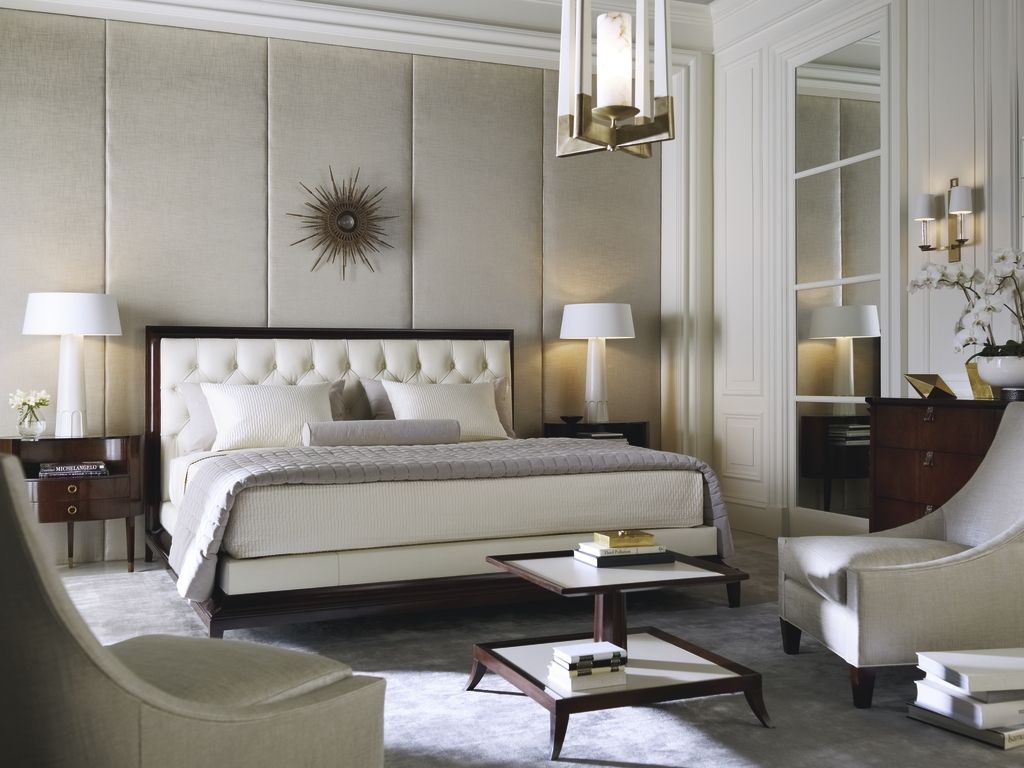
The neutral room is often read as a subtraction — colour taken out, pattern refused, a room arrived at by removal. It is more accurately a room that has been built up out of material rather than out of decoration.
Restraint is the harder discipline. Stripping a room of chromatic incident asks every other element — grain, fibre, weave, finish — to do its work in plain view. The quiet room is rarely empty; more often it is held under tension.
The interior that holds across years rather than seasons is almost always composed this way. Beige earns its character from the boucle, cream its complexity from the plaster, taupe its tension from the bronze.
Neutral is rarely absence. More often it is presence, held in lower relief.
What carries the neutral room.
Texture is what the eye reads when colour has been taken out of the brief. A woven rattan chair, a honed stone table, a rawhide-wrapped drawer front — these are not styling elements; in this kind of room they are most of the structure.
The neutral interior asks a great deal of every surface. Each material has to carry its own incident — the slub in the linen, the figure in the walnut, the cast mark on the bronze. Specified well, the room reads with as much depth as a richer palette would, only at a quieter pitch.
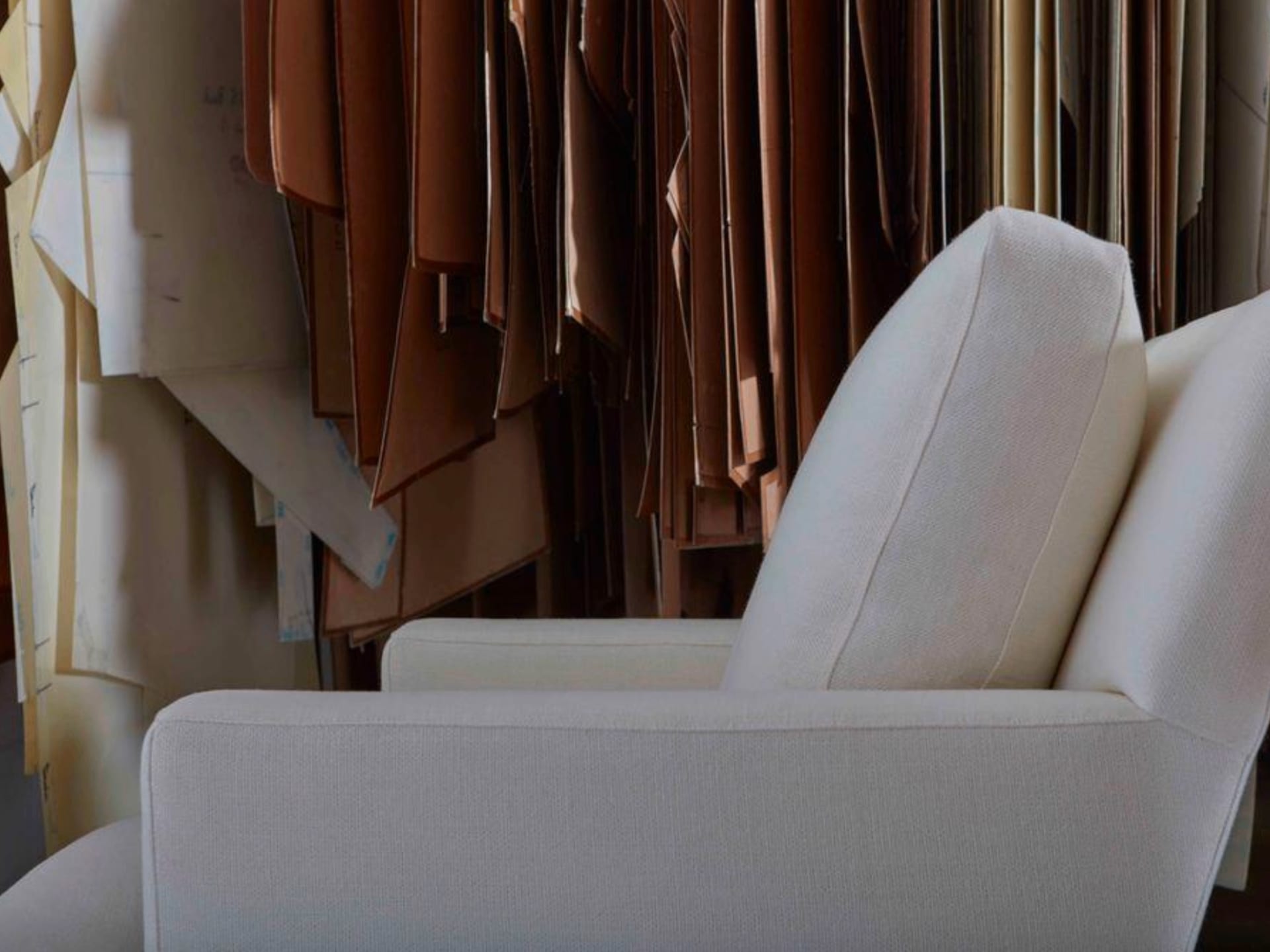
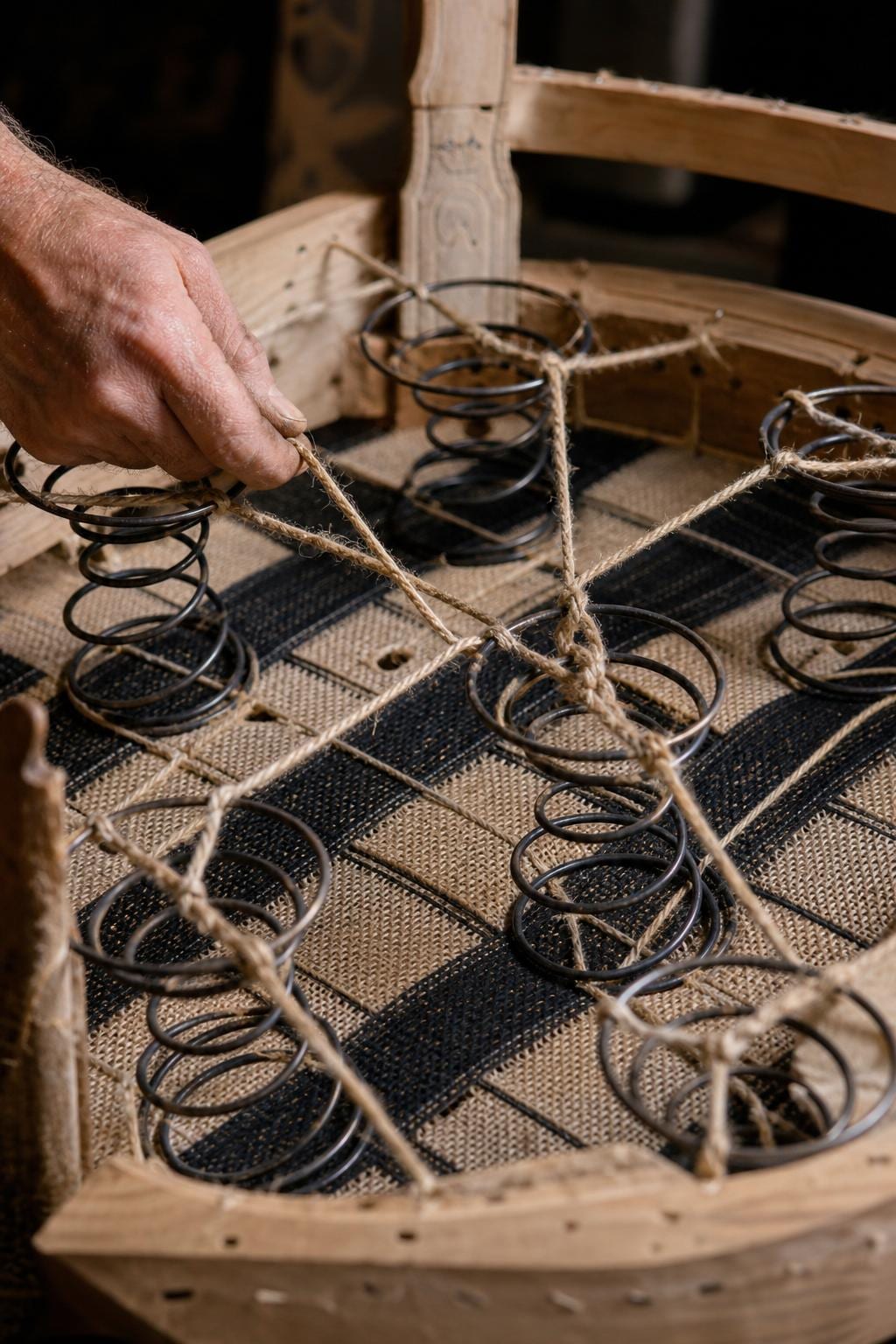
Irregularity, and the mark of the hand.
Natural materials read as considered partly because they are not identical. Quartered oak, cane, bronze, rawhide — each carries the small, useful irregularity of having been shaped rather than printed. They take light differently from one piece to the next; they tend to age into the room rather than against it.
A room composed in those materials does not usually declare itself at the threshold. It rewards proximity — the second look more than the first.
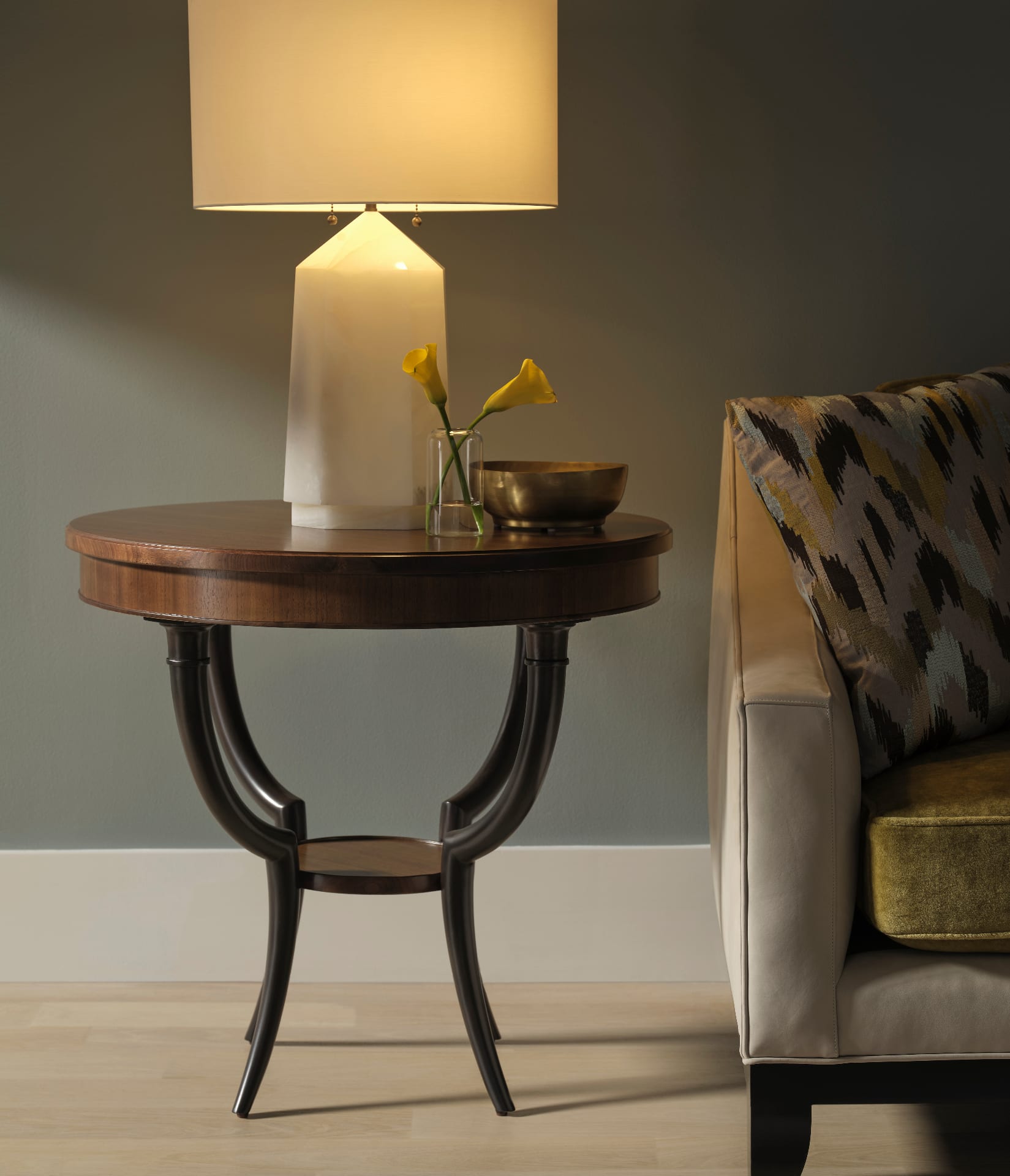
Restraint, not minimalism.
A single material, however well chosen, does not make a room. The neutral interior is built layer by layer — boucle against patina, rattan against stone, linen against bronze. Contrast is held quietly, by texture and weight rather than by colour or contour.
The distinction is worth keeping. Minimalism subtracts; restraint composes. The well-resolved neutral room is rarely the emptiest one — it is the one in which every surface can be accounted for.
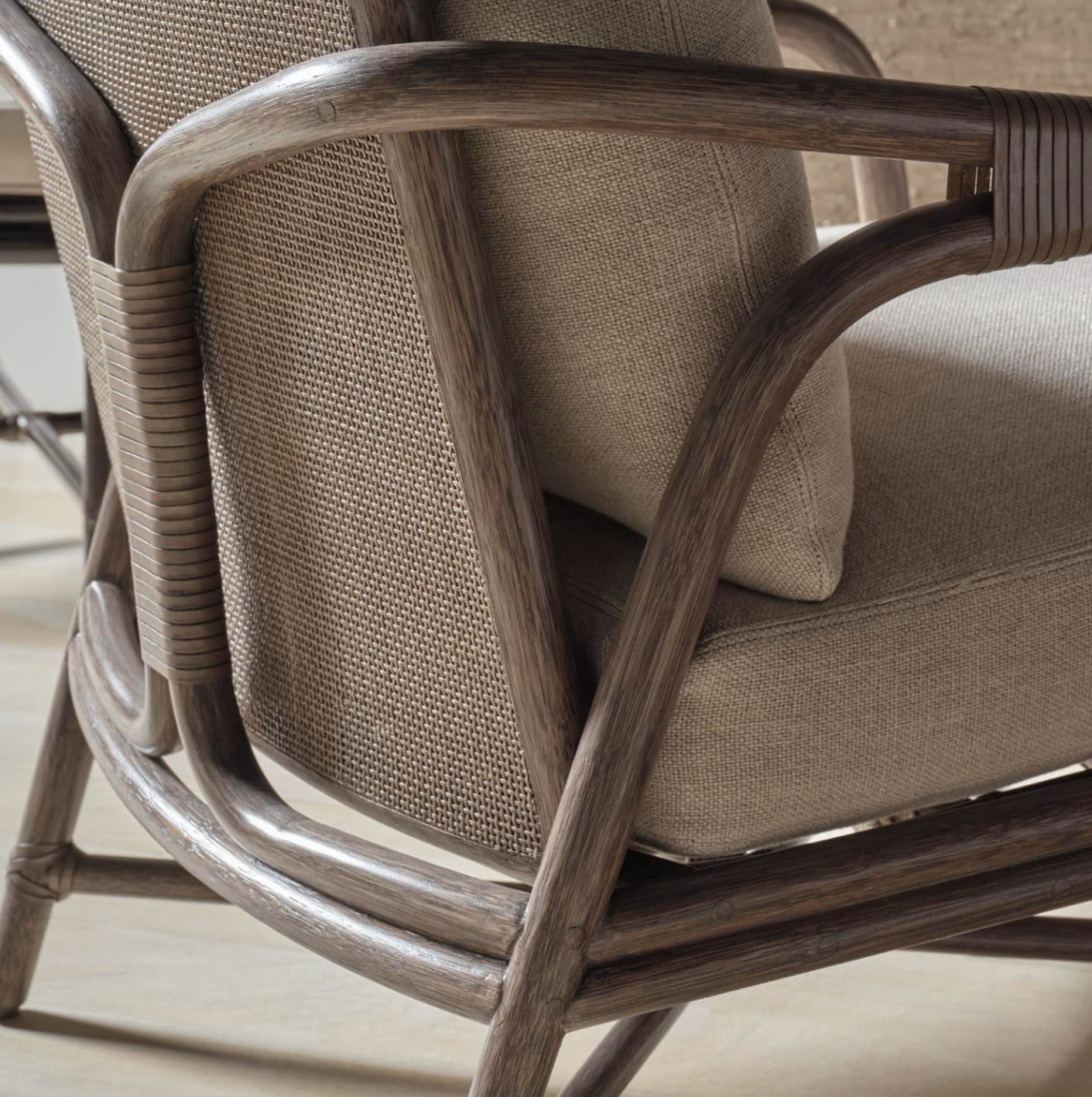
The rooms that hold up rarely announce themselves at the door. They tend to invite a closer reading, and to reward it.
Neutrality is rarely a compromise. More often it is a commitment — to mood, to material, and to a room that asks to be felt over time rather than admired at a glance.