.png)
Where does the
outside end?
Indoor–outdoor living, considered as a question of material — light, grain, stone, plaster — rather than of floor plan.
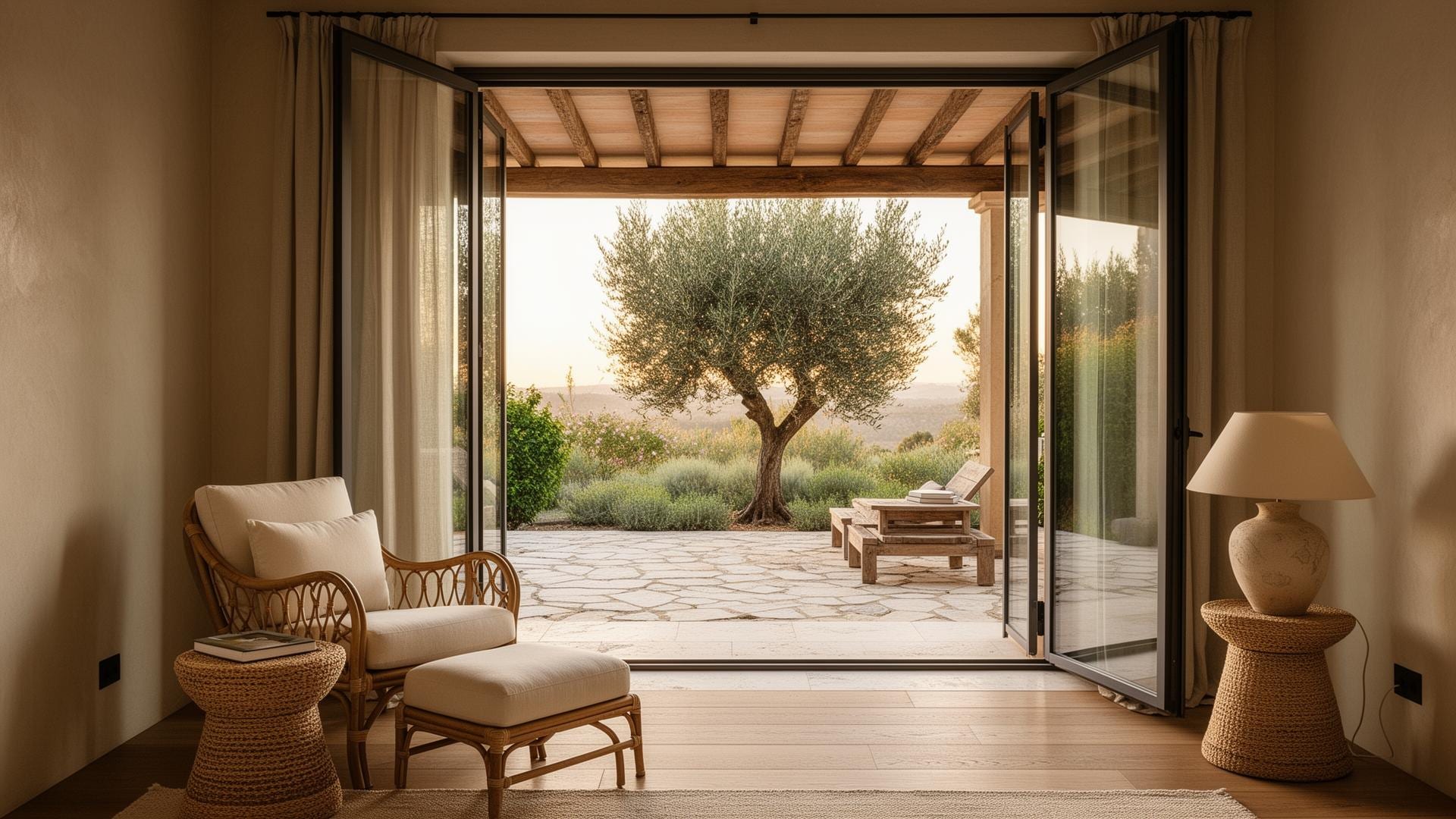
The interest in dissolving the line between inside and out is usually read as a question of plan — sliding glass, broken elevations, the lawn beyond. It is, more accurately, a question of material.
The contemporary interior is asked to do a lot. Houses now double as studios, meeting rooms and places to recover from them; the wall between work and life is largely already gone. The wall between interior and landscape is the next one to give.
What the room is being asked for, in practice, is coherence — a continuous reading from the threshold inward. That tends to be a material problem before it is an architectural one.
Indoor–outdoor living is less a plan than a choice of material.
The first material in the room.
Sunlight on a hardwood floor at eight in the morning is doing architectural work. It sets the temperature of the room, the warmth of the wall behind, the depth of the joinery. Properly specified, it carries the room without any other decoration.
The discipline is to design the light first — orientation, aperture, the weave at the window — and to compose the room against it. A linen at the glass that softens daylight will usually do more for a room than any object placed inside it.
Furniture that can hold both sides.
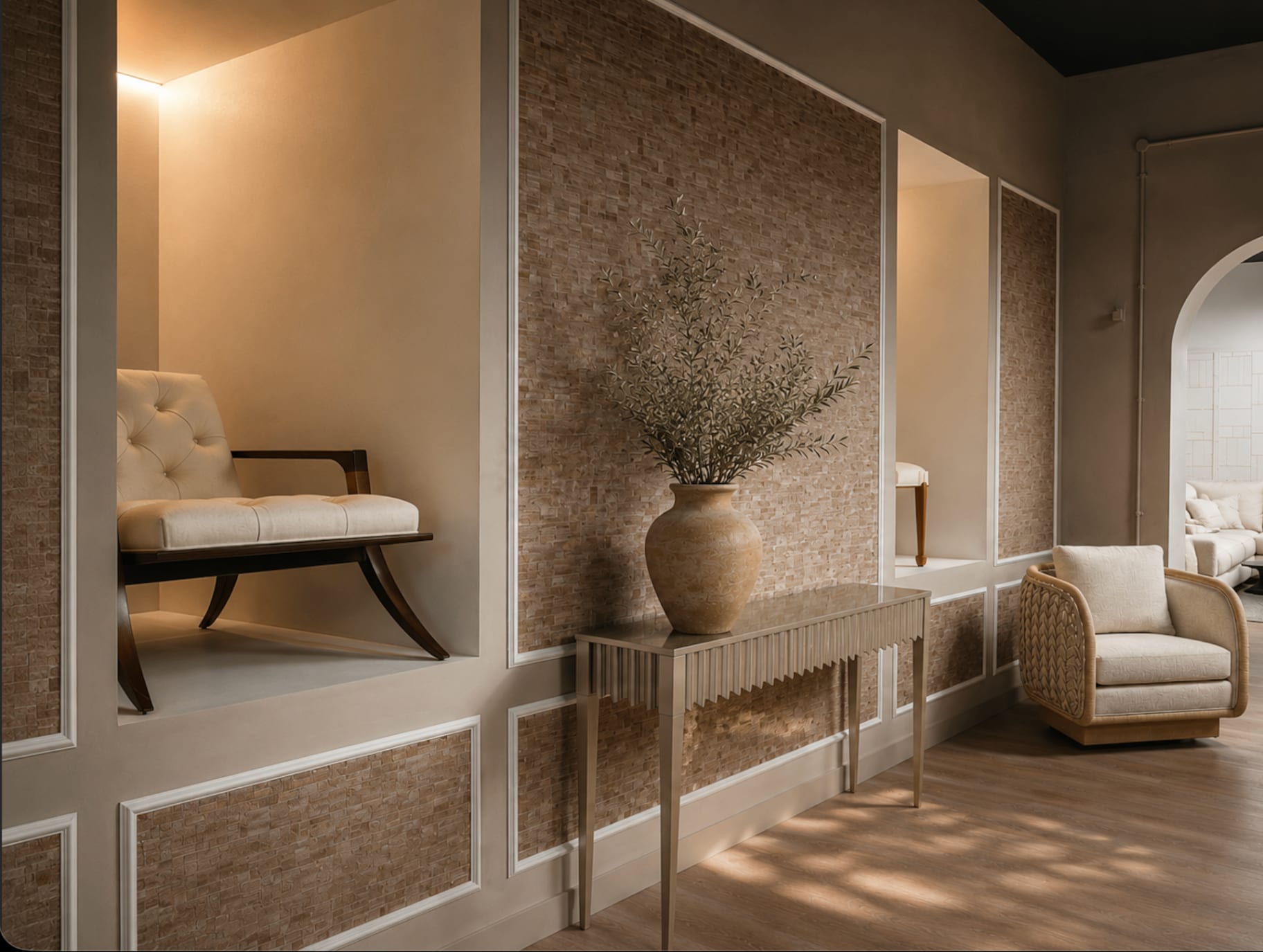
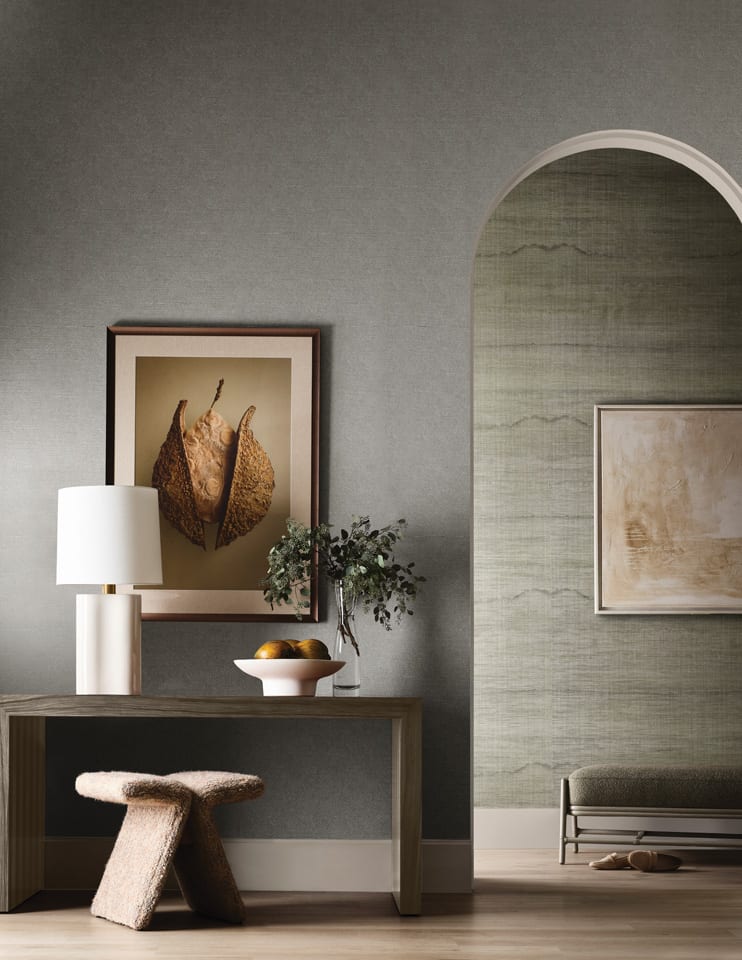
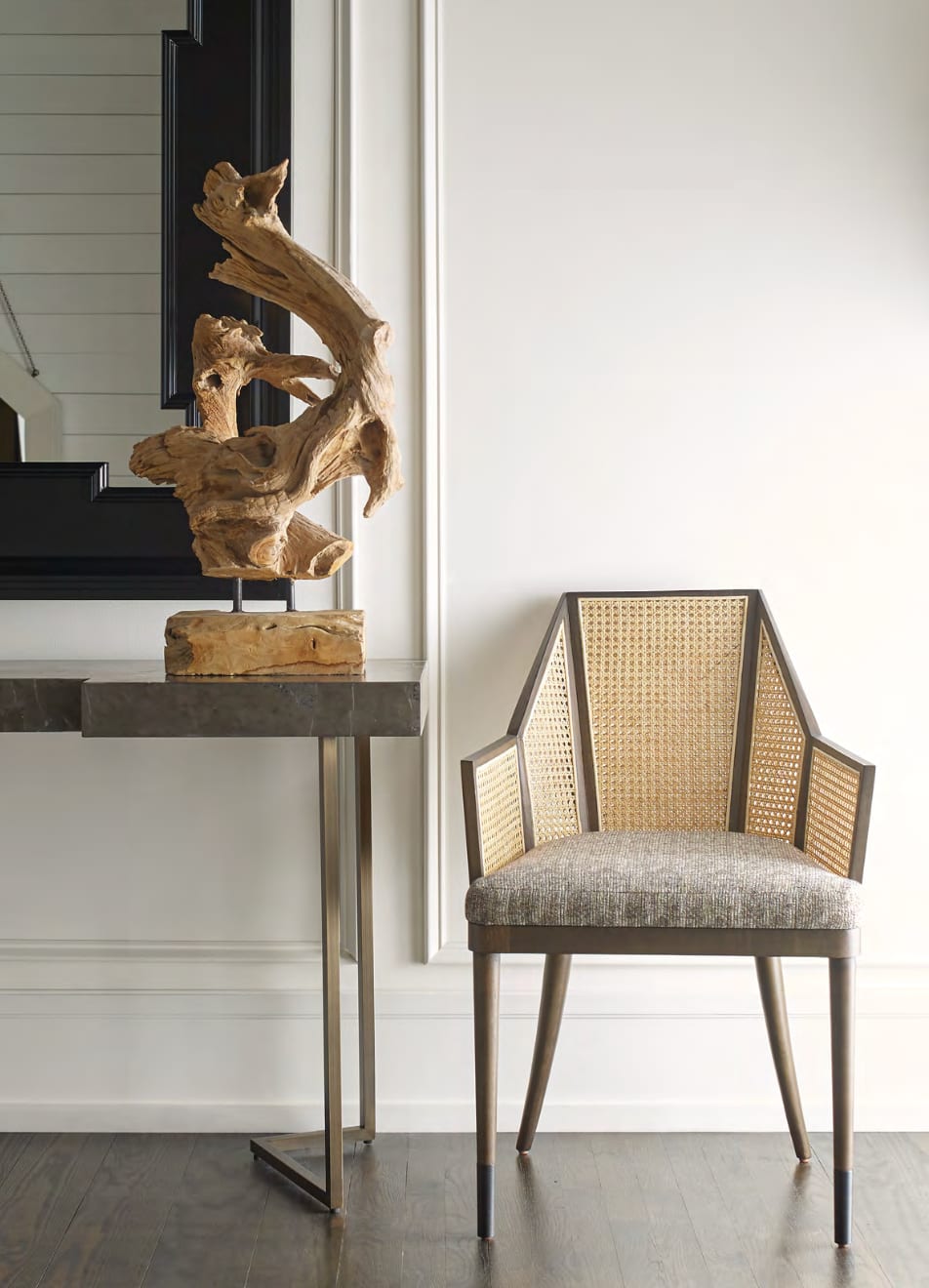
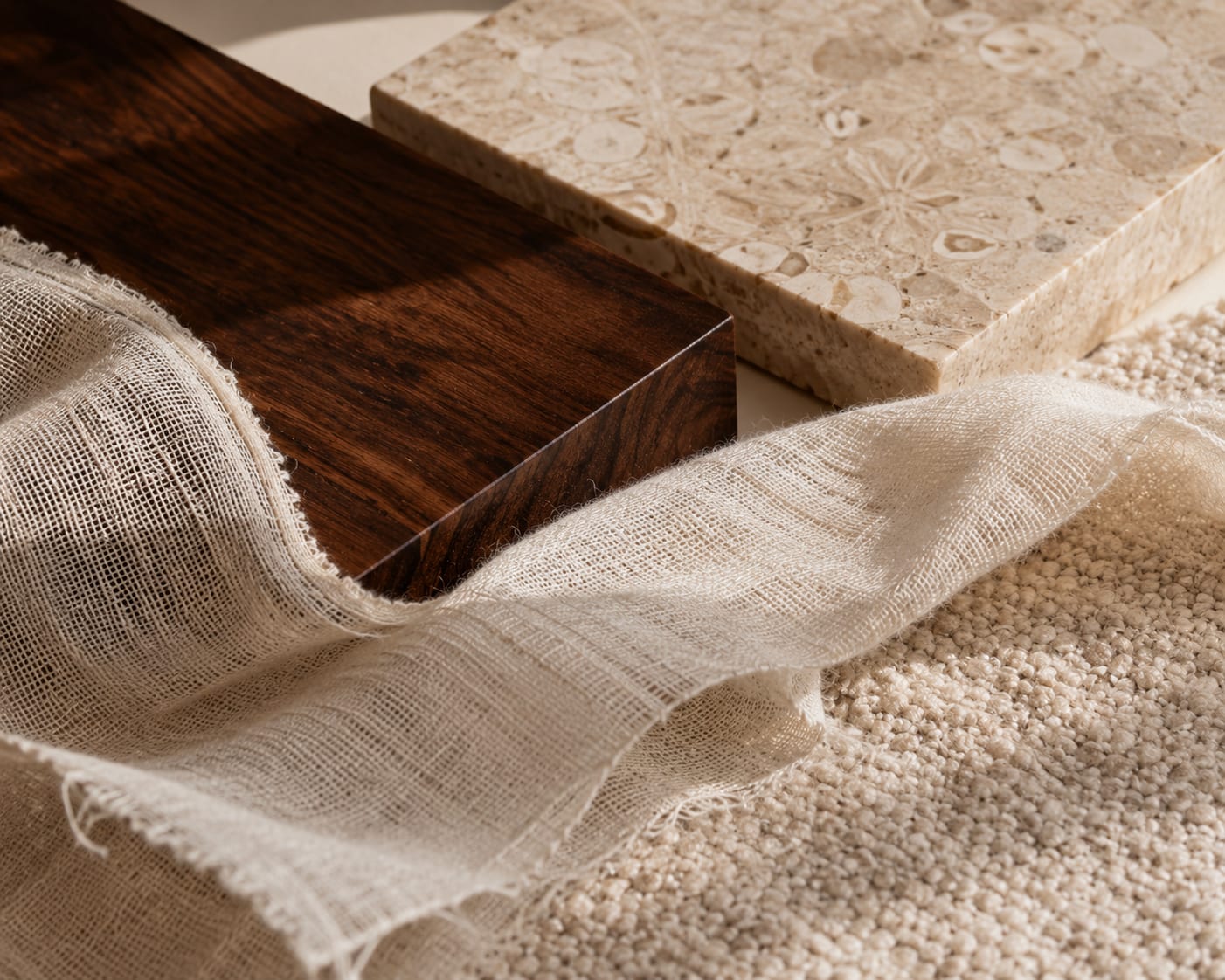
An interior that opens to the landscape needs furniture honest enough to meet it. Woods with grain, stones with a record, fibres that have been spun rather than printed, metals cast and finished by hand. Materials that do not flinch under touch — or under weather.
The choice between cane and chrome, plaster and polish, is not really a stylistic one. It is a decision about whether the room can hold the conditions outside the window without breaking register.
An older idea, not a new one.
Indoor–outdoor living is older than the small catalogue of moves now associated with it. The peristyle, the verandah, the loggia, the courtyard — each is an architectural answer to the same question. The contemporary version simply asks that the answer be made of materials honest enough to hold both sides at once.
The discipline is a single material vocabulary held continuous from inside to threshold — hardwood, stone, plaster, woven fibre, cast metal. The inventory is short. Specified well, it tends to produce a room that no longer feels divided from the landscape around it.
The room that reads continuously with the landscape it sits in is the older idea — and, on most days, the more durable one.
Where does the outside end? Approximately wherever the material stops being true. Choose the material, and the boundary tends to take care of itself.